


E-Invoice Vs EDI Invoice
An e-invoice is a structured invoice built to satisfy a government tax mandate. An EDI invoice is a structured invoice built to satisfy a trading partner agreement. Both carry machine-readable data instead of a PDF. The difference is who sets the rules: a tax authority defines e-invoicing formats and deadlines, while your customer defines EDI formats and deadlines. Most mid-size and larger suppliers end up running both.
Introduction to Invoicing
Two suppliers ship to the same retailer.
One gets a compliance notice from a tax authority.
The other gets a chargeback from the retailer.
Both are sending invoices electronically, and both think they are covered.
They are solving different problems.
Electronic invoicing and EDI invoicing overlap enough that the terms get used interchangeably in sales conversations, and that is where budgets go wrong.
EDI has moved business documents between trading partners since the 1960s.
E-invoicing, in the regulatory sense used today, is much younger and is driven by tax collection.
This blog separates the two, shows where they overlap, and gives you a way to decide what your business actually needs.
Key Takeaways
- Who writes the rules is the real split. Tax authorities mandate e-invoicing. Retailers, distributors, and manufacturers mandate EDI. One is compliance, the other is commercial.
- Scope differs. E-invoicing covers one document. EDI covers the whole order-to-cash chain: purchase orders, ship notices, acknowledgments, remittance advice, and invoices.
- 2026 is the year the mandates collide. Belgium went live 1 January 2026, Poland KSeF on 1 February 2026, France on 1 September 2026, with Germany, Spain, and Slovakia following in 2027. A supplier selling into three countries can face three deadlines in one year.
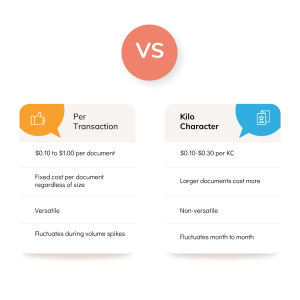
- Cost profiles are not comparable. E-invoicing platforms start cheap and scale by country. EDI costs more to set up and less per transaction at volume. Your document count decides which curve favours you.
- Running both is normal, not redundant. The invoice data comes out of the same ERP record. You are choosing two delivery routes, not two systems of record.
What is an E-Invoice?
An e-invoice is an invoice created and exchanged in a structured digital format, usually XML, that a buyer system can read and process without a human retyping anything. Two conditions have to hold: the invoice must be built in the correct structure, and it must move electronically from the seller system to the buyer system.
A PDF emailed as an attachment is not an e-invoice. Neither is a Word file, a scanned image, or an HTML invoice in the body of an email. Those all require someone at the other end to read the document and key the data into an accounting system. The structure is what makes the difference, not the fact that it travelled over the internet.
Define E-Invoice
E-invoice: a structured, machine-readable invoice exchanged between seller and buyer systems in a format such as XML or UBL, and in most jurisdictions reported to or validated by a tax authority. A PDF invoice sent by email does not qualify.
How an E-Invoice Moves From Seller to Buyer
The seller generates the invoice in a billing, accounting, or ERP system with the usual content: buyer and seller identifiers, invoice number, date, line items, quantities, prices, tax, and total (Stripe).
- The source system produces the invoice in a structured format rather than a printable document.
- The invoice travels by direct system-to-system connection, through a network such as Peppol, or via a service provider.
- Receipt and import. The buyer system ingests the structured file directly into accounts payable.
- Validation and matching. The buyer system checks the data and matches it against the original purchase order.
- Approval and payment. The invoice moves through the internal approval workflow and is paid on agreed terms.
- Both parties retain the electronic record for audit and statutory retention periods.
Under clearance and continuous transaction control models, a seventh step sits between transmission and receipt: the tax authority validates the invoice before it becomes legally valid. Saudi Arabia runs this way through ZATCA, and Poland runs it through KSeF. In those countries, an invoice your buyer accepted but the tax platform rejected is not a valid invoice.
E-invoice Formats and Standards
A handful of formats carry most of the world’s e-invoice traffic.
| Format | What it is | Where it dominates |
| XML | The underlying markup most structured invoice formats are built on. | Universal foundation across mandates. |
| UBL 2.1 | Universal Business Language, an XML schema maintained by OASIS. | Europe and the Peppol network. |
| EN 16931 | The European semantic data model for an electronic invoice (CEN). | The compliance baseline every EU mandate maps to. |
| Peppol BIS Billing | The billing specification used across the Peppol four-corner network. | Belgium, the Nordics, Singapore, Australia. |
| Factur-X / ZUGFeRD | A hybrid PDF/A-3 file with XML embedded inside it. | France and Germany. |
| EDIFACT INVOIC | The invoice message in the UN/EDIFACT standard. | Large enterprises in retail and shipping. |
| JSON | Lighter-weight structure favoured by API-first platforms. | Newer API-based tax portals. |
Note where EDIFACT appears in that list. It is an EDI standard, and it is also a valid e-invoice format. That single overlap is the source of most of the confusion around this topic, and it is worth reading the ANSI X12 vs UN/EDIFACT comparison before you commit to a format.
What E-Invoicing Actually Delivers
Vendor-published figures put automated e-invoicing at 60 to 80 percent lower cost than paper-based invoicing, with paper, printing, postage, and physical storage all disappearing from the ledger.
Treat those numbers as directional.
They come from providers selling the software, and none of them are independently audited.
The effects that survive scrutiny are more mundane and more useful.
Invoices arrive in seconds rather than days, which shortens invoice-to-cash and makes cash forecasting less of a guess.
Removing manual keying removes the transposition errors that cause rejections and disputes.
Compliance stops being a per-country project when the platform maintains the country rules for you. And accounts payable teams stop spending their week on data entry.
See how structured invoice data flows into your accounting system:
Explore Commport Order and Invoice Management Solution
Book a Free ConsultationWhat is EDI invoicing?
EDI invoicing is the exchange of invoice data between trading partners in a standardised format that both computer systems can process without human handling. In North America, that invoice is almost always an EDI 810, the X12 transaction set that serves as the electronic equivalent of a paper invoice.
Define EDI Invoicing
EDI invoice: an invoice transmitted as a standardised transaction set, most commonly the X12 EDI 810 in North America or the EDIFACT INVOIC internationally, sent under a trading partner agreement rather than a government mandate.
How an EDI Invoice is Structured
An EDI 810 breaks down into three layers:
- Data elements. Single values, such as a city name or a line quantity.
- Related elements grouped, such as a full buyer address.
- Header and trailer segments carrying control numbers that identify and validate the transmission.
The invoice rarely travels alone. It sits inside a document cycle that starts with an EDI 850 purchase order and typically runs through an EDI 855 acknowledgment, an EDI 856 ship notice, the 810 invoice, and an EDI 820 remittance advice, with EDI 997 functional acknowledgments confirming each hop. Our guide to the EDI document types worth automating first walks through that sequence in order.
Standards and Transmission Protocols
Two standard families cover most global EDI traffic. ANSI X12 dominates North America; UN/EDIFACT dominates Europe and Asia. Retail supply chains layer GS1 identification standards on top for product and location identifiers.
Transmission happens over AS2 (defined in IETF RFC 4130), SFTP, or through a value added network. Which one you pick shapes your cost and support model more than most buyers expect, and the VAN vs AS2 comparison covers that trade-off directly.
What EDI Carries Beyond the Invoice
This is where the two approaches genuinely diverge. EDI moves purchase orders, advance ship notices, acknowledgments, payment instructions, and tracking reports alongside invoices.
There are over 300 X12 transaction codes in active use across retail, healthcare, transportation, finance, and government, catalogued in the Commport ANSI X12 transactions list.
That breadth is the point. When a retailer sends you a purchase order by EDI, they expect the ship notice and the invoice back on the same channel, matched to the same PO number. ,
An e-invoicing platform that only handles invoices cannot close that loop.
What EDI Invoicing Delivers
Published comparisons put EDI invoicing at roughly one-third the cost of paper-based invoicing, with processing measured in under an hour against five days for paper (FreshBooks).
Again, directional rather than audited.
The operational gains are easier to verify from your own data.
Standardised documents and functional acknowledgments mean you know an invoice arrived rather than assuming it did.
Real-time transaction visibility shortens dispute resolution. Private networks and encryption protect financial data in transit. And at high volume, per-transaction cost falls in a way that a per-invoice SaaS fee usually does not.
Sending EDI 810 invoices to a retailer for the first time?
Review the EDI 810 specification and sample
Book a Free ConsultationE-invoice vs EDI invoice: The Differences that Matter
Attribute | E-invoice | EDI invoice |
Primary driver | Government tax mandate | Trading partner agreement |
Scope | Invoices only | Purchase orders, ship notices, acknowledgments, remittance advice, invoices |
Common formats | XML, UBL 2.1, EN 16931, Peppol BIS, Factur-X, EDIFACT | ANSI X12 (810, 850, 856, 820, 997), EDIFACT INVOIC |
Governing body | National tax authorities; EU ViDA; Peppol Authorities | ASC X12, UN/CEFACT, GS1, individual retailers |
Setup complexity | Lower. Web portal or cloud platform, low initial outlay | Higher. Partner mapping and ERP integration, higher initial outlay |
Cost curve | Low entry, scales per country and per invoice | Higher entry, falls per document at volume |
Transmission | Peppol access points, tax portals, service providers | AS2, SFTP, value added network |
Timing | Real time, often with clearance before validity | Real time or scheduled batch |
Failure consequence | Tax penalties, invoice rejected as legally invalid | Chargebacks, delayed payment, partner escalation |
Best fit | Multi-country operations facing 2026 to 2030 mandates | High-volume trading relationships in retail, automotive, healthcare, logistics |
Need both channels running from one ERP connection
Compare Commport EDI and VAN solutions
Book a Free ConsultationThe 2026 Mandate Wave: Why This Decision Got Urgent
E-invoicing mandates are live in more than 60 countries, and 2026 is the year the deadlines stack up (Lasernet). A supplier selling into three European markets can now face three separate go-live dates inside twelve months.
Jurisdiction | Milestone | Date |
Belgium | Domestic B2B mandatory via Peppol, UBL 2.1 | 1 January 2026 |
Poland | KSeF clearance, largest taxpayers | 1 February 2026 |
Poland | KSeF, remaining VAT-registered businesses | 1 April 2026 |
Saudi Arabia | ZATCA FATOORAH Wave 24 integration | 1 June 2026 |
France | All businesses must receive; large and mid-size must issue | 1 September 2026 |
France | SMEs and micro-businesses must issue | 1 September 2027 |
Germany | Issuance required above 800,000 EUR turnover | 1 January 2027 |
Germany | Issuance required for all businesses | 1 January 2028 |
EU (ViDA) | Intra-EU B2B e-invoicing and digital reporting | 1 July 2030 |
The VAT in the Digital Age package was adopted by the Council in March 2025. It removed the requirement for member states to seek derogation before mandating domestic e-invoicing, which is why France, Belgium, Poland, Spain, and Germany all moved at once (Fonoa). Deadlines and thresholds shift, so confirm with the relevant national tax authority before you change an ERP workflow.
What This Means for a North American Supplier
Canada and the United States operate post-audit regimes with no B2B e-invoicing mandate. If you sell only domestically, EDI compliance with your trading partners is the live requirement and e-invoicing is not. The moment you invoice a customer in Belgium, France, Poland, Saudi Arabia, or Malaysia, the mandate becomes yours to meet, regardless of where your business is registered.
Which One Does Your Business Need?
Work through it in this order. The answer is rarely one or the other.
Choose E-invoicing When a Tax Authority is the Deciding Party
- You invoice customers in a country with an active or announced B2B mandate.
- Your invoices have to reach the tax authority in real time under a clearance or CTC model
- You are expanding into new markets and want country rules maintained by a platform instead of your IT team.
- Your invoice volume per country is modest, which makes a per-transaction platform fee cheaper than a dedicated integration.
Choose EDI Invoicing When Your Customer is the Deciding Party
- Your retail, automotive, grocery, healthcare, or logistics partners specify EDI in the vendor agreement.
- You exchange hundreds or thousands of documents a day with a defined set of partners.
- You need the invoice matched to the purchase order and ship notice on the same channel, which is what EDI ERP integration is built for.
- You run just-in-time manufacturing or vendor-managed inventory, where the whole document cycle has to stay synchronised.
Industry Patterns Worth Knowing
Grocery and general merchandise retail run on X12 with GS1 identifiers, and non-compliance shows up as deductions rather than a conversation. Automotive runs on EDIFACT in Europe and X12 in North America, with release schedules and shipping documents mattering as much as invoices. Healthcare carries HIPAA transaction requirements on top of standard EDI. Transportation and logistics need load tender and status documents that no e-invoicing platform issues. If you sit in any of these sectors, EDI is table stakes and e-invoicing is a parallel obligation, not a replacement.
Running Both: How it Actually Works
Both channels read from the same ERP invoice record. That record gets translated once into an X12 810 for your retail partners and once into a compliant XML or UBL file for the tax authority. You are not maintaining two sets of invoice data. You are maintaining one set with two output maps, which is the same translation and mapping problem EDI teams have solved for decades.
Integration with your ERP, CRM, and supply chain systems is what keeps the two channels consistent. Where suppliers get into trouble is running the two on separate stacks with separate reconciliation, so the retailer-facing invoice and the tax-authority invoice drift apart. Read the EDI systems implementation guide for how the integration layer should be structured, and the modern EDI provider checklist for what to ask a vendor before you sign.
Mapping EDI and e-invoice output from a single ERP record?
Get a Commport integration assessment
Book a Free ConsultationA Practical Starting Sequence
- List your invoicing countries. Every jurisdiction you bill into, not just where you are registered. Check each against a mandate tracker and note the go-live date.
- Pull your trading partner EDI requirements. Vendor compliance guides specify transaction sets, protocols, and testing windows. These usually pre-date any tax mandate and are more immediately enforceable.
- Count your document volume. Documents per month per partner, not invoices alone. This determines whether a per-transaction fee or an integrated connection is cheaper over three years.
- Audit your ERP output. Confirm the invoice record holds every field both channels need. Missing tax identifiers and product codes are the usual blocker, and they are cheaper to fix before integration than after.
- Pick a transmission model. Direct AS2, a value added network, or a hybrid. The VAN complete guide covers the selection criteria.
- Test before the deadline. Both retailers and tax platforms run certification cycles. Build in a testing window and treat the published deadline as the end of testing, not the start.
Conclusion
There is no universal answer, and any vendor offering one is selling you their product rather than solving your problem.
If a tax authority sets your deadline, you need e-invoicing. If your customer sets it, you need EDI.
Most companies of any size discover they have both, which is why the sensible question is not which channel to pick, but how to run both from a single invoice record without maintaining two separate truths.
Start with the deadline that arrives first.
For a North American supplier selling into Europe in 2026, that is usually a tax mandate.
For a supplier onboarding with a major retailer, it is a vendor compliance guide with a certification date.
Work back from whichever comes first and build the second channel onto the same integration.
Commport Invoicing Solutions for E-Invoicing and EDI Invoicing
Need Help? Download: Commport's EDI Buyers Guide
Unlock the full potential of your supply chain with our comprehensive EDI Buyer's Guide — your first step towards seamless, efficient, and error-free transactions
Frequently Asked Questions
An e-invoice is a structured invoice that satisfies a government tax mandate, usually in XML or UBL. An EDI invoice is a structured invoice that satisfies a trading partner agreement, usually an X12 810 or EDIFACT INVOIC. Both are machine-readable. The difference is who sets the format and the deadline: a tax authority or your customer.
Sometimes. EDIFACT is accepted as a valid e-invoice format in several jurisdictions, so an EDIFACT INVOIC can satisfy both purposes. An X12 810 usually cannot, because most tax mandates specify XML-based formats aligned to EN 16931. Check the format list for each country you invoice into.
No. A PDF, scanned image, or Word document sent by email requires a person to read it and key the data in. A true e-invoice carries structured data that the buyer system processes automatically. Hybrid formats such as Factur-X and ZUGFeRD are the exception, because they embed XML inside a PDF/A-3 file.
Belgium went live on 1 January 2026, Poland KSeF on 1 February and 1 April 2026, Saudi Arabia continues ZATCA integration waves through June 2026, and France begins on 1 September 2026. Germany and Spain follow in 2027, and EU-wide intra-community requirements arrive under ViDA in 2030. Mandates are active in more than 60 countries.
Yes, and most mid-size and larger suppliers do. Both channels draw from the same ERP invoice record, translated once into an EDI transaction set for trading partners and once into a compliant XML file for tax authorities. Keep the two on one integration layer so the invoice data cannot drift apart.
E-invoicing platforms cost less to start, since they run on cloud portals with low initial outlay. EDI carries higher setup cost for partner mapping and ERP integration, then falls below e-invoicing on a per-document basis at volume. Your monthly document count and partner count decide which curve favours you.
E-invoicing platforms cost less to start, since they run on cloud portals with low initial outlay. EDI carries higher setup cost for partner mapping and ERP integration, then falls below e-invoicing on a per-document basis at volume. Your monthly document count and partner count decide which curve favours you.
The EDI 810 is the ANSI X12 invoice transaction set, the electronic equivalent of a paper invoice. A supplier sends it to a buyer to request payment, typically after an EDI 850 purchase order and an EDI 856 ship notice. The buyer confirms receipt with an EDI 997 functional acknowledgment.
Only if they invoice into mandated jurisdictions. Canada and the United States use post-audit models with no B2B e-invoicing mandate. A Canadian supplier billing a customer in Belgium, France, Poland, or Saudi Arabia must meet that country’s requirements regardless of where the supplier is registered.