


Introduction to GDSN for Suppliers
GDSN compliance isn’t just about meeting technical requirements.
It’s a strategic investment that delivers measurable returns through improved accuracy, reduced costs, and expanded market opportunities.
The GS1 GDSN network has revolutionized B2B product information exchange, with more than 40,000 users and 22 million registrations across retail and healthcare sectors.
In essence, GDSN’s meaning extends beyond simple data sharing:
It’s an automated, standards-based global environment that enables secure and continuous synchronization of product information.
For suppliers wondering what GDSN is and why it matters, the answer lies in efficiency and accuracy.
The network connects trading partners through GS1 GDSN-certified data pools, where standardized product data is stored and continually updated.
In this blog, we’ll explore six compelling reasons why suppliers need to join this transformative network.
- Reason 1: Eliminate Data Errors and Improve Accuracy
- Reason 2: Faster Product Launches and Time-to-Market
- Reason 3: Meet Major Retailer Requirements
- Reason 4: Reduce Operational Costs and Save Time
- Reason 5: Enhance Trading Partner Relationships
- Reason 6: Ensure Accurate Logistics and Shipping Information
Key Takeaways
- Eliminate costly data errors: GDSN reduces manual entry mistakes that cost the CPG and retail industries $25-50 billion annually through automated validation and real-time synchronization.
- Accelerate product launches: Streamlined data sharing cuts time-to-market from weeks to days, enabling faster retailer onboarding and simultaneous distribution to multiple trading partners.
- Meet major retailer requirements: Compliance with GDSN standards is mandatory for partnerships with Kroger, Amazon, Carrefour, and other global retailers, avoiding penalties and gaining market access.
- Reduce operational costs significantly: Companies report 64% faster processing times, $2.2 million in annual transportation savings, and 30% reduction in inventory errors through standardized data exchange.
- Strengthen trading partner relationships: Transparent, accurate data builds trust with 94% of consumers showing greater loyalty to brands offering complete transparency, creating a competitive advantage.
- Ensure precise logistics operations: Accurate packaging dimensions, weights, and shipping information prevent costly errors, reduce chargebacks, and optimize warehouse and transportation efficiency.
What is GDSN and Why It Matters for Suppliers
The Global Data Synchronization Network operates as an internet-based, interconnected network of interoperable data pools governed by GS1 standards.
At its core, GDSN enables companies around the globe to exchange standardized product master data with their trading partners through a sophisticated yet streamlined system.
The network functions using a publish-subscribe pattern between two trading partners, each registered with and accessing the GDSN via a data pool.
This architecture creates a single point of truth for master data across the entire supply chain. When we subscribe to a certified GS1 GDSN data pool, high-quality product content is uploaded, maintained, and shared automatically.
Trading partners gain immediate access to the most current and complete information needed to exchange products on both local and global markets.
The GS1 Global Registry acts as the network’s directory, pointing to the data pool where specific data is housed. It matches subscriptions to registrations to facilitate synchronization between parties.
Currently, there are 44 GDSN-certified data pools operating within this network. While all data pools offer GDSN storage and synchronization capabilities, they differ in the additional information managed, supportive services, and pricing models.
How GS1 GDSN Standards Work
GS1 GDSN standards create a common language for product information across the global supply chain. The network uses GS1 identification and data standards, specifically the Global Trade Item Number (GTIN) for products and the Global Location Number (GLN) for supply chain parties and locations.
GTINs are 14-digit numbers that brand owners assign to all their products, defining the master data attributes to be associated with each product GTIN, such as size, color, and brand information. GLNs serve as 13-digit numbers used to uniquely identify information suppliers like distributors, brokers, and manufacturers, as well as legal entities and physical locations. Within GDSN, trade items are identified using a unique combination of these GS1 identification keys, along with GDSN identification keys like Target Market and Global Product Classification.
Product content in the GS1 GDSN network follows the GS1 Global Data Model standard, which defines a globally consistent set of foundational product attributes needed to list, store, move, and sell products. This standardization simplifies and harmonizes the exchange of product data around the world, increasing operational efficiency for brand owners and retailers while improving data accuracy and completeness for consumers.
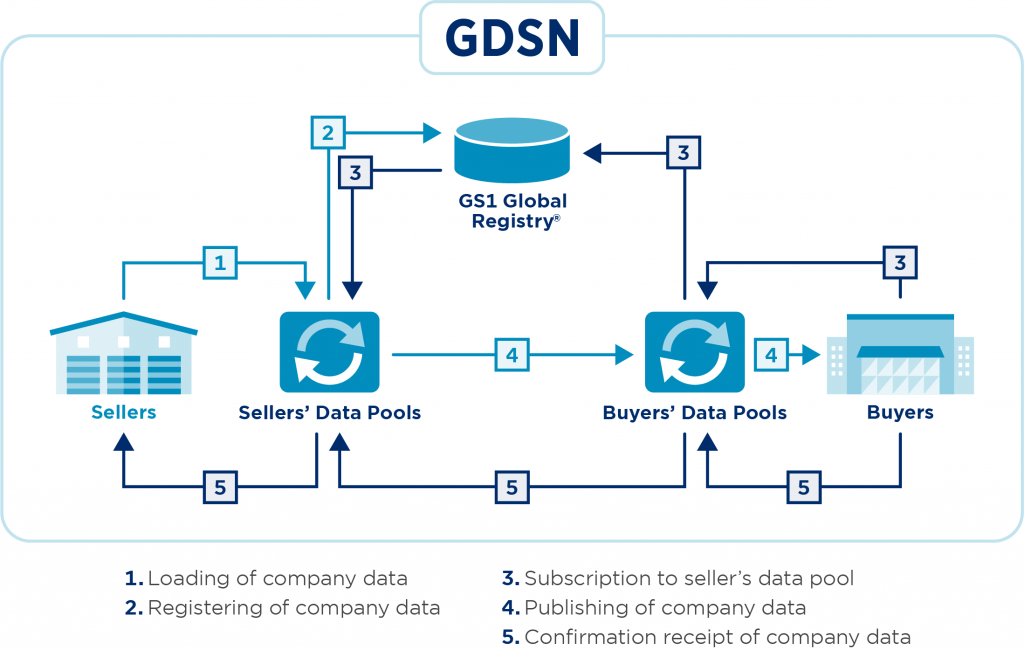
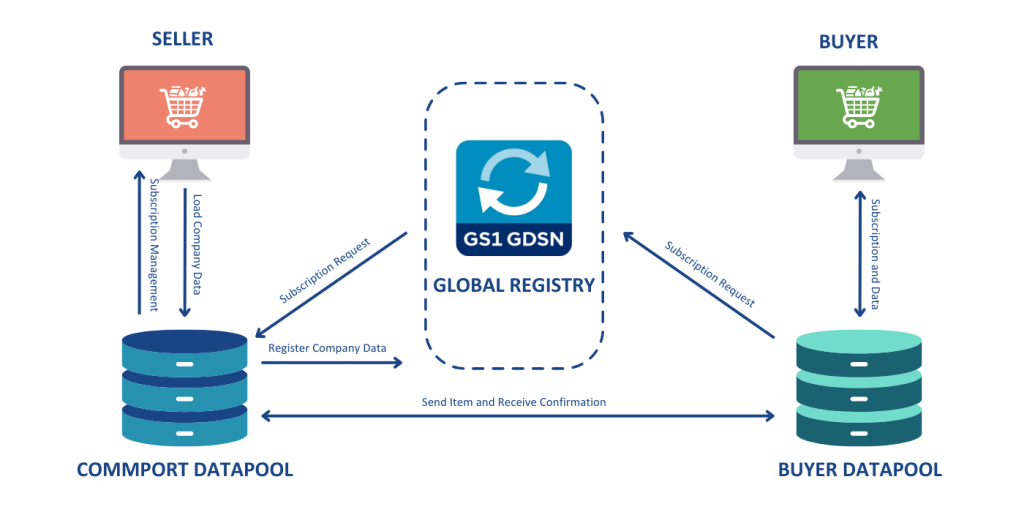
The synchronization process follows five distinct steps:
- Loading company data – The information supplier loads product and company information into its data pool
- Registering company data – A small subset of this data is sent to the GS1 Global Registry
- Subscription to sellers’ data pool – The information recipient subscribes to receive the information through its own data pool
- Publishing company data – The supplier’s data pool publishes the requested information to the recipient’s data pool
- Confirmation receipt – The recipient sends a confirmation back to the supplier via each company’s data pool
This automated approach converts the complex and burdensome task of managing product information into a simple, efficient, behind-the-scenes process
The Role of GDSN Certified Data Pools
Drummond Group, LLC serves as GS1’s official GDSN testing and certification agency, ensuring all data pools in the network maintain consistency and employ a common basic set of validation rules that support data integrity.
Data pools provide users with a single point of entry for accessing the entire GDSN network. Any company that needs to send or receive product information can take advantage of GS1 GDSN by subscribing to a data pool. Your chosen data pool enables you to set up your product content and synchronize it with all trading partners simultaneously, allowing you to plug in reliable data for all markets at one time.
Network architecture allows trading partners to work together using one set of standards and one network even if they are using different data pools. A brand can belong to one data pool while its retailer belongs to another, but because of this network interoperability, these data pools can seamlessly share information. This flexibility means you only need to select one data pool to connect with all trading partners.
GDSN promotes reliable data through the use of authoritative data sources that help ensure product information is identical across IT systems and among trading partners. The network enhances the quality of supply chain information by validating that information is properly defined and formatted per GS1 Standards. Using a real-time, continuous approach to data synchronization, GDSN keeps data current and up-to-date across all connected systems.
Reason 1: Eliminate Data Errors and Improve Accuracy
Manual data entry mistakes cost the consumer packaged goods and retail industries between USD 25 and USD 50 billion each year. Human error in product information creates a ripple effect across supply chains, causing delays, returns, and damaged trading partner relationships. GDSN addresses this costly problem head-on through standardization and automated validation.
How GDSN Reduces Manual Data Entry Mistakes
GDSN ensures that core product data elements follow consistent formats across all trading partners. GTINs, weights, regulatory information, and dimensions all conform to the same structure, eliminating errors in translation, conflicting formats, and inconsistencies that plague traditional exchange methods.
Product Data synchronization provides an automated method to align item information with suppliers according to global industry standards, using the same format for all trade items and parties to improve accuracy. This automation dramatically reduces the time spent manually entering and adjusting information. Instead of hand-keying data into multiple retailer systems, suppliers input their information once and publish it simultaneously to all trading partners.
The system reduces hand keying for both creation and maintenance of items, which directly minimizes potential human error. In effect, suppliers deliver data integrity because item maintenance comes directly from the supplier’s corporate office. Recipients receive additional item information for pallet, vendor pack, warehouse pack, and each level that was not previously available through manual processes.
Real-time updates for item maintenance replace the outdated approach of sending spreadsheets or PDFs to each trading partner individually. This continuous synchronization keeps everyone working from the same authoritative source, ensuring product information is identical across IT systems and among all trading partners.
Real-Time Data Validation and Quality Control
GDSN validation rules catch errors before they go live. The system identifies incorrect dimensions, invalid GTINs, or missing regulatory information during submission rather than after products reach the market. These errors are flagged and fixed during the initial submission process, eliminating retroactive editing.
Data accuracy in GDSN refers to the degree of data excellence of a trade item’s characteristics that can be measured for conformity to GS1 GDSN standards, GDSN validation rules, and GS1 Package Measurement Rules. The network enhances the quality of supply chain information by validating that information is properly defined and formatted per GS1 Standards.
Validation processes built into GDSN systems provide specific feedback required to fix errors. When a submission fails validation, suppliers receive clear guidance on what needs correction. This enables quick resubmission, making product launches and updates fast and seamless.
Automated validation streamlines compliance efforts significantly. Modern systems can automatically flag missing GDSN attributes, validate data types and formats, and map attributes for specific retail channels. These automated checks include:
- Verifying numeric fields contain valid numbers within acceptable ranges
- Ensuring text fields comply with character limits
- Confirming date fields are formatted properly
Technical validations like these prevent submission failures caused by formatting issues. As a result, suppliers avoid the frustration of repeated rejections and can focus valuable resources on core business activities.
Impact on Supply Chain Efficiency
Clean, standardized data dramatically reduces the rejection rates that plague traditional product onboarding processes. Instead of weeks or months of back-and-forth communication to resolve data issues, GDSN-compliant submissions typically process within days. This faster processing enables quicker product launches and reduced time-to-market.
The efficiency benefits extend beyond initial market access. Suppliers experience faster product updates, reduced maintenance requirements, and simplified expansion into new retail channels. Accurate, synchronized data reduces inefficiencies throughout the supply chain, allowing businesses to increase overall efficiency.
Trading partners can optimize their business processes with accurate product content at their fingertips, subsequently passing on reliable product information to consumers. The system eliminates manual processes and reduces errors, generating quality data that flows seamlessly through the entire network.
By utilizing a real-time, continuous approach to data synchronization, GDSN keeps data current and up-to-date across all connected systems. This automation converts the complex and burdensome task of managing product information into a simple, efficient, behind-the-scenes process.
Reason 2: Faster Product Launches and Time-to-Market
Speed defines competitive advantage in modern retail. GDSN removes friction for manufacturers, retailers, and supply chain partners by from entry to shelf, streamlining product data. Automated exchange supports faster activation across sales channels, directly addressing the pressure suppliers face to launch products quickly and efficiently.
Streamlined Product Information Sharing
The GS1 GDSN enables trading partners to share product master data with continuous updates. This real-time capability means automatic data sync reduces manual entry, errors, and duplication across systems. When we update product information via our GS1-certified data pool, those details are automatically shared and updated elsewhere, including on retailer ecommerce websites.
The network design for its interconnected data pools reduces the need for manual processes for moving data. This process also reduces errors and decreases the time needed to take product information to market. CPG brands specifically use GDSN to synchronize high volumes of product data with multiple retailers and marketplaces. From packaging updates to regulatory compliance, GDSN supports faster product launches and fewer chargebacks across mass retail and e-commerce.
Stakeholders can establish an authoritative data source to align product information across their internal systems as well as their trading partners. Brand owners, manufacturers, distributors, wholesalers, retailers, foodservice operators, and healthcare providers all access the same, consistent information, including product attributes such as weight, description, brand name, product information, Global Trade Item Number, and manufacturer information.
Meeting Retailer Onboarding Requirements
Many major retailers like Kroger, Lowe’s, and Amazon use the GDSN. This allows companies, consumers, and retailers to benefit from automated content delivery and widespread adoption. For suppliers, this means meeting retailer requirements becomes a one-time setup rather than a repeated process for each trading partner.
The advantage of using the GDSN is that it offers supply chain members one point of connectivity through their GDSN-certified data pool, a common set of attributes, one common format, and a continuous, automated approach for keeping that data up-to-date. Using an automated approach to data synchronization, the GDSN converts the complex and burdensome task of managing product information into a simple, efficient, behind-the-scenes process.
Retailers need to know exactly what they are purchasing before doing so. They need to see the nutritionals, know if there are allergens like peanuts or gluten in the product, and understand the item’s pack size. GDSN addresses these requirements systematically, ensuring all necessary information flows to retailers without gaps or delays.
Automated Data Distribution to Multiple Trading Partners
The GDSN connects trading partners to a trusted, continuously synchronized product information source. These established connections allow product information, including changes, to move freely. Automated content delivery allows brands to build an airtight digital optimization process and get new, testable experiences online faster.
This process allows for efficient digital optimization that lowers the time required to launch new shopping experiences that attract and engage consumers. By aligning all parties around a single, validated version of product truth, GDSN reduces errors, accelerates shelf readiness, and supports global scalability.
High-quality product content is uploaded, maintained, and shared automatically, ensuring trading partners have immediate access to the most current and complete information needed to exchange products on both local and global markets. Any company that needs to send or receive product information can subscribe to a data pool, which will enable setting up product content and synchronizing it with all trading partners, so reliable data plugs in for all markets at one time.
The network ensures synchronized and accurate data exchange across the supply chain in real time. Trading partners use attributes within the GDSN to share crucial product data with retailers, while data pools sync information with valid attributes defined by each brand and retailer.
Reason 3: Meet Major Retailer Requirements
Losing a trading partner isn’t just about one missed opportunity. When suppliers fail to meet GS1 GDSN requirements, the cascading effects can reshape their entire market position.
Retailers That Require GDSN Compliance
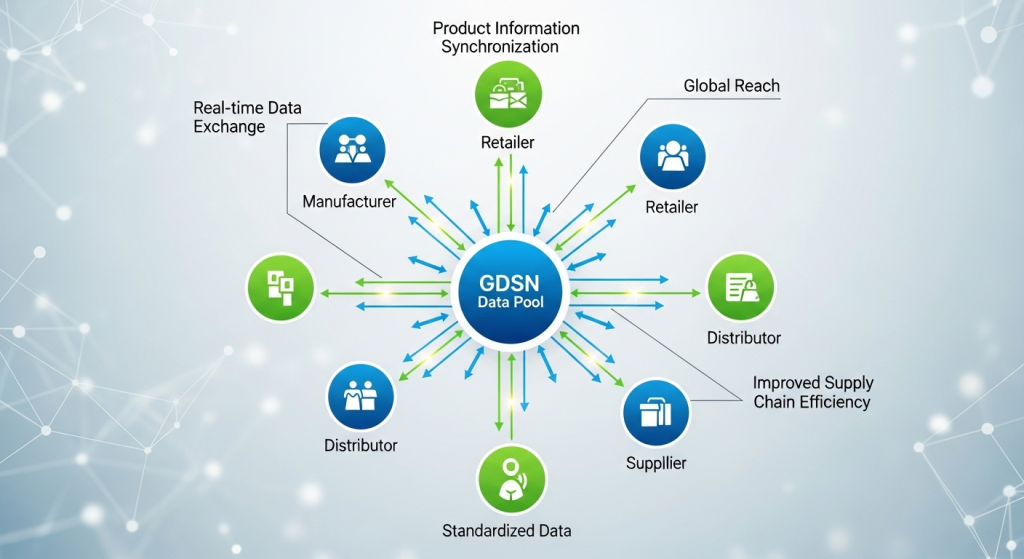
Major global retailers have made GDSN compliance a non-negotiable requirement for supplier partnerships. , one of the largest multinational retailers in the world, uses the GS1 Global Data Synchronization Network extensively. Carrefour. Migros Supermarkets, renowned for adopting state-of-the-art services, has already integrated the system into its operations.
Beyond these European leaders, North American retailers, including Kroger, Lowe’s, and Amazon, all operate on the GDSN. Government programs have also adopted these standards. USDA Foods vendors face mandatory GDSN requirements, with specific compliance timelines for contract awards. The USDA FNS Food Distribution uses a dedicated Global Location Number (0861583000319) for data synchronization.
The network spans globally, connecting brands, retailers, and distributors who rely on this infrastructure to exchange product data securely and efficiently across more than 50 data pools. This widespread adoption creates a clear market expectation: suppliers operating outside GS1 GDSN standards risk exclusion from major distribution channels.
Commport GDSN Datapool Solution is GS1 Certified and trusted by Over 3000+ Brands. Get Started Today!
Avoiding Compliance Penalties and Delays
Non-compliance carries severe financial and operational consequences. Businesses that fail to adhere to GDSN standards risk losing trading partners, as retailers may switch to suppliers who maintain GDSN-compliant operations. This shift directly impacts revenue and market share.
The operational fallout extends beyond lost partnerships. Non-compliance results in errors in product data, which cascade into incorrect orders, delayed shipments, and lost sales. Retailers expect high accuracy, but systems that deliver outdated or incomplete item records cause rejections, cleanups, and delays. Brands face endless rejection cycles, duplicate submissions, and costly errors that erode trust and delay speed-to-market.
Regulatory exposure adds another layer of risk. Non-compliance can result in regulatory fines and legal action, which can prove costly and damaging to a business’s reputation. These penalties compound the direct revenue losses from missed sales opportunities.
In addition to financial penalties, operational inefficiencies multiply without standardized data exchange. Companies often conduct manual, time-consuming data correction measures when proper standards aren’t followed. These reactive fixes consume administrative resources that could drive growth initiatives instead.
Gaining Access to More Distribution Channels
GDSN compliance opens doors that remain closed to non-compliant suppliers. The GS1 GDSN certified data pool infrastructure creates a single point of connectivity, allowing suppliers to reach multiple retailers simultaneously. Trading partners working within the network benefit from one set of standards and seamless information exchange across different data pools.
Market expansion becomes significantly simpler with GDSN compliance. Suppliers can connect with retailers worldwide through the network’s interoperable architecture. A brand joining a single data pool can synchronize its data with trading partners in different pools, as the network enables seamless information sharing across the ecosystem.
Product traceability and supply chain visibility improve with proper GDSN standards implementation, making suppliers more attractive to retailers focused on operational excellence. This capability helps manage the flow of goods, optimize shipping and receiving processes, and provide transparency into product movement throughout the distribution network.
Accordingly, suppliers who maintain GDSN compliance position themselves as preferred partners. They demonstrate commitment to data quality, operational efficiency, and industry best practices. This reputation advantage becomes increasingly valuable as more retailers mandate these standards and competition for shelf space intensifies.
By adhering to GS1 GDSN standards, businesses ensure their product data remains accurate, up-to-date, and consistent across all trading partners. This consistency leads to increased revenue, improved customer satisfaction, and a stronger market position.
Reason 4: Reduce Operational Costs and Save Time
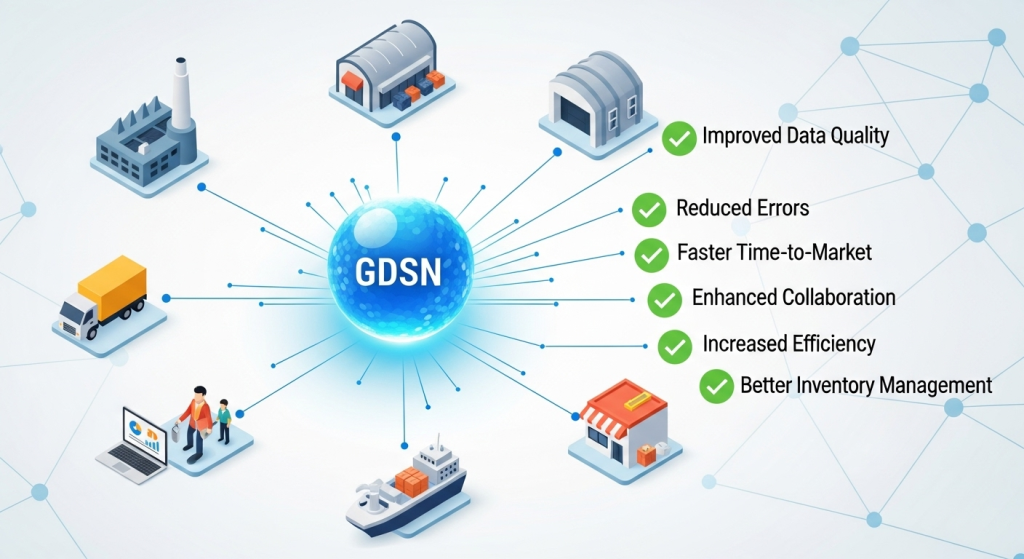
Financial performance improves when GS1 GDSN standards replace inefficient manual workflows. Real companies report measurable returns that go straight to the bottom line, making the business case for GDSN adoption clear and compelling.
Cutting Down Administrative Resources
GS1 GDSN eliminates labor-intensive activities that consume valuable staff time. One manufacturer condensed a five-to-six-day spreadsheet-based process for aligning product information with distributors into 48 hours, representing a 64 percent improvement. This time compression freed teams to focus on revenue-generating activities rather than administrative drudgery.
The system decreases data management time and costs by eliminating manual processes and reducing errors. Another manufacturer shaved five minutes off the order inspection process, yielding annual savings of 59,000 hours, or 2 percent of total customer service time for the year. When we multiply these minutes across thousands of transactions, the savings become substantial.
Administrative cost avoidance represents another significant benefit. One manufacturer avoided the cost of hiring additional full-time employees to process new items, saving 33 percent in administrative costs. Given that personnel expenses constitute one of the largest operational expenditures, these savings directly impact profitability. Wegmans reduced its time spent reconciling items not scanning correctly at the back door to 30 minutes per store per week, a productivity impact of 25 percent. In addition, improvements in the direct store delivery receiving process through spot checking of physical goods at receipt projected a reduction in DSD receiving time by 17 percent.
Fewer Returns Due to Incorrect Product Information
Incorrect product data triggers a cascade of costly corrections. BD achieved a 73 percent reduction in ordering discrepancies by implementing synchronized data systems. These discrepancies typically result in wrong shipments, customer complaints, and product returns that erode margins.
Implementing track and trace solutions can reduce inventory errors by up to 30%. Precise inventory management enabled by accurate and up-to-date product data allows companies to better predict demand and reduce excess stock. This optimization minimizes the risk of spoilage and waste, leading to considerable cost savings.
Wegmans reduced its reconciliation of invoice and coupon discrepancies by 5 percent due to improved item data information. Fewer item data errors means less time reconciling discrepancies. Furthermore, Wegmans reduced its time spent on out-of-period adjustments by 14 percent, allowing the accounting department to spend more time on value-added activities. Accurate item data improves order and invoice accuracy, which consequently allows expedited delivery of products to customers and less manual investigation and rework of problem orders.
Lower Supply Chain Management Costs
Transportation expenses drop significantly with accurate weights and measures. One manufacturer’s data audit revealed that each case in an entire product line had been overweight for years, and this discovery now allows the manufacturer to accommodate up to two additional pallets of product per truck on inter-company transfers, resulting in a USD 2.20 million annual savings in transportation costs for this product line alone. Transportation savings were the single greatest benefit accruing to GDS participants, with manufacturers capturing 2 to 8 percent in annual inbound and outbound transportation cost savings.
McKinsey reports that companies with advanced supply chain transparency can reduce supply chain costs by up to 50%. This dramatic reduction stems from optimized transportation costs, minimized excess inventory, and reduced operational expenses throughout the supply chain. Wegmans estimated productivity savings of USD 1.00 million in its warehouse operations through automation and the use of the GDSN.
BD achieved a 30% reduction in outstanding days payable, improving cash flow and working capital management. Accurate and synchronized data shortens product lead times, reducing storage times and the risk of expired products. As a result of these improvements, companies cut costs and reduce their ecological footprint.
Reason 5: Enhance Trading Partner Relationships
Strong supplier-retailer partnerships depend on confidence in shared information. When suppliers and trading partners know they’re viewing the same accurate, up-to-date data, business transactions become smoother, quicker, and less expensive. The GS1 GDSN network transforms this principle into operational reality through automated synchronization that builds trust at every touchpoint.
Building Trust Through Data Transparency
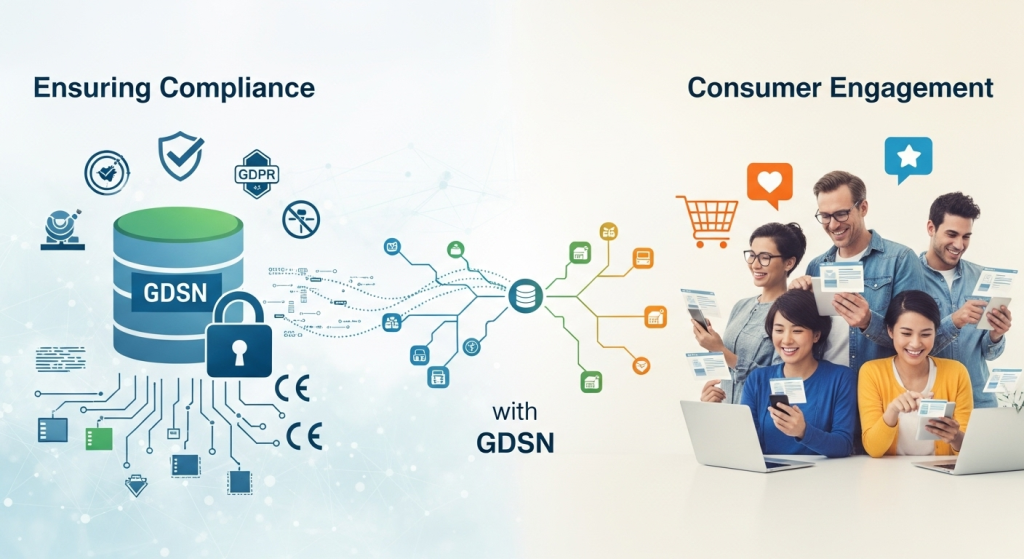
Consumer expectations for product transparency have reshaped supplier-retailer dynamics. Research shows that 94% of consumers demonstrate greater loyalty to brands offering complete transparency. This loyalty translates directly into financial performance, with 73% of consumers willing to pay premium prices for products providing detailed information about sourcing and production processes.
GDSN creates this transparency by ensuring trading partners have immediate access to the most current and complete information needed to exchange products on both local and global markets. Real-time data synchronization empowers organizations with complete end-to-end visibility, providing a clear view of all inventories. Transparency allows brands to identify procurement sources for consumers, enabling them to verify where their products originate.
Traceability has become an essential component of product content strategy, seeing that sustainability and ethical practices now factor significantly in purchase decisions. GDSN helps brands provide comprehensive data, so consumers know exactly how their purchases are sourced, giving them certainty that their shopping choices reflect their values. SmartLabel gathers GDSN data to provide full transparency for food and grocery products, offering shoppers a thorough understanding through a single source of product data.
Improved Communication Across the Supply Chain
The gs1 gdsn certified data pool infrastructure creates a universal language between retailers, distributors, and trading partners. Data is disbursed in real time, ensuring accuracy and consistency across every sales channel. When suppliers update product data, the changes become instant for all trading partners and all locations where consumers might purchase the item.
This synchronization drives unnecessary costs out of the supply chain. Trading partners experience enhanced reporting, order tracking, and planning capabilities. Simpler additions and changes replace cumbersome manual processes. Evidently, these improvements lead to fewer complaints and disputes between partners. Better accuracy of orders, shipments, and receiving becomes standard rather than exceptional.
Companies implementing the global data synchronization network experience significant improvements in operational metrics. Businesses that implemented GDSN reported a 25% reduction in data errors and a 30% increase in operational efficiency. Lower logistics and labor costs accompany increased sales. As a result, trading partners develop much greater confidence in the information sent to and received from one another.
Competitive Advantage in the Market
With accurate product content at their fingertips, trading partners can optimize their business processes and pass on reliable product information to consumers and patients. This capability positions GDSN-connected suppliers as preferred partners in competitive markets.
The network enables brand transparency to consumers and patients, creating differentiation that competitors without synchronized data cannot match. In a similar fashion, healthcare providers gain access to critical data about medical products, reducing the risk of errors in patient care. Retailers benefit from getting products on shelves faster, reducing logistics costs, and enhancing customer relationships. These efficiencies provide businesses with a competitive edge as products reach the market more quickly with fewer discrepancies.
Reason 6: Ensure Accurate Logistics and Shipping Information
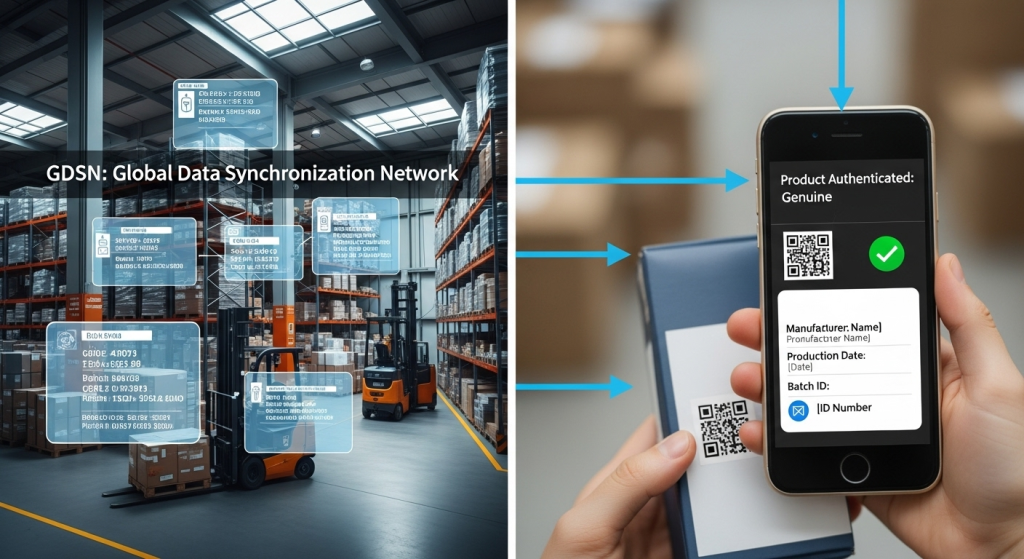
Logistics operations depend on precise physical specifications that gs1 gdsn standards deliver with mathematical accuracy. High-quality data provides consumers, patients, and trading partners with meaningful, reliable information on products they use, consume, or trade. This accuracy serves as an enabler for end-to-end supply chain performance.
Proper Packaging and Dimension Data
The GS1 Global Data Model defines packaging measurements that facilitate seamless communication of product specifications from consumer units to case levels and all intermediate packaging in between. GDSN data accuracy refers to the degree of data excellence measured for conformity to GS1 GDSN standards, GDSN validation rules, and GS1 Package Measurement Rules.
Standard tolerances define allowable variations between stated and measured physical product dimensions. Physical products identified by the same GTIN have inherent variability in gross weights and linear dimensions due to manufacturing variability, handling methods, environment, or other factors. Accurate and synchronized product dimensions enable truck and warehouse optimization, reduce reconciliations, increase productivity, improve speed to shelf, and enhance customer service.
Weight and Pallet Configuration Details
GS1 standards specify that a GTIN must have exactly one value for each of the following attributes: height, width, depth/length, and gross weight. Trading partners exchange pallet configuration data, including quantities per layer and layers per pallet, through synchronized systems. This information proves necessary because only one set of physical product dimensional attributes for a GTIN may be published.
Reducing Shipping Errors and Delays
Transport units require labels with an SSCC (Serial Shipping Container Code) for proper identification. A single barcode that doesn’t meet proper formatting rules can slow down receiving, cause shipment rejections, or lead to unexpected chargebacks. Common problems include inconsistent formatting, incorrect SSCC structure with misplaced characters or missing digits, non-compliant GS1-128 barcodes, and label placement errors. Accurate labeling prevents misrouted shipments, misplaced inventory, and incorrect replenishment.
List of GS1 Certified GDSN Datapool Providers
| Company Name | Data Pool Name | Established Connections | Website |
|---|---|---|---|
| Commport Communications International, Inc. | Commport Global Synchronization Datapool Service (CGS) v2.0 R1.1 | 18 | https://www.commport.com/commport-services/commport-gdsn/ |
| 1WorldSync GmbH | 1 WorldSync Data Sync Engine (DSE) | 43 | http://www.1worldsync.com/de/ |
| 1WorldSync, by Syndigo | Item Management (IM) | 47 | http://www.1worldsync.com |
| @GP | Datapool @GP | 24 | N/A |
| AGENA3000 | A3 PARANGON DATAPOOL | 41 | https://www.parangondatapool.com |
| BAYARD GmbH | b-synced | 39 | https://www.b-synced.io |
| Carrefour Group | CARryData v1.0 | 22 | https://www.carrefour.com |
| Comarch SA | Comarch EDI Master Data Management V1.0 | 13 | http://www.comarch.com |
| EDI COM | EDI COM DATA DP (EDICOMDATA) | 16 | https://www.edicomgroup.com |
| EQUADIS SA | EQUADIS V5.0 | 31 | https://www.equadis.com |
| Eway | Syncway 2.0 | 13 | http://www.syncway.com |
| GS1 Association Greece | HellaSync | 32 | http://www.gs1greece.org |
| GS1 Australia | National Product Catalogue (NPC) | 41 | http://www.gs1au.org |
| GS1 Austria | GS1 Sync Healthcare AT | 0 | https://www.gs1.at/gs1-sync |
| GS1 Belgilux | My Product Manager | 43 | http://www.gs1belu.org |
| GS1 Canada | GS1 Canada GDSN | 44 | http://www.gs1ca.org |
| GS1 China | ANCCNET version 3.0 | 26 | http://b2b.gds.org.cn |
| GS1 Czech Republic | SYNFONY | 33 | https://www.synfony.cz |
| GS1 Denmark | GS1 Trade Sync | 33 | https://www.gs1tradesync.dk |
| GS1 Estonia | GS1 Estonia – DataSync | 19 | https://www.gs1.ee |
| GS1 Finland | Synkka | 35 | https://www.gs1.fi |
| GS1 Hong Kong, China | GS1 HK Data Pool v7.0 | 25 | http://www.gs1hk.org |
| GS1 Hungary | GS1HUb | 4 | http://gs1hu.org/ |
| GS1 Iceland | Gagnalaug | 23 | https://www.gs1.is/thjonustur/gs1-gagnalaug |
| GS1 Italy | Allineo | 40 | https://servizi.gs1it.org/servizi/allineo/ |
| GS1 Mexico | Syncfonia | 39 | https://www.syncfonia.com |
| GS1 Netherlands | GS1 Data Source | 43 | https://www.gs1.nl |
| GS1 Portugal | SYNC PT | 31 | http://www.gs1pt.org |
| GS1 Slovakia | Synfony | 21 | https://www.synfony.sk |
| GS1 Spain | AECOC DATA | 41 | http://www.gs1es.org |
| GS1 Sweden | Validoo Platform | 29 | http://www.validoo.se |
| GS1 Switzerland | GS1 Switzerland – firstbase | 42 | https://www.firstbase.ch |
| GS1 Türkiye | TOBBsenkron v1.0 | 15 | http://www.gs1tr.org |
| GS1 UK | TrueSource | 21 | http://www.gs1uk.org |
| iTradeNetwork, Inc. | ITN_GDS v2.0 | 22 | http://www.itradenetwork.com |
| Logyca | LOGYCA/COLABORA | 4 | http://www.logycacolabora.com |
| Markant Industriewaren-und Vermittlungs AG | Markant GDSN | 38 | https://www.markant.com/… |
| NielsenIQ | Global Product Exchange (GPE) | 29 | http://www.brandbank.com |
| Salsify | Alkemics Platform | 13 | https://www.salsify.com/ |
| Salsify | Salsify Data Pool | 31 | https://www.salsify.com |
| Syndigo, LLC | Syndigo Data Pool | 39 | https://www.syndigo.com |
| Systrion AG | prootec | 39 | https://www.systrion.com/prootec.html |
| The Data Council + RIVIR | The RIVIR | 34 | https://www.GORIVIR.com |
| Viagenie | Global Data Gateway | 31 | http://viagenie.ca/gdsn |
| TOTALS | 44 Data Pools Listed | 1,208 | — |
Conclusion
The GS1 GDSN network delivers measurable returns across accuracy, efficiency, and trading partner relationships.
As a matter of fact, suppliers who embrace this standardized approach position themselves for sustainable growth while those who resist risk losing market access and competitive advantage.
The evidence speaks clearly: reduced errors, faster launches, lower costs, and stronger partnerships all flow from synchronized product data. Commport GDSN Datapool Solution is GS1 Certified Datapool Trusted by Over 3000+ Brands and offers a proven path to start today.
Your choice to join the network represents more than technical compliance; consequently, it becomes a strategic investment that pays dividends in the long run through improved operations and expanded market opportunities.
Commport GDSN Datapool - #1 GDSN Datapool in North America
Download: GDSN Buyers Guide
Empower your business with global data synchronization; download our GDSN Buyer's Guide today and take the first step towards streamlined, accurate, and compliant product data management.
Frequently Asked Questions
GDSN (Global Data Synchronization Network) is a data-sharing protocol that connects trading partners through interoperable data pools. It enables companies to share and continuously update product master data, ensuring accurate and consistent product details across the supply chain. This system allows suppliers to maintain up-to-date information for inventory management, order fulfillment, and supply chain efficiency.
GDSN significantly reduces data errors by eliminating manual data entry and providing real-time validation. The network uses standardized formats for all product information, ensuring consistency across trading partners. Automated validation catches errors before they go live, and continuous synchronization keeps everyone working from the same authoritative source, preventing the costly mistakes that typically result from manual processes.
GS1 standards create a common language for product identification and data exchange across the global supply chain. They enable suppliers to reduce operational costs, accelerate product launches, and meet major retailer requirements. The standardized approach streamlines communication, minimizes errors, and provides access to more distribution channels while building stronger trading partner relationships through data transparency.
Major global retailers including Kroger, Lowe’s, Amazon, Carrefour, and Migros Supermarkets require GDSN compliance. Government programs like USDA Foods also mandate GDSN requirements for vendors. This widespread adoption across more than 50 data pools globally makes GDSN compliance essential for suppliers seeking to maintain and expand their retail partnerships.
GDSN reduces operational costs by eliminating time-consuming manual processes and administrative tasks. Suppliers experience fewer product returns due to incorrect information, optimized transportation costs through accurate weight and dimension data, and reduced inventory errors. Companies report significant savings in labor hours, administrative expenses, and supply chain management costs, with some achieving up to 50% reduction in overall supply chain costs.