


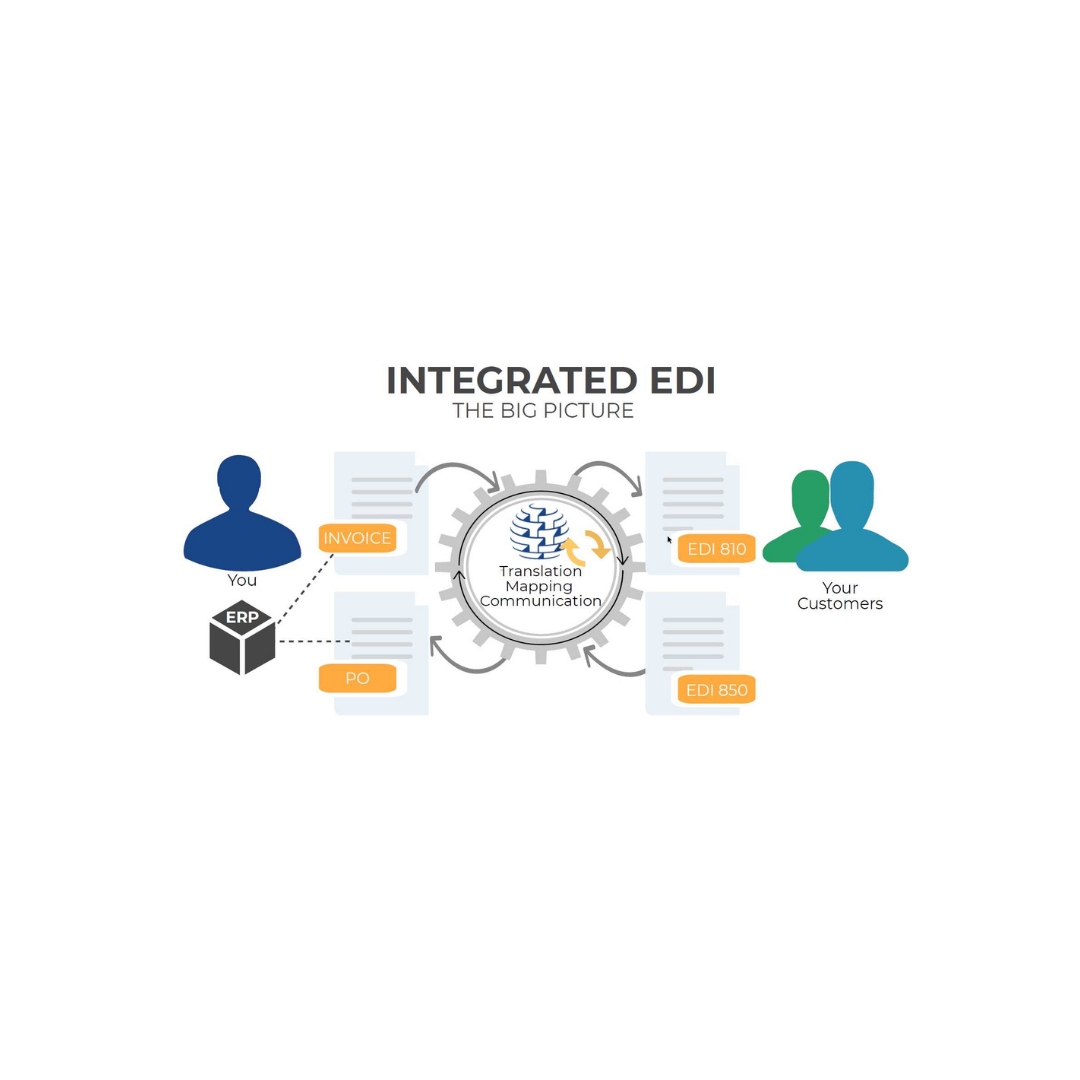

Introduction to Enterprise EDI Solution
Manual data entry and outdated systems can increase operational expenses by 20-30%, plus an additional 20% in chargebacks due to processing errors.
That’s why an enterprise EDI solution has become essential for organizations managing complex B2B transactions across multiple trading partners.
Our enterprise-grade Integrated EDI Solution automates workflows, reducing transaction costs by 35% and processing errors by 30% through seamless system-to-system communication.
In this blog, we’ll show you how Commport’s enterprise EDI solution simplifies multi-partner connections, streamlines ERP integration, and scales with your business growth.
Key Takeaways
- Centralized partner management eliminates integration chaos – Connect all trading partners through one platform instead of managing hundreds of point-to-point connections
- Automated workflows reduce processing costs by 35% – Intelligent document routing, validation, and error detection minimize manual intervention and processing errors by 30%
- Direct ERP connectivity requires zero custom coding – Pre-built integrations for major platforms like NetSuite, SAP, and Microsoft Dynamics eliminate months of development work
- Cloud-based architecture scales automatically – Handle transaction volume spikes up to 500% without infrastructure changes or capacity planning
- Partner onboarding drops from months to hours – Automated processes and self-service portals reduce traditional 2-3 month onboarding timelines to same-day deployment
What is Enterprise EDI and Why B2B Integrations are Complex
B2B integration presents obstacles that most organizations underestimate until they’re deep into implementation. In fact, 75% of B2B companies struggle with system integration challenges, and 60% report data inconsistencies due to disconnected systems. These aren’t minor hiccups. They represent fundamental barriers to efficient operations.
The first challenge centers on data format incompatibility. Companies use everything from EDI and JSON to XML and proprietary formats. When one supplier sends purchase orders in X12 format while another uses EDIFACT, and your internal systems expect JSON, you’re forced to build custom translators for each connection. This creates technical debt that grows with every new partner relationship.
Managing multiple trading partners compounds this difficulty. Each partner brings different technological capabilities, communication preferences, and integration requirements. Security and compliance add another layer of complexity. You’re exchanging sensitive business information across networks, which means implementing encryption, access controls, and audit trails while meeting regulations like GDPR and industry-specific standards.
Scalability issues emerge as operations expand. Legacy integration solutions struggle to handle increasing data volumes and transaction counts. What worked for 50 partners breaks down at 200. Consequently, businesses find themselves rebuilding infrastructure just to accommodate growth.
The Role of Enterprise EDI Solutions
Enterprise EDI addresses these challenges through standardization and automation. EDI software establishes a common language for system-to-system communication, eliminating the need for manual data translation between different formats. Instead of building point-to-point connections for each partner, an integrated EDI solution creates a centralized hub where all partners connect once.
The technology handles data transformation automatically. When a trading partner sends an invoice in their preferred format, the EDI solution translates it into your ERP system’s native format without human intervention. This removes the manual data entry that causes errors and delays.
Security becomes manageable through built-in protocols. Enterprise EDI solutions include encryption, secure communication channels, and compliance frameworks designed for regulated industries. You’re not building security measures from scratch for each integration.
How Complexity Scales With Business Growth
Growth doesn’t just increase volume. It multiplies complexity in ways that catch businesses off guard. A recent survey across one of our partner ecosystems revealed that 52% of total project effort goes into integrations rather than frontend features. That percentage tells you where the real work happens.
As you add partners, markets, and systems, connections multiply exponentially. One hundred partners with direct integrations means managing hundreds of individual connections, each with its own mapping rules, error handling, and monitoring requirements. Given that most enterprises exchange data with suppliers and customers with more than 250 partners, the operational burden becomes unsustainable without proper infrastructure.
New industries bring new protocols layered on top of existing ones. You can’t simply replace old standards. Manufacturing partners might require AS2, while retail customers expect API-based integrations, and logistics providers use SFTP. Your integration layer must support all of them simultaneously.
The challenge shifts from moving data to coordinating workflows across a complex partner ecosystem. Customer-specific pricing logic, role-based permissions, compliance requirements, and multi-ERP environments are standard requirements now. Without centralized execution at the integration layer, organizations rely on manual intervention to keep processes running, which doesn’t scale.
How Commport's Enterprise EDI Solution Handles Multi-Partner Connections
Managing hundreds of trading partners through traditional point-to-point connections creates operational chaos. Commport’s enterprise EDI takes a different approach by centralizing all partner interactions through a single platform architecture.
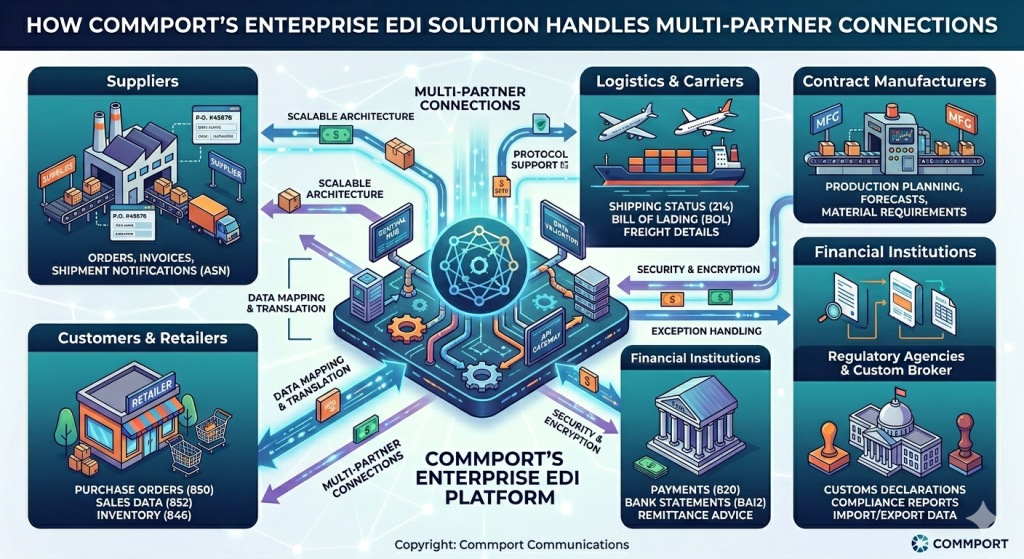
1. Centralized Partner Management
We consolidate every trading partner relationship into one unified interface. Instead of juggling separate configurations for each partner across disconnected systems, you get a single dashboard where you can view, modify, and monitor all partner connections. This consolidated approach provides immediate visibility into partner components, making it easier to find specific configurations, deploy changes, and track communication status across your entire network.
The platform maintains partner profiles that store communication preferences, document formats, and compliance requirements. When you need to update a partner’s settings or troubleshoot a connection issue, you’re working from one central location rather than searching through multiple systems. This eliminates the patchwork environment that legacy platforms create, where internal teams struggle with inconsistent results and prolonged timelines.
2. Automated Partner Onboarding Process
Traditional EDI onboarding takes 2-3 months per trading partner. We’ve seen companies report spending 210 hours per partner, with some taking three years to onboard a single major customer. Commport’s automated approach cuts this timeline dramatically.
The system reduces onboarding from weeks to days through pre-built connections and self-service workflows. Once a partner connects to the network, you don’t need to manually configure communication channels to every endpoint. The platform handles routing, formatting, and conversion to partner-preferred message formats based on predefined templates and profiles.
Self-service portals let business users initiate and track the onboarding process without waiting on IT resources. Automated testing validates document exchange before going live, catching format mismatches and data errors during setup rather than in production. This speeds up validation cycles and reduces the back-and-forth testing that extends traditional onboarding timelines.
3. Support For Multiple EDI Standards
Different industries and regions require different communication protocols. Commport’s integrated EDI solution supports X12, EDIFACT, TRADACOMS, Rosettanet, and EANCOM standards. What’s more, the platform handles partner communications through AS2, FTP/Secure FTP, VAN, and Web Services.
The system normalizes messages across these heterogeneous environments through multi-standard intelligence. When you’re exchanging data with automotive suppliers using VDA, retailers requiring X12, and European partners on EDIFACT, the platform translates between formats automatically. You can add your company’s profile for each standard, and the system ensures the right standard gets used for each partner.
This multi-standard capability proves particularly helpful with automation. The platform streamlines configuration, creation, transmission, and processing across different document formats. Sample implementation guides for EDIFACT, X12, Odette, VDA, SAP, and AIAG transactions support testing and partner setup.
4. Single Point of Connection For All Trading Partners
Instead of building separate integrations for each partner, Commport creates one connection point for your entire trading network. Partners connect to the platform once, and the system manages all routing, translation, and delivery from there.
This hub model eliminates the exponential growth of connections that happens with direct partner integrations. When a partner changes their EDI requirements or document formats, you update the mapping in one place rather than modifying individual connection logic. The platform maintains compliance requirements and keeps them current across your partner network, reducing the administrative burden of tracking different partner specifications.
Reusable templates and onboarding patterns mean partner growth doesn’t require infrastructure redesign each time. You establish patterns for how data moves and how processes respond, then apply those patterns across new partners while still accommodating partner-specific requirements where needed.
Simplifying ERP and System Integration with Commport's Enterprise EDI Solution
Connecting EDI software to ERP systems traditionally required months of custom development work and ongoing maintenance. Organizations struggled with compatibility issues between systems that weren’t designed to communicate. Commport’s integrated EDI solution changes this dynamic through native connectivity that eliminates the coding burden.
1. Direct ERP Connectivity Without Custom Coding
We provide native integrations that connect directly to your ERP system without requiring custom API development. Instead of hiring developers to write integration code, map data fields, and create transformation logic, our pre-built connections handle these functions automatically. The platform translates EDI documents into your ERP’s native format without manual intervention.
This approach removes the technical debt that comes with custom-built integrations. When your ERP vendor releases updates, you’re not stuck rewriting integration code to maintain compatibility. Our team owns, manages, and maintains the integrations, ensuring reliability and compliance from day one. Updates and patches get handled on our end, not yours.
Unlike middleware solutions that add another layer between systems, direct integration provides faster performance and eliminates the bottleneck of file uploads and downloads that prevent real-time visibility. The data flows directly from trading partners through EDI translation into your ERP in a governed, standardized way.
2. Pre-Built Integrations For Major Platforms
Our EDI software supports NetSuite, SAP, Microsoft Dynamics, Acumatica, QuickBooks, and Shopify through standardized onboarding processes. These aren’t generic connectors that require heavy customization. We’ve built integrations specific to each platform’s data structure and workflows, reducing implementation time and errors.
For organizations running multiple ERP systems across divisions or regions, we provide a single integration point that works across all your ERP solutions without duplicate configurations. You onboard trading partners once and apply connections across your entire ERP environment, whether you’re managing acquisitions with different legacy systems or supporting regional deployments with varied platforms.
3. Real-Time Data Synchronization Across Systems
Batch processing creates delays that slow operations. Our platform synchronizes data in real time, updating connected systems in milliseconds rather than waiting for scheduled batch jobs. When a purchase order arrives via EDI, it appears in your ERP instantly, reducing processing time and manual errors.
Bi-directional synchronization creates an automated, two-way flow between your ERP and trading partner systems. Inventory adjustments in your ERP are immediately propagated to EDI-based allocation calculations. Order statuses update across all connected platforms without manual data entry in Real time, Easy to scale, and Integrate With All Major ERP Systems. Commport’s Enterprise EDI Solution Handles Thousands of EDI Transactions.
4. Eliminating Data Silos in Enterprise Environments
Data silos emerge when departments adopt specialized applications independently, creating fragmented IT environments where information gets trapped in disconnected systems. When sales data sits in one platform, supply chain information in another, and financial insights in a third system, teams waste time reconciling information manually.
Organizations lose significant productivity every year due to poor interoperability between IT systems. Our integrated approach connects applications, platforms, and infrastructure into a unified ecosystem. Therefore, customer information scattered across CRM, finance, and support platforms becomes accessible through one synchronized data layer. Teams gain a complete view without switching between disconnected tools, and decision-makers access consistent data for faster, more informed choices.
Commport's Enterprise EDI Solution Helps Automate Workflow Management for Complex B2B Transactions
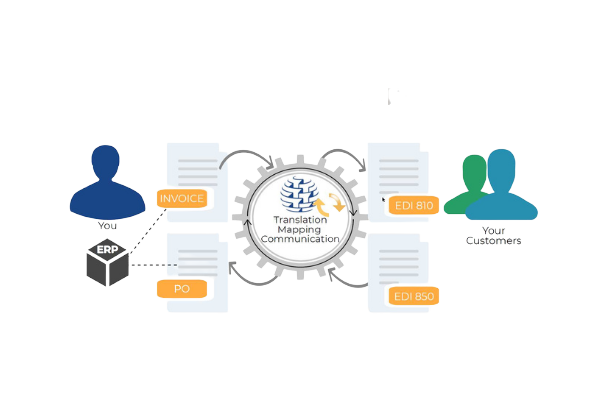
Automated workflows eliminate the bottlenecks that occur after partner connections and system integrations go live. Commport’s enterprise EDI orchestrates document flow through predefined rules that execute without human intervention.
1. Intelligent Document Routing and Validation
The platform uses rule-based processing and dynamic validation logic to handle incoming documents automatically. When an EDI document arrives, the system classifies it, precisely extracts its content, and transfers the data directly to target systems. This works even with multilingual or unstructured formats that traditionally required manual review.
Validation happens through confidence scoring. The system assigns each extracted data point a percentage where 100% means perfectly accurate. Outputs below defined thresholds get flagged for human review. For instance, an invoice with 95% confidence might auto-process, while one at 70% routes to a reviewer. As the system learns from corrections, exception volumes decline steadily.
2. Error Detection and Resolution Automation
Our integrated EDI solution identifies anomalies before they cause problems. The platform blocks duplicate invoices and fraudulent attempts before the payment process, reducing errors by 90%. Automated error detection catches invalid formats, missing fields, and failed communications immediately.
When authentication issues or mapping errors occur during partner onboarding, the system reveals where the error exists within a transaction. This pinpoints the concern area so teams resolve situations swiftly rather than troubleshooting blindly. Consequently, businesses save time and improve relationships by addressing issues before they escalate.
3. Transaction Monitoring and Alerts
Real-time monitoring provides instant visibility into transaction status through centralized dashboards. The platform tracks key performance indicators including transaction throughput, processing times, and error rates. Automated alerts notify relevant parties via email and SMS when transactions fail, acknowledgments go missing, or processing delays exceed thresholds.
Every extraction, transfer, and deviation gets documented with complete audit trails and reporting. This creates transparency for compliance requirements while giving teams the information needed for quick decision-making.
4. Reducing Manual Intervention in Complex Processes
Automation delivers measurable productivity gains. Organizations improve efficiency by 20% to 25% by automating manually performed tasks. Businesses implementing automation see up to a 30% productivity increase. Manual document processing consumes up to 20% of weekly employee time, time that automation reclaims for strategic work.
The entire purchase order workflow runs automatically through our EDI software. From receiving orders through inventory checks, confirmations, shipping notices, and invoice generation, the process completes in minutes rather than days without manual data entry.
Scalability and Flexibility of Commport's Enterprise EDI Solution
Growth pressure tests every integration platform differently. When transaction volumes surge 500% during peak periods, infrastructure either scales seamlessly or collapses under load.
1. Cloud-Based Architecture for Enterprise Growth
Our cloud-native EDI solution eliminates on-site deployment entirely. The platform expands automatically when order surges hit and contracts during quiet periods. You’re not paying for empty server capacity sitting idle between peak seasons.
Cloud providers distribute data across multiple regions. If one data center experiences downtime, EDI transactions continue processing without interruption. Consequently, you trade massive upfront hardware investments for predictable monthly operating expenses.
2. Handling High Transaction Volumes
The platform processes millions of messages without building backlogs. Message queues buffer incoming data, letting systems process transactions at sustainable speeds even when volumes spike unexpectedly. Auto-scaling spins up additional processing capacity during rushes, then scales down when demand normalizes.
3. Adding New Partners Without Infrastructure Changes
Integration costs stay flat as your network expands. Adding partner 51 takes the same effort as partner 50 on account of configuration-based onboarding rather than custom development. Commport’s Enterprise EDI Solution Handles Thousands of EDI Transactions in Real Time, Easy to Scale and Integrate With All Major ERP Systems. Get Started Today!
4. Customizable Workflows for Unique Business Needs
The platform supports AS2 and SFTP protocols while adapting to client-specific EDI formats. Organizations can accommodate business changes without complete system overhauls, maintaining operational flexibility as requirements evolve.
Conclusion
Complex B2B integrations don’t have to drain resources or limit growth. We’ve shown you how our enterprise EDI solution eliminates the traditional pain points through centralized partner management, automated workflows, and direct ERP connectivity.
Manual data entry errors and lengthy onboarding cycles become obsolete when you automate system-to-system communication.
Commport’s Enterprise EDI Solution Handles Thousands of EDI Transactions in Real Time, Easy to Scale and Integrate With All Major ERP Systems. Get Started Today!
The platform adapts to your unique requirements while supporting growth without infrastructure overhauls, especially as transaction volumes fluctuate and partner networks expand.
Your investment delivers measurable returns through reduced processing costs, faster partner onboarding, and improved operational efficiency across your entire trading ecosystem.
Commport's Integrated EDI Solution - Enterprise Grade EDI Solution
Need Help? Download: Commport's EDI Buyers Guide
Unlock the full potential of your supply chain with our comprehensive EDI Buyer's Guide — your first step towards seamless, efficient, and error-free transactions
Frequently Asked Questions
B2B EDI integration is a process that enables seamless electronic exchange of business documents like purchase orders, invoices, and shipping notices between trading partners. It works by connecting an EDI platform with internal systems such as ERP or supply chain management software, allowing automatic data exchange without manual intervention.
Traditional EDI typically handles large, recurring orders with standardized formats, while B2B e-commerce deals with more ad-hoc ordering scenarios and complex product management. B2B e-commerce platforms also provide interactive online communication with customers, going beyond just order processing to include real-time engagement and flexible ordering capabilities.
EDI payments minimize errors through machine-to-machine communication, eliminating manual data entry and the risk of typos or mismatched information. The automated system ensures payment information, invoices, and remittance data are exchanged accurately between businesses without relying on PDFs or email exchanges.
Many EDI providers today offer API-driven solutions that only complete about 30% of the work, leaving clients to handle mapping and custom translations themselves. A truly fully managed EDI provider handles everything from initial setup and partner onboarding to testing and ongoing support, which is difficult to find in the current market.
Traditional EDI onboarding can take 2-3 months per trading partner, with some companies reporting up to 210 hours of work per partner. In extreme cases, onboarding a single major customer can take up to three years using legacy systems and manual processes.