


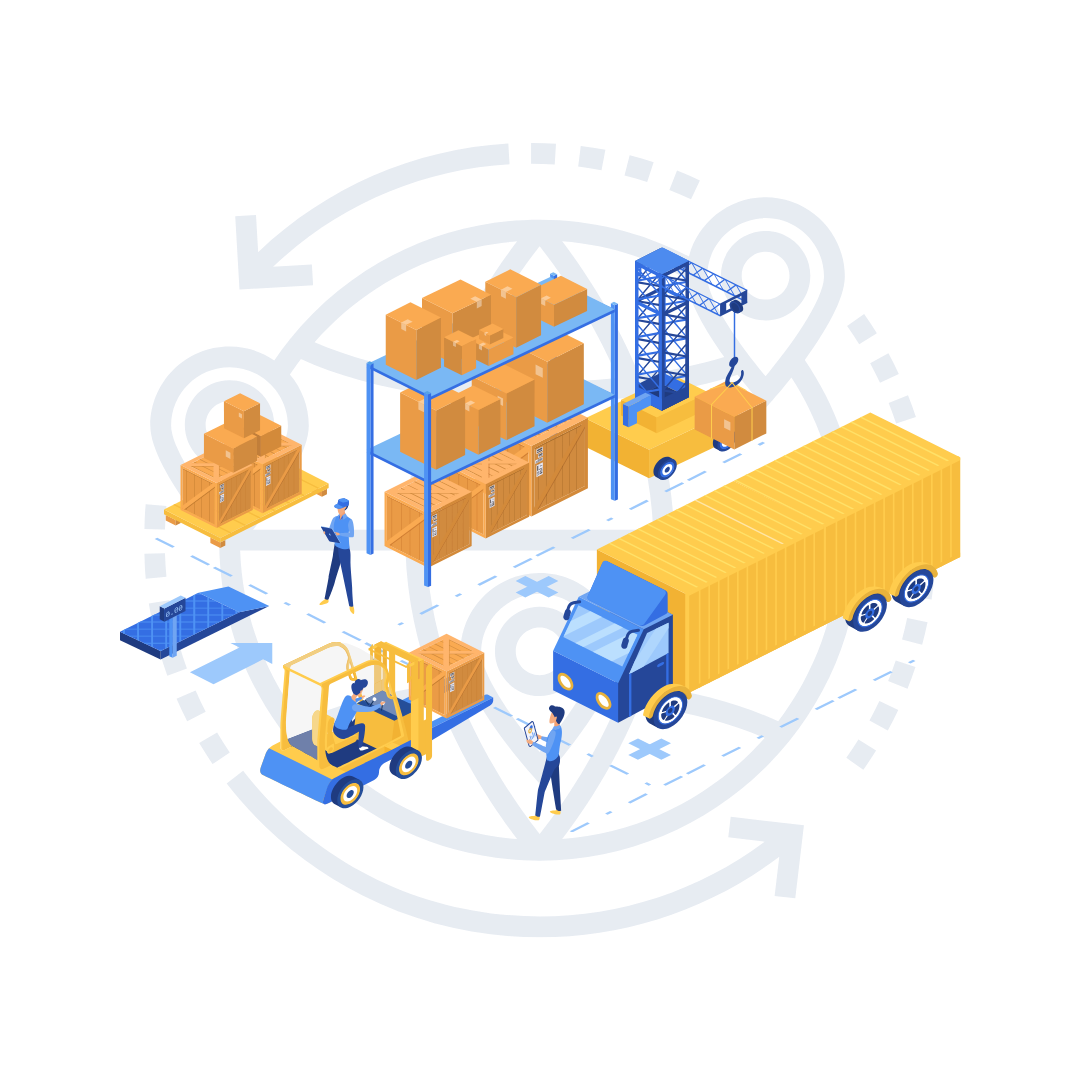

Introduction to Distribution Center
The journey of a product from manufacturer to consumer is facilitated by distribution centers that determine a company’s market reach, operational efficiency, and overall competitiveness.
As businesses strive to meet evolving customer demands and navigate complex supply chains, understanding and optimizing distribution centers has become more crucial than ever.
Distribution centers serve as the arteries of commerce, pumping products and services through a network of intermediaries to reach end consumers.
These pathways are not just about moving goods; they’re about creating value, building relationships, and strategically positioning a company in the marketplace.
From traditional brick-and-mortar stores to cutting-edge e-commerce platforms, the realm of distribution centers is diverse and dynamic.
Quick Answer
A distribution center (DC) is a logistics facility that receives finished goods from suppliers, stores them for a short time, then picks, packs, and ships them to fulfill retail or customer orders. The 15 main types of distribution centers are: retail, wholesale, e-commerce fulfillment, cross-docking, cold-chain (temperature-controlled), consolidation, break-bulk, regional, hub-and-spoke, reverse logistics, bulk-storage, specialized/multi-channel, micro-fulfillment, dark-store, and bonded distribution centers. Each type is defined by the goods it handles, its location, and whether it prioritizes storage or fast throughput.
Key Takeaways
- A DC is not a warehouse. A warehouse stores goods long-term; a distribution center prioritizes fast movement — receive, pick, pack, ship.
- 15 types, one job. Every DC type exists to get the right goods to the right place faster and at lower cost.
- Type follows function. Choose a DC type based on product characteristics, order profile, and delivery speed — not building size alone.
- EDI is the connective tissue. Transactions like EDI 940, 943, 944, 945, and 856 automate the data flow that keeps any DC type running.
- Real-time data wins. DCs that share live inventory and shipment data reduce stockouts, chargebacks, and manual errors.
What is a Distribution Center?
A distribution center is a logistics facility built to move goods, not just hold them.
Suppliers ship finished products in; staff receive, store, pick, pack, and ship those products out to retailers, other facilities, or directly to consumers.
The whole design serves the speed and accuracy of fulfillment.
That focus on flow is what separates a DC from a plain warehouse.
Retailers like Walmart and Target run large DC networks, so each store gets one consolidated shipment instead of dozens of separate supplier deliveries.
E-commerce companies run fulfillment centers so that an online order ships the same day.
Third-party logistics providers run DCs on behalf of many clients at once.
The building looks similar in each case, but the operating model changes with the type of distribution center in use.
Distribution Center vs. Warehouse
People use the two words interchangeably, but they handle different jobs. Here is the practical difference:
Factor | Warehouse | Distribution Center |
Primary job | Long-term storage | Fast pick, pack, and ship |
Inventory dwell time | Weeks to months | Hours to days |
Order fulfillment | Rare | Core daily activity |
Ships to | Wholesalers, manufacturers | Retail stores and end consumers |
Technology | Basic tracking | WMS, automation, EDI, real-time data |
For a deeper look at how data automation supports these facilities, see Commport’s guide to EDI in warehousing and the 8 common EDI transactions that automate warehouse operations.
15 Types of Distribution Centers
The right facility depends on what you sell, how customers order, and how fast you need to deliver. Here are the 15 types you will encounter across supply chain and logistics operations.
- Retail distribution center
- Wholesale distribution center
- E-commerce Fulfillment Center
- Cross-docking distribution center
- Cold-chain (temperature-controlled) distribution center
- Consolidation distribution center
- Break bulk distribution center
- Regional distribution center
- Hub and spoke distribution center
- Reverse logistics distribution center
- Bulk storage distribution center
- Specialized / Multi-channel center
- Micro fulfillment center
- Dark store
- Bonded distribution center
1. Retail Distribution Center
Supplies a retailer’s own store network. It holds a wide product range and replenishes shelves on a set schedule, so each store receives one consolidated truck instead of many small supplier deliveries. Best for chains with physical locations.
2. Wholesale Distribution Center
Supplies goods in bulk to other businesses, retailers, restaurants, or industrial buyers. It handles a narrower product range at high volume. Order sizes are large and predictable, which favors pallet-level storage and handling.
3. E-Commerce Fulfillment Center
Built for online orders. Staff pick, pack, and ship individual parcels straight to consumers, often the same day. These centers lean heavily on automation, barcode scanning, and tight WMS integration to hit fast shipping promises.
4. Cross-Docking Center
Moves inbound freight straight to outbound trucks with little or no storage. Goods arrive on one dock and leave on another within hours. This cuts holding costs and speeds delivery, which suits fast-moving and perishable goods.
5. Cold-Chain (Temperature-Controlled) Center
Stores and ships goods that need refrigeration or freezing, such as food, pharmaceuticals, and some chemicals. Temperature integrity is the whole point, so these facilities add monitoring, backup power, and strict handling rules.
6. Consolidation Center
Combines shipments from several suppliers into one larger, cheaper outbound load. It optimizes freight cost and reduces the number of deliveries a retailer receives. Common in retail and manufacturing supply chains.
7. Break-Bulk Center
Does the reverse of consolidation. It receives large bulk shipments and splits them into smaller loads for regional delivery. Useful when a manufacturer ships in volume but customers order in smaller quantities.
8. Regional Distribution Center
Serves a defined geographic area for a national or global company. Placing DCs close to demand shortens delivery times and cuts transport cost. A retailer might run one on each coast to reach all customers faster.
9. Hub-and-Spoke Center
Uses a central hub for inventory planning and bulk handling, feeding smaller “spoke” facilities that handle final-mile delivery to local markets. This model balances central efficiency with local speed.
10. Reverse Logistics Center
Handles returns, recycling, refurbishment, and disposal. As return rates climb, especially in e-commerce, a dedicated returns facility keeps the forward flow clean and recovers value from returned stock.
11. Bulk-Storage Distribution Center
Holds large-quantity, low-turnover goods such as building materials, grain, or industrial chemicals. Items are stored and moved by the pallet or container rather than the unit.
12. Specialized / Multi-Channel Center
Serves a specific industry or blends multiple sales channels (store, online, wholesale) from one facility. Multi-channel centers manage the added complexity of allocating one inventory pool across several order types.
13. Micro-Fulfillment Center (MFC)
A small, highly automated facility placed close to dense urban demand, usually under 10,000 square feet. It holds a few days of fast-moving stock and picks at the unit level to support same-day or two-hour delivery. Common in grocery, pharmacy, and direct-to-consumer retail.
14. Dark Store
A former retail store converted to fulfill online orders only. Customers do not shop inside; staff pick e-commerce and click-and-collect orders from aisles arranged for speed. It lets retailers reuse low-traffic locations for last-mile fulfillment without building new infrastructure.
15. Bonded Distribution Center
A customs-authorized facility where imported goods are stored without paying import duty until they leave the center. It helps international sellers manage cash flow and complex import pipelines, since duty is deferred or avoided on re-exported stock.
Many companies run a mix of these. A national retailer might operate regional DCs, a cross-dock for fast movers, a cold-chain facility for grocery, and a reverse logistics center for returns, all connected by EDI and VAN data exchange.
Distribution Center Types at a Glance
DC Type | Primary Goods | Storage vs. Speed | Best For |
Retail | Broad assortment | Balanced | Store chains |
Wholesale | Bulk, narrow range | Storage | B2B supply |
E-commerce fulfillment | Individual units | Speed | Online retail |
Cross-docking | Fast movers | Speed | Perishables, high turnover |
Cold-chain | Temp-sensitive | Storage + control | Food, pharma |
Consolidation | Multi-supplier | Speed | Freight savings |
Regional | Any | Balanced | National coverage |
Hub-and-spoke | Any | Balanced | Last-mile networks |
Reverse logistics | Returns | Processing | High-return sectors |
Bulk-storage | Large, low turnover | Storage | Materials, commodities |
Micro-fulfillment | Fast movers, units | Speed | Urban same-day delivery |
Dark store | Online orders | Speed | Click-and-collect, grocery |
Bonded | Imported goods | Storage + customs | International trade |
How a Distribution Center Works: The Core Workflow
No matter the type, most distribution centers run the same three core processes. EDI transactions automate the data behind each step.
1. Receiving
Trucks arrive, and staff unload, scan, and inspect incoming goods against the order. A supplier’s advance ship notice (EDI 856 ASN) tells the receiving team exactly what is coming and when, so docks and labor are ready before the truck arrives.
2. Storage and Put-Away
Received goods move to storage locations based on a strategy such as FIFO or FMR (fast-mover-forward). For third-party operations, a warehouse stock transfer receipt (EDI 944) confirms exactly what was received back to the inventory owner, flagging any short or damaged stock. Cross-docking skips this step entirely.
3. Order Fulfillment
When an order arrives, staff pick, pack, and ship it. In a 3PL setting, the inventory owner sends a warehouse shipping order (EDI 940) to authorize the shipment, and the facility returns a warehouse shipping advice (EDI 945) once goods leave the dock. Live inventory positions flow back through EDI 846 inventory advice so trading partners always see current stock.
Why Distribution Center's Data Accuracy Matters
A distribution center only performs when its data is right. Miscounts, late shipment notices, and manual entry cause the problems that hurt margins most:
- Chargebacks from retailers when ASN or labeling data is wrong or late.
- Stockouts and overstock when inventory counts drift from physical reality.
- Slow fulfillment when orders arrive by email or fax instead of automated EDI.
- Lost returns value when reverse logistics data is not tracked.
Electronic Data Interchange removes the manual handoffs. When a retailer sends a purchase order (EDI 850), it can trigger a cascade of automated actions across the DC, no phone calls, no re-keying, no transcription errors. That is why roughly 94% of 3PL providers now offer EDI services. Commport connects distribution centers to their trading partners through 3PL B2B integration solutions and direct ERP, WMS, and TMS integrations.
Components of Distribution Centers
Distribution centers are complex systems composed of various interconnected elements. Understanding these components is crucial for effectively managing and optimizing the distribution process. Let’s explore the key components that make up a typical distribution center:
- Manufacturers
- Wholesalers
- Retailers
- Agents and Brokers
- Logistics Providers
- Technology Platforms
- Consumers
- Financial Institutions
Manufacturers
Manufacturers are the starting point of the distribution center. They are responsible for:
- Producing goods or services
- Determining initial pricing
- Developing product specifications
- Establishing quality control measures
Manufacturers play a crucial role in setting the tone for the entire distribution process, influencing everything from product quality to brand perception.
Wholesalers
Wholesalers act as intermediaries between manufacturers and retailers. Their primary functions include:
- Purchasing large quantities of products from manufacturers
- Storing and managing inventory
- Breaking bulk shipments into smaller quantities for retailers
- Providing credit to retailers
Wholesalers add value by:
- Reducing distribution costs for manufacturers
- Offering a wide range of products to retailers
- Providing market information to both manufacturers and retailers
Retailers
Retailers are the final link in the distribution chain before products reach consumers. They are responsible for:
- Selecting and purchasing products from wholesalers or manufacturers
- Displaying and marketing products to consumers
- Providing customer service and support
- Managing local inventory
Retailers play a crucial role in:
- Creating the final customer experience
- Gathering consumer feedback
- Influencing purchasing decisions through merchandising and promotions
Agents and Brokers
Agents and brokers facilitate transactions between different parties in the distribution center. They typically:
- Represent manufacturers or wholesalers
- Negotiate sales and contracts
- Provide market intelligence and expertise
- Do not take ownership of the products they represent
These intermediaries are particularly valuable in:
- Specialized or niche markets
- International trade
- Industries with complex regulatory requirements
Logistics Providers
Logistics providers ensure the smooth movement of goods through the distribution channel. Their services include:
- Transportation (air, sea, road, rail)
- Warehousing and storage
- Inventory management
- Order fulfillment
- Customs clearance for international shipments
Effective logistics management is crucial for:
- Reducing transit times
- Minimizing shipping costs
- Ensuring product integrity during transport
Technology Platforms
In the digital age, technology platforms have become integral components of distribution centers. These include:
- E-commerce platforms
- Enterprise Resource Planning (ERP) systems
- Warehouse Management Systems (WMS)
- Transportation Management Systems (TMS)
- Customer Relationship Management (CRM) software
These technologies enable:
- Real-time inventory tracking
- Automated order processing
- Data-driven decision making
- Enhanced communication across the channel
Consumers
While often considered the endpoint of the distribution channel, consumers play an active role in shaping distribution strategies. They influence the channel through:
- Purchasing behaviors and preferences
- Feedback and reviews
- Demand for omnichannel experiences
- Expectations for fast and convenient delivery
Understanding consumer needs and behaviors is crucial for optimizing distribution centers and enhancing customer satisfaction.
Financial Institutions
Financial institutions support the distribution center by providing:
- Credit and financing options for channel members
- Payment processing services
- Risk management solutions
- International trade financing
These services facilitate smoother transactions and help manage financial risks within the distribution network.
Factors Influencing Distribution Centers Choice
Let’s explore the key considerations that businesses must weigh when choosing their distribution centers:
- Product Characteristics
- Target Market
- Company Resources and Capabilities
- Competitive Landscape
- Legal and Regulatory Environment
- Cost Considerations
- Control and Flexibility
- Technology and Innovation
- Customer Service Requirements
- Growth Strategy
Product Characteristics
The nature of the product itself plays a pivotal role in determining the most suitable distribution center:
- Perishability: Products with short shelf lives (e.g., fresh produce) require fast, direct channels.
- Complexity: Technical or specialized products may need channels with expert sales support.
- Customization: Highly customized products often benefit from direct channels for better control.
- Value and Size: High-value or bulky items may require specialized handling and distribution.
Target Market
Understanding the target audience is crucial for channel selection:
- Geographic Dispersion: Widely dispersed customers may necessitate multiple channel types.
- Buying Habits: Consider where and how your target market prefers to shop.
- Market Size: Larger markets might require more extensive distribution networks.
- Customer Segments: Different segments may require different channel approaches.
Company Resources and Capabilities
A company’s internal resources and capabilities significantly influence channel choice:
- Financial Resources: Direct channels often require more upfront investment.
- Managerial Expertise: Consider the company’s ability to manage complex distribution networks.
- Technological Capabilities: Advanced tech infrastructure can support more sophisticated channel strategies.
- Production Capacity: Ensure the chosen channel aligns with production capabilities.
Competitive Landscape
The competitive environment plays a crucial role in channel decisions:
- Competitor Strategies: Analyze how competitors distribute their products.
- Market Positioning: Channel choice should align with the brand’s market position.
- Differentiation: Unique distribution strategies can serve as a competitive advantage.
Legal and Regulatory Environment
Regulatory factors can significantly impact distribution center choices:
- Industry Regulations: Some industries have specific distribution requirements.
- International Trade Laws: For global distribution, consider trade agreements and restrictions.
- Environmental Regulations: Sustainability concerns may influence channel decisions.
Cost Considerations
The economics of different channel options are crucial:
- Distribution Costs: Compare the costs of various channel options.
- Economies of Scale: Larger volumes may make certain channels more cost-effective.
- Value-Added Services: Consider the cost-benefit of additional services provided by channel partners.
Control and Flexibility
The desired level of control over the distribution process is an important factor:
- Brand Image Control: Direct channels offer more control over brand presentation.
- Pricing Control: Longer channels may reduce control over final pricing.
- Flexibility to Market Changes: Some channels offer more agility in responding to market shifts.
Technology and Innovation
The role of technology in distribution is increasingly important:
- E-commerce Capabilities: Consider the potential for online sales channels.
- Data Analytics: Advanced analytics can inform channel optimization.
- Emerging Technologies: New technologies like blockchain or AI may offer innovative channel options.
Customer Service Requirements
The level of customer service needed can influence channel choice:
- Pre-sale Support: Products requiring demonstrations may need specialized channels.
- After-sales Service: Consider warranty and repair service requirements.
- Customer Feedback: Some channels offer better opportunities for customer interaction.
Growth Strategy
Long-term business goals should align with distribution center choices:
- Market Expansion Plans: Choose channels that support future growth ambitions.
- Product Line Extensions: Ensure channels can accommodate new product categories.
- International Expansion: Consider channels with global capabilities if expansion is planned.
Strategies for Effective Distribution Centers Management
Managing distribution centers effectively is crucial for ensuring that products reach consumers efficiently and profitably. A well-executed distribution strategy can provide a significant competitive advantage. Here are key strategies for effective distribution center management:
- Developing Clear Channel Objectives
- Choose the Right Channel Partners
- Establish Strong Relationships
- Implement Channel Performance Metrics
- Optimize Channel Conflict Management
- Leverage Technology for Channel Integration
- Adapt to Market Changes
- Focus on Customer Experience
- Implement Effective Inventory Management
- Providing Ongoing Training and Support
- Develop a Robust Channel Pricing Strategy
- Conduct Regular Channel Audits
Develop Clear Channel Objectives
Start by establishing clear goals for your distribution centers:
- Define specific, measurable objectives (e.g., market share, sales targets, geographic coverage)
- Align channel objectives with the overall business strategy
- Communicate these objectives clearly to all channel partners
Choose the Right Channel Partners
Selecting appropriate partners is crucial for channel success:
- Evaluate potential partners based on their market reach, financial stability, and reputation
- Ensure partners have the necessary expertise and resources to represent your products effectively
- Consider cultural fit and alignment with your company’s values and goals
Establish Strong Relationships
Building and maintaining strong relationships with channel partners is essential:
- Develop clear communication channels and regular touchpoints
- Provide comprehensive training and support to partners
- Offer incentives and recognition programs to motivate channel partners
- Foster a collaborative environment that encourages feedback and idea sharing
Implement Channel Performance Metrics
Regularly assess channel performance to ensure objectives are being met:
- Develop key performance indicators (KPIs) specific to each channel
- Monitor metrics such as sales volume, market penetration, customer satisfaction, and inventory turnover
- Use data analytics to gain insights into channel performance and identify areas for improvement
Optimize Channel Conflict Management
Address and minimize conflicts within the distribution network:
- Clearly define roles and territories for each channel partner
- Implement fair pricing and incentive structures across channels
- Develop strategies to manage competition between direct and indirect channels
- Use contracts and agreements to clarify expectations and resolve disputes
Leverage Technology for Channel Integration
Utilize technology to enhance channel efficiency and coordination:
- Implement integrated systems for inventory management, order processing, and customer data
- Use Customer Relationship Management (CRM) tools to manage partner relationships
- Leverage e-commerce platforms to support omnichannel distribution strategies
- Employ data analytics for demand forecasting and inventory optimization
Adapt to Market Changes
Stay flexible and responsive to evolving market conditions:
- Regularly review and adjust channel strategies based on market trends and consumer behavior
- Be prepared to add new channels or modify existing ones as needed
- Stay informed about technological advancements that could impact distribution methods
Focus on Customer Experience
Ensure that your distribution strategy enhances the overall customer experience:
- Maintain consistent brand messaging and product quality across all channels
- Implement seamless omnichannel experiences for customers
- Gather and act on customer feedback to improve channel performance
- Ensure efficient order fulfillment and after-sales support across all channels
Implement Effective Inventory Management
Optimize inventory levels across the distribution network:
- Use demand forecasting tools to predict inventory needs
- Implement just-in-time inventory practices where appropriate
- Develop strategies for efficient inventory allocation across different channels
- Utilize real-time inventory tracking systems to prevent stockouts and overstocking
Provide Ongoing Training and Support
Continuously educate and support your channel partners:
- Offer regular training programs on product knowledge, sales techniques, and customer service
- Provide marketing and promotional support to help partners drive sales
- Offer technical support and troubleshooting assistance
- Share market insights and best practices to help partners succeed
Develop a Robust Channel Pricing Strategy
Create a pricing strategy that supports channel objectives:
- Ensure pricing is competitive while maintaining profitability
- Implement clear pricing policies to prevent channel conflict
- Consider different pricing strategies for different channels if appropriate
- Regularly review and adjust pricing based on market conditions and channel performance
Conduct Regular Channel Audits
Periodically assess the effectiveness of your distribution centers:
- Evaluate the performance and relevance of each channel
- Identify underperforming channels and develop improvement plans
- Assess the need for new channels or the elimination of ineffective ones
- Review channel costs and profitability regularly
The Role of Technology in Modern Distribution Centers
Technology has revolutionized the way distribution centers operate, offering new opportunities for efficiency, transparency, and customer engagement. In today’s digital age, leveraging technology is not just an option but a necessity for businesses looking to stay competitive in their distribution strategies. Let’s explore the various ways technology is shaping modern distribution centers:
E-commerce Platforms
E-commerce has transformed distribution by enabling direct-to-consumer sales:
- Provides a global reach without physical store presence
- Offers 24/7 availability and convenience for customers
- Allows for personalized shopping experiences and product recommendations
- Facilitates easy price comparisons and product research for consumers
Supply Chain Management Software
Advanced software solutions streamline supply chain operations:
- Enables real-time tracking of inventory and shipments
- Facilitates better demand forecasting and inventory management
- Improves coordination between different channel partners
- Enhances visibility across the entire supply chain
Internet of Things (IoT) in Logistics
IoT devices are revolutionizing logistics and inventory management:
- RFID tags and sensors provide real-time tracking of goods
- Smart warehouses improve efficiency in storage and retrieval
- Connected vehicles optimize route planning and delivery schedules
- Environmental sensors ensure proper handling of sensitive products
Artificial Intelligence and Machine Learning
AI and ML are enhancing decision-making in distribution:
- Predictive analytics for demand forecasting and inventory optimization
- Chatbots and virtual assistants for customer service
- Automated order processing and fulfillment
- Personalized marketing and product recommendations
Blockchain Technology
Blockchain offers new possibilities for transparency and security:
- Enhances traceability in supply chains
- Improves the authentication of products, reducing counterfeits
- Facilitates smart contracts for more efficient transactions
- Increases trust and transparency among channel partners
Cloud Computing
Cloud-based solutions offer flexibility and scalability:
- Enables real-time data sharing across the distribution network
- Facilitates collaboration between different channel partners
- Provides scalable infrastructure for growing businesses
- Offers cost-effective solutions for data storage and processing
Mobile Technologies
Mobile devices and apps are transforming field operations:
- Enables on-the-go inventory management and order processing
- Facilitates real-time communication between field staff and central offices
- Supports mobile payments and digital signatures
- Enhances customer service through mobile-based support
Data Analytics and Business Intelligence
Advanced analytics tools provide valuable insights:
- Helps in identifying market trends and consumer preferences
- Enables data-driven decision-making in channel management
- Supports performance monitoring and optimization
- Facilitates more accurate demand forecasting and inventory planning
Augmented Reality (AR) and Virtual Reality (VR)
AR and VR technologies are creating new possibilities in distribution:
- Virtual product demonstrations and try-ons
- AR-assisted picking and packing in warehouses
- Virtual store experiences for online shoppers
- Training simulations for channel partners and employees
Robotic Process Automation (RPA)
RPA is streamlining repetitive tasks in distribution:
- Automates order processing and invoicing
- Enhances accuracy in inventory management
- Streamlines customer data management and reporting
- Reduces human error in routine operations
Omnichannel Integration Technologies
Technologies that support seamless omnichannel experiences:
- Unified commerce platforms for consistent customer experiences across channels
- Cross-channel inventory visibility and management
- Integrated customer data management across all touchpoints
- Technologies supporting buy-online, pick-up-in-store (BOPIS) and similar hybrid models
Last-Mile Delivery Innovations
Technology is transforming the final stage of product delivery:
- Route optimization software for efficient deliveries
- Drone and autonomous vehicle deliveries in some areas
- Real-time tracking and notifications for customers
- Smart lockers and secure drop-off points for flexible delivery options
The integration of these technologies into distribution channels offers numerous benefits:
- Increased Efficiency: Automation and optimization reduce costs and improve speed.
- Enhanced Visibility: Real-time tracking and data analytics provide better insights.
- Improved Customer Experience: Personalization and convenience drive customer satisfaction.
- Greater Flexibility: Cloud and mobile technologies enable adaptable distribution strategies.
- Data-Driven Decision Making: Advanced analytics support more informed strategic choices.
Conclusion
Distribution centers are more than just pathways for moving products; they are strategic assets that can make or break a business’s success in today’s competitive marketplace. The key to successful distribution lies in selecting and managing channels that align with your business objectives, product characteristics, and target market needs. As technology continues to evolve, businesses must embrace digital transformation in their distribution strategies while maintaining strong relationships with channel partners. The future of distribution centers will likely see further integration of advanced technologies, making it crucial for businesses to stay adaptable and forward-thinking in their approach to distribution management.
Whether you’re a startup choosing your first distribution center or an established business optimizing your existing network, understanding and implementing these principles will help create a robust and efficient distribution strategy that drives growth and customer satisfaction. Remember, the most successful distribution strategies are those that remain flexible enough to evolve with changing market dynamics while staying true to core business objectives and customer needs.
Connect Any Distribution Center With Commport B2B Network Solutions
Frequently Asked Questions
The 15 main types are retail, wholesale, e-commerce fulfillment, cross-docking, cold-chain, consolidation, break-bulk, regional, hub-and-spoke, reverse logistics, bulk-storage, specialized multi-channel, micro-fulfillment, dark-store, and bonded centers. Each is defined by the goods it handles, its location, and whether it prioritizes storage or fast throughput.
A warehouse stores goods long-term, often for weeks or months, and rarely fulfills orders. A distribution center prioritizes speed: it receives, picks, packs, and ships goods within hours or days, usually straight to retail stores or consumers. DCs also rely more on automation, WMS, and EDI data exchange.
A cross-docking center moves inbound freight directly from a receiving dock to an outbound truck with little or no storage in between. Goods arrive and leave within hours, which lowers holding costs and speeds delivery. It works best for fast-moving, high-turnover, or perishable goods.
EDI automates the exchange of business documents between a distribution center and its trading partners. Transactions like the EDI 940 (shipping order), 943 and 944 (stock transfers), 945 (shipping advice), and 856 (ASN) replace phone calls and spreadsheets, reducing errors, speeding fulfillment, and preventing retailer chargebacks.
In a hub-and-spoke model, a central hub handles inventory planning and bulk processing, then feeds smaller spoke facilities that manage final-mile delivery to local markets. It balances the efficiency of central operations with the delivery speed of nearby local sites.
Both speed up local delivery, but they differ in origin and automation. A micro-fulfillment center is a small, purpose-built, highly automated facility near urban demand. A dark store is a former retail store converted to fulfill online orders only, and it usually relies more on manual picking than an MFC.
A bonded distribution center is a customs-authorized facility that stores imported goods without paying import duty until they leave the center. It helps international sellers defer or avoid duty on re-exported stock, improving cash flow while managing complex import pipelines.
Match the facility to your product and order profile. Consider what you sell (perishable, bulky, high-value), how customers order (bulk B2B or single-unit online), and how fast you must deliver. Most large operations run a mix of DC types connected by shared, real-time EDI data.