


EDI Data Accuracy Importance
Electronic Data Interchange (EDI) boosts data accuracy by replacing manual data entry with automated, standardized document exchange, cutting error rates from roughly 30% to below 1%. That accuracy gain translates directly into savings: a manual purchase order costs $30 or more to process, while an EDI transaction costs less than $1. Businesses that switch typically cut transaction costs by at least 35% and speed up cash flow by settling payments 2-5 days faster.
The Foundation for Operational Excellence
Data-driven organizations are three times more likely to report significant operational improvements than organizations that rely less on data.
When implemented well, EDI becomes the foundation for operational excellence, turning manual, error-prone processes into automated systems that drive profitability and competitive advantage.
Businesses lose 20 to 30% of their yearly revenue to inefficient processes, and data accuracy plays a critical role in that staggering figure.
Manual data entry and inconsistent formats lead to costly errors that touch everything from order fulfillment to payment processing.
This blog looks at what data accuracy means for your business, how EDI improves it through automation and real-time validation, and the cost savings you can actually expect.
It also covers EDI’s strategic benefits in supply chain management and how accurate data strengthens day-to-day operations.
Key Takeaways
- EDI reduces data entry errors from 30% to below 1%, eliminating costly mistakes that drain 20-30% of annual revenue from inefficient processes.
- Processing costs drop fast. Manual purchase orders cost $30 or more, while EDI transactions cost less than $1, and invoice processing falls from $12-30 to just $3-6 per document.
- Cash flow improves by up to 50% through faster order-to-cash cycles, with payments settling 2-5 days faster and inventory costs reduced by 20-30%.
4. Real-time validation and standardized formats support up to 99% touchless processing, cutting chargebacks and compliance penalties while strengthening supplier relationships.
What Is Data Accuracy and Why It Matters
Data Accuracy Definition
Data accuracy is how closely information reflects its true, real-world value.
Accurate data is correct, precise, and free of errors, which makes accuracy a core dimension of data quality alongside completeness, consistency, timeliness, and validity. In practical terms, accurate data is data you can trust enough to make decisions with.
In a customer database, accurate data means names, addresses, and contact information match the customer’s actual, current details.
When records contain misspellings, outdated entries, or duplicates, accuracy degrades, and so does the value of every decision based on that information.
The Cost of Inaccurate Data
Poor data quality carries a hefty price tag.
Gartner estimates organizations lose an average of $12.9 million annually due to data inaccuracies.
At the macro level, bad data costs the US more than $3 trillion per year.
Over a quarter of organizations estimate they lose more than $5 million yearly, and 7% report losses of $25 million or more.
Real-world incidents show how steep these costs can get.
Unity Technologies disclosed roughly $110 million in lost revenue after inaccurate data ingestion corrupted the machine learning models it used for advertising.
Equifax issued incorrect credit scores to millions of consumers due to faulty data, resulting in a $725,000 settlement, regulatory scrutiny, and reputational damage.
Samsung Securities processed an invalid data entry that mistakenly triggered the issuance of billions of duplicate shares, wiping out hundreds of millions in market value.
How Data Errors Impact Business Operations
Data inaccuracies disrupt operations in multiple ways.
Human error during manual data entry remains the leading cause of data problems.
Sales representatives waste 27% of their time chasing down bad or incomplete data, which works out to more than a full day every week lost to avoidable mistakes.
Wrong information misleads decision-makers and drives substantial revenue losses and inefficient resource allocation.
Marketing campaigns built on erroneous customer data misidentify target audiences, which wastes spend and lowers returns.
Data scientists spend 50% to 80% of their time collecting and cleaning messy data before analysis can even start, and that drain extends across departments, pulling employees away from strategic work so they can firefight errors instead.
Inaccurate data also creates compliance risk, particularly in regulated industries where proper reporting matters.
Organizations without data validation controls face audits, penalties, and reputational harm.
How EDI Improves Data Accuracy
1. Automating Data Entry to Eliminate Manual Errors
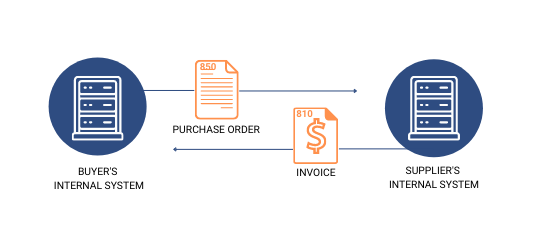
EDI replaces manual paperwork with automated, standardized document exchange.
Instead of employees typing purchase orders or invoices into systems by hand, EDI transmits documents like the 850 Purchase Order, 856 ASN, or 810 Invoice directly between trading partners in real time.
This automation eliminates the repetitive work of digging through spreadsheets, sending emails, and manually tracking down data.
Companies that integrate EDI see error rates drop below 1%, compared to 30% with manual re-keying.
Manual data entry error rates can reach as high as 4%, which means even a small percentage of mistakes leads to real financial losses at scale.
EDI cuts manual order entry by as much as 98%, and many businesses achieve 99% touchless processing, where critical documents flow automatically with no human involvement.
2. Standardizing Document Formats for Consistency
EDI files use standardized formats like ANSI X12 (used in North America) or EDIFACT (used internationally), which define how data is organized and what each segment represents.
These guidelines keep documents consistently structured, so businesses can communicate clearly across systems.
Every trading partner in the supply chain interprets and processes data the same way, which cuts down on discrepancies and inconsistencies.
Without standards like these, systems would have no way to tell which part of a message corresponds to which data field, and automated exchange would be impossible.
3. Real-Time Data Validation and Error Detection
EDI validation checks that electronic documents follow proper format and business rules, so transactions stay error-free, fast, and compliant.
Validation confirms that transmitted data matches the expected formats, structures, and business logic.
The system gives instant feedback on data compliance, which allows immediate corrections before documents ever reach a trading partner.
4. Reducing Human Error in Supply Chain Transactions
EDI enables system-to-system exchange of enterprise documents between trading partners, standardizing transactions and cutting the risk of miscommunication.
By directly linking purchase orders and shipping documents to invoices, companies reduce errors and discrepancies between what was ordered, shipped, and invoiced.
How EDI Saves Your Business Money
1. Reducing Labor Costs Through Automation
Manual purchase order processing costs money at every step, including labor and materials.
Processing a paper purchase order costs over $30, while an EDI transaction costs less than $1. Manual invoice processing ranges from $12 to $30 per document, while automated EDI invoicing drops that cost to $3 to $6.
You can calculate your own savings by tracking hours saved.
Two employees spending 10 hours per week on manual order input at $25 per hour save $26,000 annually once that work is automated.
Teams can redirect that time toward revenue-generating work instead of data entry.
2. Eliminating Paper and Printing Expenses
EDI eliminates the costs tied to paper, printing, reproduction, storage, filing, postage, and document retrieval. Businesses switching to EDI lower transaction costs by at least 35%.
One major electronics manufacturer calculated manual order processing at $38 per order, compared to just $1.35 for EDI-processed orders.
3. Minimizing Costly Errors and Chargebacks
Large retailers fine suppliers for late, incorrect, or non-compliant documents.
A single $100 ASN fee might not sound catastrophic on its own, but across thousands of orders and multiple retailers, recurring EDI-related chargebacks quietly remove margin points from key accounts.
EDI helps you avoid these penalties by ensuring documents go out accurately and on time.
Commport EDI Solutions, the #1 EDI Provider in North America, trusted by 6,000+ customers, guarantees 100% EDI compliance to eliminate chargeback risk.
4. Faster Payment Processing and Cash Flow
EDI cuts order-to-cash cycles by as much as 50%. Companies process more orders in less time, which improves cash flow through faster invoicing.
Payments settle 2 to 5 days faster on average, improving how working capital gets used.
5. Reducing Inventory Holding Costs
Real-time inventory data gives you insight into customer buying patterns, so you can adjust based on actual demand instead of guesswork.
Companies realize 19% higher accuracy in demand forecasting with EDI integration.
Organizations typically reduce inventory carrying costs by 20 to 30%, which helps prevent both overproduction and inventory shortages.
How to Calculate Your EDI ROI
Before you commit budget to an EDI implementation, it helps to run your own numbers rather than relying only on industry averages. The calculation is straightforward and only needs figures you already track.
Simple EDI ROI Formula
Annual Savings = (Manual Processing Cost − EDI Processing Cost) × Annual Document Volume
Example: A distributor processing 2,000 purchase orders a year at $30 manual cost versus $1 EDI cost saves (30 minus 1) multiplied by 2,000, or $58,000 a year on purchase orders alone, before counting invoices, ASNs, or labor hours redirected to other work.
- Count your current document volume. Pull last year’s totals for purchase orders, invoices, and ASNs from your ERP or accounting system.
- Price out your manual cost per document. Include labor time, paper, printing, postage, and any error-correction time your team can quantify.
- Compare against typical EDI costs. Use the benchmarks in the table below as a starting point, then request exact pricing from your EDI provider.
- Add in the indirect savings. Faster cash flow, fewer chargebacks, and lower inventory carrying costs compound the direct labor savings above.
Manual vs. EDI: Cost Comparison by Document Type
The table below summarizes the cost difference between manual and EDI-based processing across the document types most businesses handle every day.
Document / Process | Manual Cost | EDI Cost | Savings |
Purchase order | $30+ per order | Under $1 per order | Roughly 97% lower |
Invoice processing | $12 to $30 per document | $3 to $6 per document | Up to 80% lower |
Order-to-cash cycle | Baseline cycle time | Up to 50% faster | 2-5 days faster payment |
Inventory carrying cost | Baseline | 20-30% lower | Frees working capital |
Electronic Data Interchange Benefits for Your Bottom Line
Beyond the immediate cost reductions, EDI’s benefits extend to strategic operational improvements that strengthen your competitive position.
1. Improved Decision-Making With Accurate Data
Organizations using data-driven approaches are three times more likely to report significant improvements in decision-making than organizations relying less on data.
EDI provides real-time visibility into supply chain operations, supporting better strategic planning and resource allocation.
Accurate data removes uncertainty from business decisions, so you can respond quickly to market demands and customer needs.
2. Enhanced Supplier and Partner Relationships
EDI builds stronger supplier relationships by ensuring timely, accurate information exchange.
The reliability of automated transactions builds trust between trading partners.
Better vendor relationships through timely invoice reconciliation also improve customer service and strengthen partnerships.
Real-time transparency lets both sides track transaction status, resolve issues quickly, and keep operations running smoothly.
3. Faster Order Processing and Fulfillment
EDI implementation accelerates transaction processing times by up to 20%, which lets businesses operate more efficiently.
Near real-time processing drastically cuts the time from order to delivery, and instant transmission of electronic documents speeds up response times across the supply chain.
4. Meeting Compliance Requirements Efficiently
Effective EDI compliance boosts operational efficiency by automating transactions and speeding up processing.
Standardized data handling helps businesses meet legal requirements and avoid potential fines. EDI also supports secure, responsible transaction handling for regulated industries.
Conclusion
Data accuracy directly impacts your bottom line, and EDI offers a proven path to eliminate costly manual errors while delivering measurable savings.
By automating data entry, standardizing formats, and validating transactions in real time, EDI turns your supply chain into a streamlined, cost-effective operation.
The benefits go beyond immediate cost reductions to strategic advantages like faster cash flow, stronger partnerships, and more confident decision-making.
Commport EDI Solutions, the #1 EDI Provider in North America
Need Help? Download: Commport's EDI Buyers Guide
Unlock the full potential of your supply chain with our comprehensive EDI Buyer's Guide — your first step towards seamless, efficient, and error-free transactions
Frequently Asked Questions
EDI improves data accuracy by automating the exchange of business documents, removing the manual data entry that’s prone to errors. Standardized formats and real-time validation keep documents consistently structured and error-free, reducing inaccuracies from human input and miscommunication between trading partners.
EDI delivers significant cost savings by cutting labor costs through automation, eliminating paper and printing expenses, and minimizing costly errors and chargebacks. A paper purchase order costs over $30 to process, while an EDI transaction costs less than $1. Businesses can also cut transaction costs by at least 35% and lower inventory carrying costs by 20 to 30%.
EDI delivers faster transaction cycles, improved data accuracy, and the ability to scale operations without adding manual work. It speeds up order processing by up to 20%, cuts order-to-cash cycles by as much as 50%, and enables near real-time processing. These gains lead to stronger partner relationships, better customer experiences, and lower operational costs.
EDI supports compliance by automating transactions and standardizing data handling, which helps businesses meet legal requirements and avoid fines. The system handles transactions securely and responsibly, which matters most for regulated industries, while producing consistent documentation that satisfies audit and reporting requirements.
Implementation requires upfront investment in technology and integration with existing systems. Companies need their trading partners to be EDI-capable and need to establish standardized processes internally. The long-term advantages of faster transactions, better accuracy, and lower costs typically outweigh these initial challenges.
Multiply your current manual cost per document by your annual document volume, then subtract the equivalent EDI cost at the same volume. For example, switching 2,000 purchase orders a year from a $30 manual cost to a $1 EDI cost saves roughly $58,000 annually before counting invoices, faster cash flow, or reduced chargebacks.
Yes, in most cases. The same per-document savings that apply to large enterprises apply to smaller businesses, and providers now offer EDI outsourcing and managed services that remove most of the upfront technical burden. A business processing even a few hundred purchase orders a year can recover the cost of implementation within months through reduced errors and faster payments.