Introduction
Manual data entry can lead to slower order fulfillment and increase operational expenses by 20-30%, with an additional 20% in chargebacks due to data processing errors.
We’ve seen cloud EDI gain tremendous momentum in recent years as it offers a combination of technological and business process improvements designed to meet the demands of today’s market.
This modern approach to electronic data interchange enables businesses of all sizes, small, medium, and large, to exchange documents such as purchase orders, invoices, shipping notices, and other key EDI documents over the internet using cloud infrastructure instead of traditional on-premise systems.
Additionally, cloud EDI solutions are cost-effective and require no prior EDI knowledge or complicated software installation. It eliminates the need for on-premise hardware investments while providing anytime, anywhere access to your data
Throughout this blog, we’ll explore what cloud-based EDI is, how it works, and why many EDI companies believe it will become the dominant EDI exchange method in the years to come.
Furthermore, we’ll discuss how these cloud-hosted benefits maintain your ability to exchange structured data with trading partners over the internet, potentially reducing or eliminating transaction fees through direct connections and secure communications.
Key Takeaways
- Cloud EDI reduces costs by 50-80% compared to traditional systems by eliminating the need for expensive hardware, maintenance, and IT staffing requirements through subscription-based pricing models.
- Partner onboarding accelerates from months to days with cloud solutions, enabling businesses to start exchanging documents within 24-48 hours instead of lengthy traditional setup processes.
- Real-time visibility and automation reduce manual errors by 20-30% while providing instant transaction monitoring and automated document processing across the entire supply chain.
- Seamless ERP integration with systems like SAP, NetSuite, and QuickBooks creates unified data flows through automated mapping and transformation, eliminating communication gaps.
- Enterprise-grade security, achieved through end-to-end encryption, secure protocols (AS2, SFTP, HTTPS), and compliance with Canadian data protection laws, ensures the safe exchange of documents.
What is Cloud EDI and How It Works
Define Cloud EDI
Cloud EDI is an approach to electronic data exchange that operates on cloud infrastructure rather than in-house servers. This method enables companies to exchange standardized business documents—purchase orders, invoices, advance ship notices, and more directly with trading partners over the internet, software-as-a-service (SaaS)
How Cloud EDI Works
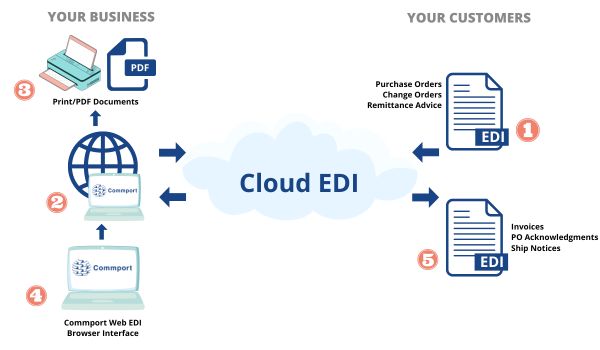
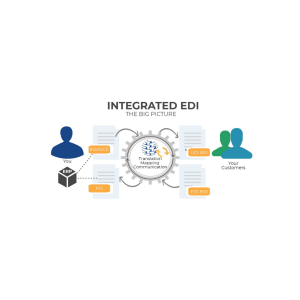
At its core, cloud EDI functions as a secure hub positioned between your business and your trading partners. The typical workflow involves several steps: when a partner sends an order through the cloud EDI platform, your system translates the electronic document into the appropriate format. Subsequently, the converted document flows from the translator into your business systems, such as Enterprise Resource Planning (ERP) or Warehouse Management System (WMS). Your internal systems then update their records accordingly and can send outbound documents through the same cloud pathway to your partners.
Most cloud EDI solutions support common EDI standards like X12 and EDIFACT, with multiple versions tailored for different industries and purposes. This standardization eliminates delays associated with manual data entry, consequently reducing error risks while providing faster document exchange, cleaner data, and enhanced supply chain visibility.
How Cloud EDI Differs from Traditional EDI
Traditional / In-House built EDI solutions require businesses to install and manage systems within their internal IT infrastructure. These setups demand substantial IT resources for implementation, configuration, upgrades, and ongoing management. Moreover, they involve expensive hardware, software licenses, and dedicated IT support.
In contrast, cloud EDI eliminates these infrastructure burdens by shifting responsibility to an EDI solutions provider who handles hosting, monitoring, updates, and compliance. This distinction becomes particularly evident when examining factors like:
- Cost structure: Cloud EDI involves without major upfront investments predictable monthly subscription fees
- Accessibility: Cloud solutions can be accessed from anywhere with an internet connection, unlike on-premises systems confined to internal networks
- Integration capabilities: Cloud EDI typically leverages APIs for simpler connections with other applications, whereas on-premises EDI often requires complex custom coding
- Implementation speed: Cloud implementations are generally faster since providers handle setup, deployment, and ongoing management
Common Communication Protocols: AS2, SFTP, HTTPS
Cloud EDI relies on specific communication protocols to securely transfer data between trading partners. Three predominant protocols include:
AS2 (Applicability Statement 2) has become widespread in the retail and healthcare sectors. This protocol:
- Uses HTTP/HTTPS for transmitting EDI data securely over the internet
- Employs S/MIME encryption to place information in a secure “envelope.”
- Provides end-to-end encryption and digital signatures[18]
- Offers Message Disposition Notifications (MDNs) for non-repudiation[18]
SFTP (Secure File Transfer Protocol) extends the Secure Shell protocol (SSH) to provide secure file transfers[16]. This protocol:
- Uses SSH and cryptographic algorithms like AES to secure data between servers
- Offers various authentication mechanisms, from passwords to public keys
- Meets requirements for regulations like HIPAA and GDPR
HTTPS (Hypertext Transfer Protocol Secure) combines HTTP with SSL/TLS protocols to provide encryption and secure server identification. This approach is commonly used for sensitive transactions and information exchange between business systems.
Each protocol offers distinct security features and ideal applications based on your specific business needs and technical requirements.
Benefits of Cloud EDI Solutions
Businesses across the US and Canada are shifting to cloud EDI solutions primarily for the concrete advantages they offer over traditional systems. First and foremost, the transition from legacy systems to cloud-based platforms delivers measurable benefits that directly impact operational efficiency and bottom-line results.
- Lower infrastructure and maintenance costs
- Faster partner onboarding and document exchange
- Real-time visibility and automation
- Scalability for growing transaction volumes
1. Lower Infrastructure and Maintenance Costs
Cloud EDI eliminates the need for expensive on-premise hardware and data center maintenance, slashing capital expenditures for businesses of all sizes. Unlike In-house EDI with its substantial upfront investments, cloud solutions operate on subscription-based models where companies pay only for what they use. This shift creates predictable monthly costs without the surprise fees often associated with legacy systems.
Beyond the hardware savings, cloud EDI significantly reduces staffing expenses. Updates, troubleshooting, system maintenance, and backups become the provider’s responsibility. This arrangement allows internal IT teams to focus on core business initiatives rather than EDI management. In fact, many organizations report compared to legacy billing models.50–80% monthly EDI cost savings
2. Faster Partner Onboarding and Document Exchange
The onboarding process for legacy EDI typically stretches across weeks or even months, delaying revenue generation and inventory movement. In contrast, cloud EDI platforms can connect new trading partners in just days, sometimes within 24-48 hours. This acceleration occurs because many modern platforms maintain pre-connected networks with verified routing paths and known-good communication setups.
Specifically, cloud solutions streamline the process by eliminating half the typical onboarding cycle. As a result, businesses can start exchanging documents almost immediately, validate flows faster, and move to production sooner without extensive manual configuration.
3. Real-Time Visibility and Automation
Cloud EDI provides from the moment they enter your system. Automated error alerts enable proactive issue resolution, preventing costly delays and disruptions. Indeed, this real-time monitoring capability helps companies spot and address issues early, maintaining stronger customer relationships. unmatched visibility into EDI transactions
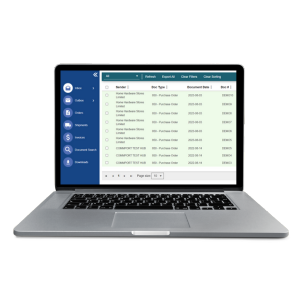
Notably, cloud platforms automate document exchange, removing most human intervention. This automation reduces error rates while freeing staff from routine tasks like checking spreadsheets or manually entering data. For non-technical users, intuitive self-service tools enable independent access to critical documents without IT support.
4. Scalability for Growing Transaction Volumes
As transaction volumes fluctuate, cloud EDI allows companies to easily adjust resources without significant capital investment. Hence, seasonal peaks or business growth no longer require expensive infrastructure upgrades. This flexibility proves especially valuable during expansion, as businesses can add new documents, trading partners, or integrations without hardware changes.
The pay-as-you-grow pricing models ensure you only pay for the transaction volumes or trading partners you actually need. Simultaneously, the cloud infrastructure handles routing, formatting, and conversion to partner-preferred message formats based on predefined templates.
Commport Cloud EDI solution. The industry leading Cloud based EDI easy to use, scalable and affordable. Trusted by over 6000+ brands.
Cloud EDI Integration with ERP and Supply Chain Systems
The seamless connection between cloud EDI and business systems forms the backbone of efficient digital commerce operations. Integrating these technologies eliminates communication gaps that often plague traditional supply chain interactions.
Integration with ERP Systems like SAP, NetSuite, and QuickBooks
Cloud EDI platforms excel at connecting with various enterprise resource planning (ERP) systems, establishing automated data flows that eliminate manual entry requirements. For SAP environments, integration typically leverages specific methods, including Business Application Programming Interface (BAPI), and IDoc—a specialized file type designed for data transfers between SAP and external systems. These connections ensure continuous information exchange without requiring staff intervention. Application Link Enabling (ALE)
NetSuite integration similarly creates unified data pathways that enhance operational efficiency. When properly implemented, this integration enables real-time data synchronization between cloud EDI and NetSuite, allowing businesses to make informed decisions based on current information. For accounting and finance departments, this integration simplifies financial reporting processes, essentially streamlining complex workflows.
QuickBooks users benefit from cloud EDI integration through and procure-to-pay processes. First of all, these connections boost operational flexibility while minimizing errors and avoiding costly chargebacks. As an example, TrueCommerce offers QuickBooks-specific EDI integration that positions businesses for growth into new sales channels. automated order-to-cash
Support for WMS and SCM Platforms
The integration of cloud EDI with Warehouse Management Systems (WMS) creates powerful operational synergies. This connection enables warehouses to maintain precise inventory control through real-time processing alongside secure document exchange with partners.
WMS-EDI integration extends through five key connection points in modern warehouse ecosystems, primarily creating a cohesive operational environment. Upon receiving an EDI document, the information flows seamlessly into the WMS, automatically updating inventory records and triggering appropriate warehouse actions.
Automated Data Mapping and Transformation
Automated data mapping constitutes a critical component of effective cloud EDI integration. The process involves two essential elements: mapping EDI standards provided by trading partners and translating documents into formats compatible with internal systems.
Cloud-based integration platforms offer any-to-any transformation tools and mapping solutions that fully automate connection, transformation, and integration processes. These capabilities allow organizations to:
- Support end-to-end processes by creating ecosystem data exchanges between internal systems, cloud applications, and trading partner platforms
- Eliminate integration bottlenecks by consolidating to a single platform
- Reduce time and costs associated with building and maintaining mapping processes
The transformation process automatically converts incoming EDI documents into ERP-friendly formats like CSV, TXT, XML, or specialized types like IDoc for SAP. Likewise, outgoing data from internal systems gets translated into standardized EDI transaction formats such as ANSI X12 or EDIFACT.
Security and Compliance in Cloud EDI Platforms
Security concerns remain paramount when considering cloud EDI implementation, primarily as businesses exchange sensitive financial and operational data with trading partners. Proper safeguards must be established to protect information both during transmission and storage.
1. Data Encryption and Secure Protocols
Robust cloud EDI platforms employ end-to-end encryption to safeguard data both in transit and at rest. Most reliable providers utilize TLS 1.2 or higher for network connections and AES-256 encryption for stored data, the same standard trusted by financial institutions and government agencies. For secure data exchange, cloud EDI relies on specialized protocols:
- AS2 (Applicability Statement 2) has become widely adopted in the retail and healthcare industries. It uses digital certificates for encryption, provides strong authentication between trading partners, and offers non-repudiation features that prevent either party from denying they sent or received transmissions.
- SFTP (Secure File Transfer Protocol) extends SSH protocol capabilities to protect file transfers through strong cryptographic algorithms and supports multiple authentication methods from passwords to public keys.
- HTTPS combines standard HTTP with SSL/TLS protocols, creating a secure channel for sensitive information exchange between systems.
2. User Access Controls and Audit Trails
Even strong encryption fails without proper access management. Effective cloud EDI platforms implement:
- Role-based access controls limiting user permissions to necessary functions
- Multi-factor authentication to prevent unauthorized entry
- Least-privilege principles ensuring users access only what they need
Comprehensive audit logging captures every login and document action, maintaining visibility into user activity across the platform. These detailed records prove invaluable during compliance reviews and help quickly identify suspicious behavior.
3. Compliance with Canadian Data Protection Laws (PIPEDA)
Cloud EDI providers serving Canadian businesses must comply with the Personal Information Protection and Electronic Documents Act (PIPEDA). This legislation establishes rules for collecting, using, and disclosing personal information during commercial activities.
Although PIPEDA doesn’t prohibit cloud computing even when providers operate outside Canada, it requires organizations to remain accountable for transferred information. Businesses must use contractual means to ensure personal information receives comparable protection levels when handled by a third-party cloud provider
Why Choose Commport Cloud EDI?
Selecting the right cloud EDI provider requires careful evaluation of several factors specific to the United States and Canadian business landscape. Many organizations find themselves comparing features, support levels, and pricing structures before making their final decision
Commport Communications Top Cloud EDI Provider in North America
North America’s EDI market features both international players and homegrown solutions.
Commport Communications holds a strong position as one of North America’s largest EDI service providers, headquartered in Newmarket Ontario, Canada, has established itself as a leading Canadian EDI provider with bilingual support in both English and French. Focusing on retailer networks and managed services, and delivering EDI solutions built on one of the fastest VAN infrastructures, which supports cloud-based integrations.
Commport Communications has formed partnerships with major US and Canadian retailers, including Home Hardware, Longos, Walmart, Home Depot, Loblaws, and more, making it uniquely positioned for both international and domestic supply chains. Our EDI technology specifically supports multiple EDI standards and world-class customer service, addressing North America’s unique market requirements. Commport Cloud EDI enables streamlined order processing with both US and Canadian trading partners through automated exchange of transaction documents, including purchase orders, ASNs, invoices, and more.
Conclusion
Cloud EDI represents a significant leap forward for businesses seeking efficient document exchange methods with trading partners. Throughout this article, we’ve explored how cloud-based EDI systems offer a modern approach to electronic data interchange, eliminating the need for costly on-premise hardware while providing secure, accessible solutions.
First and foremost, the transition from traditional to cloud EDI delivers measurable benefits that directly impact operational efficiency. Companies typically experience 50-80% monthly cost savings compared to legacy systems. Additionally, the accelerated partner onboarding process—often completed within days rather than months—allows businesses to begin exchanging documents almost immediately.
Cloud EDI also provides unmatched real-time visibility into transactions, helping companies spot and address issues early. This capability, combined with automated document exchange, reduces error rates significantly while freeing staff from routine data entry tasks.
The seamless integration between cloud EDI and business systems certainly forms the backbone of efficient digital commerce operations. Whether connecting with ERP systems like SAP, NetSuite, and QuickBooks or supporting warehouse management platforms, cloud EDI creates powerful operational synergies through automated data mapping and transformation.
Security remains paramount in cloud EDI implementations. The best platforms employ robust encryption methods, secure protocols like AS2 and SFTP, and comprehensive access controls. For Canadian businesses specifically, compliance with PIPEDA ensures personal information receives appropriate protection levels when handled by third-party cloud providers.
As transaction volumes grow and supply chains become increasingly complex, cloud EDI will undoubtedly continue gaining momentum as the dominant EDI exchange method in the coming years. The combination of technological advancement and business process improvement positions cloud EDI as an essential component of modern B2B transactions—delivering the efficiency, security, and scalability businesses need to thrive in today’s digital economy.
Commport Cloud EDI Solution - #1 EDI Solution in North America
Need Help? Download: Commport's EDI Buyers Guide
Unlock the full potential of your supply chain with our comprehensive EDI Buyer's Guide — your first step towards seamless, efficient, and error-free transactions
Frequently Asked Questions
Cloud EDI is a modern approach to electronic data interchange that uses cloud infrastructure for exchanging business documents over the internet. Unlike traditional EDI, which requires on-premise hardware and software, cloud EDI offers lower costs, faster implementation, and greater accessibility without the need for extensive IT resources.
Cloud EDI significantly reduces costs by eliminating the need for expensive hardware and maintenance. It offers a subscription-based model, typically resulting in 50-80% monthly cost savings compared to traditional systems. Additionally, it speeds up partner onboarding from months to days and provides real-time visibility, enhancing overall operational efficiency.
Yes, Cloud EDI platforms employ robust security measures. They use end-to-end encryption, secure protocols like AS2 and SFTP, and implement strict user access controls. Many providers also comply with data protection laws and industry certifications, ensuring the safe exchange of sensitive business information.
Cloud EDI seamlessly integrates with various Enterprise Resource Planning (ERP) systems, such as SAP, NetSuite, and QuickBooks, as well as Warehouse Management Systems (WMS). It uses automated data mapping and transformation to ensure smooth data flow between different systems, eliminating the need for manual data entry and reducing errors.
Canadian businesses should look for providers that offer support for Canadian retail supply chains, comply with Canadian data protection laws (PIPEDA), and provide bilingual support. Cost-effectiveness for small businesses, scalability, and integration capabilities with existing systems are also important factors to consider when selecting a Cloud EDI solution.