Introduction
Over 85% of global supply chain transactions rely on EDI infrastructure for their day-to-day operations. Despite this overwhelming dependence, many organizations struggle to maintain the reliability and performance needed in today’s fast-paced business environment. As EDI has become a cornerstone of modern supply chain management and B2B communication, achieving near-perfect uptime is no longer optional; it’s essential for business continuity.
Modern EDI technology has evolved significantly to meet these challenges. Today’s EDI features are designed to support scalability, reduce errors, and enhance communication with trading partners. However, the journey toward EDI modernization requires careful planning and strategic implementation. When considering the cost of EDI infrastructure, organizations must balance immediate expenses against long-term reliability benefits. Furthermore, the networking infrastructure of EDI systems must be robust enough to handle growing transaction volumes while maintaining consistent performance. Modern EDI platforms like Commport EDI Solutions are specifically built to support evolving business needs, consequently transforming how companies manage their supply chains and partner communications.
In this comprehensive guide, we’ll explore how Commport’s EDI infrastructure guarantees 99.99% uptime. We’ll examine everything from assessing your current system’s limitations to implementing Commport’s cloud-native solutions that can scale with your business. Additionally, we’ll address critical considerations for maintaining compliance while optimizing costs.
Key Takeaways
- Assess before you invest: Evaluate legacy system limitations, identify bottlenecks, and establish baseline metrics before implementing high-availability improvements.
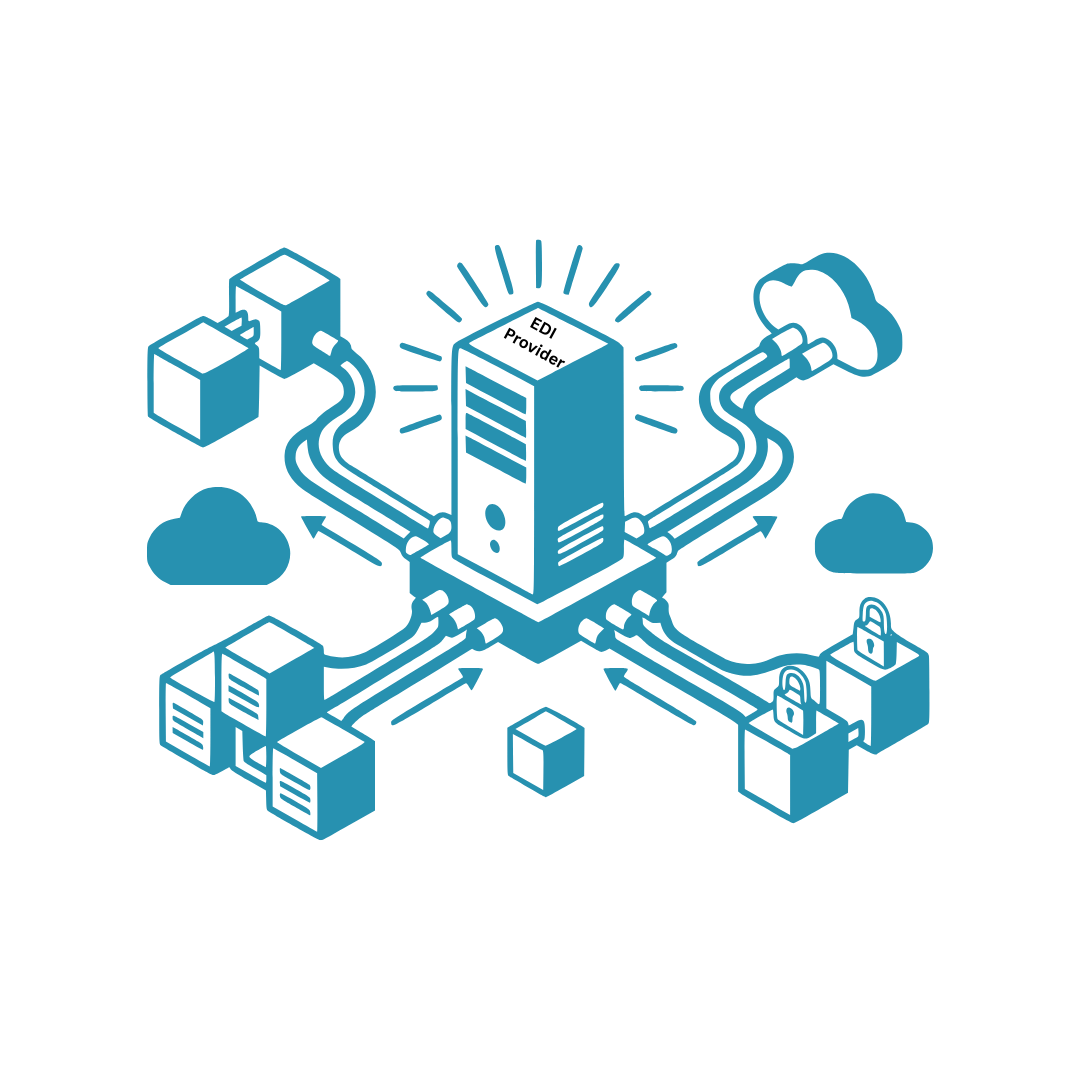
- Design for redundancy: Go with an EDI provider who as the ability to implement multiple communication protocols (AS2, SFTP, VAN API), load balancing across gateways, and automatic failover mechanisms to eliminate single points of failure.
- Monitor proactively: Choose a provider who provides real-time dashboards, predictive analytics, and 24/7 automated monitoring to detect and resolve issues before they impact operations.
- Choose your financial model wisely: Balance CAPEX vs OPEX approaches while ensuring SOC 2 and GDPR compliance through role-based access controls.
- Scale with cloud-native architecture: Leverage elastic scaling, edge computing, and geo-redundancy to handle transaction spikes while maintaining consistent performance globally.
Assessing Your Current Legacy EDI Readiness for High Availability.
Determining whether your IT infrastructure is ready for high availability begins with a thorough assessment of your current systems.
Many organizations discover that their existing legacy EDI setups operate adequately during normal conditions, yet fail when transaction volumes spike.
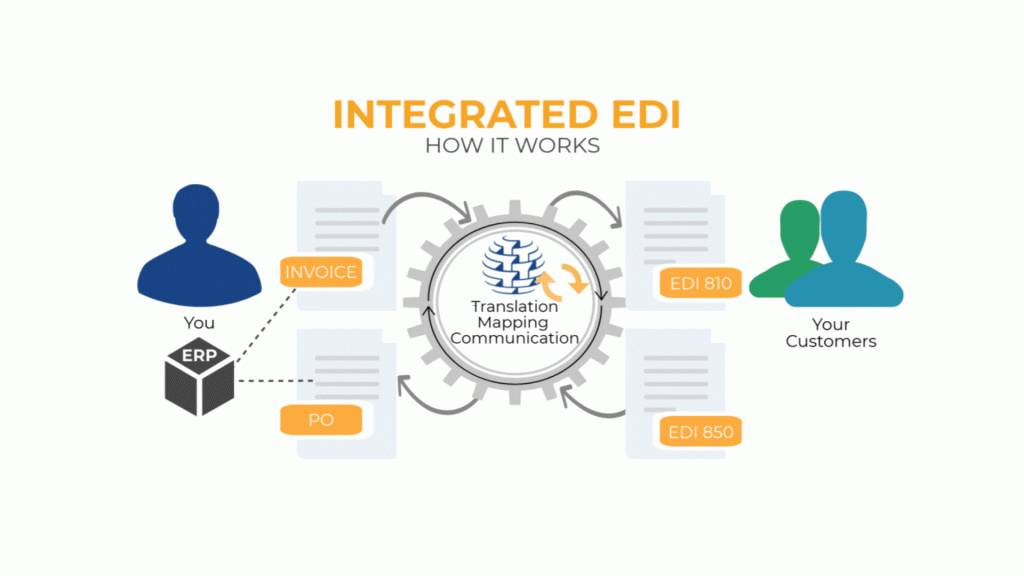
One of Commport’s current customer a automobile manufacturer, used their old legacy EDI system and spent six months with their largest trading partner, only to experience system-wide failures on launch day $200,000 implementing EDI. This cautionary tale underscores the need for a comprehensive readiness evaluation before attempting to achieve 99.99% uptime, and that’s when he switched to Commport’s robust Integrated EDI solution, which meets their needs.

Evaluating Legacy EDI System Limitations
Legacy EDI systems present numerous challenges that directly impact availability. These older systems typically exhibit rigid architectures that resist integration with modern technologies, limiting your ability to adapt to changing business requirements. Many on-premise systems struggle with standardization across different trading partners, each potentially using different EDI formats. This lack of standardization often necessitates manual customization for each data flow, creating brittle connections that can fail during peak processing periods.
Moreover, these systems frequently suffer from technical debt accumulation. As organizations add partner-specific exceptions and custom code to address immediate needs, the infrastructure becomes increasingly complex and difficult to maintain. This complexity manifests as unpredictable performance during high-volume periods. Rather than providing real-time data exchange, legacy EDI implementations often operate with delays that impact operations and limit visibility across your trading network.
Identifying Bottlenecks in Data Exchange
Bottlenecks in EDI data exchange primarily emerge from format inconsistencies, integration challenges, and infrastructure limitations. Many businesses discover their EDI systems operate in isolation from other critical business applications, creating data silos that impede efficient information flow. Format mismatches between systems represent another major challenge—for instance, when IT designates “delivery date” as a single field while shipping teams utilize three distinct timestamps.
Error handling capabilities also present significant bottlenecks. One missing value or incorrect character can derail an entire transaction, yet many systems provide inadequate visibility into failure points. Without real-time monitoring tools to track transaction flows and errors, you’re essentially operating blind until problems surface through missed deadlines or customer complaints.
Baseline Metrics for Current Uptime Performance
Establishing baseline uptime metrics is essential before implementing improvements. Uptime calculation should follow a consistent formula: divide operational time by the total measurement period, then multiply by 100 to get a percentage. For example, a system that achieves 99.91% uptime (8,752 ÷ 8,760 × 100) has 8 hours of downtime in a year.
When assessing your current performance, consider these crucial metrics:
- Transaction processing times: Measure how long each document takes to process from receipt to completion
- Error rates: Track the percentage of failed transactions and identify common failure patterns
- System response times: Evaluate how quickly your infrastructure responds during normal and peak volumes
- Network latency: Measure delays between sending and receiving EDI messages
Small percentage differences in uptime can have a significant operational impact. The difference between 99.9% and 99.99% uptime in a 30-day month is substantial 43 minutes versus just 4 minutes of allowable downtime. To properly evaluate your infrastructure, use an EDI health check that analyzes data flow, configuration, and overall system performance. This assessment helps identify potential bottlenecks before they cause disruptions, essentially providing a roadmap for achieving near-perfect uptime.
Switch to Commport EDI a High Fault-Tolerant EDI Infrastructure
Most providers talk about uptime; we build for it. Commport provides a sophisticated, multi-layered architecture that ensures your business stays “always-on,” regardless of component failures.

1. Multi-Protocol Redundancy (AS2, SFTP, VAN, API)
Don’t get locked into a single point of failure. Commport utilizes a “Triple Pillar” approach to communication, ensuring that if one pathway is congested or down, your data finds another way through:
- AS2: Secure, industry-standard encryption (pioneered by giants like Walmart) for real-time reliability.
- SFTP: High-volume bulk transfers via secure SSH protocols.
- REST APIs: Modern, lightweight connections that integrate seamlessly with your existing business apps.
- Commport Value-added network (VAN) offers alternative communication options
2. Active-Active Load Balancing
We don’t let your data sit in a queue. Our gateway solutions utilize active-active frameworks and round-robin algorithms to distribute workloads across server clusters.
- No Bottlenecks: Parallel processing handles your busiest seasons without a hiccup.
- Session Persistence: We maintain transaction integrity even in complex, multi-request exchanges.
3. Automatic Failover & Cloud-Native Scaling
In a traditional setup, a server crash means a midnight phone call for your IT team. With Commport, our system automatically redirects traffic to functional nodes the moment a glitch is detected.
- Zero Intervention: Our cloud-native infrastructure scales up or down based on your real-time volume.
- 99% Uptime: We aim for near-total availability, limiting potential downtime to mere minutes per month compared to the hours seen in lesser systems.
The Commport Advantage
As the #1 EDI provider in North America, we support over 6,000 happy customers by removing the technical burden of EDI compliance.
Feature | Standard EDI | Commport EDI Solution |
Compliance | Manual/Variable | 100% EDI Compliance Guaranteed |
Architecture | Single-point | Fault-Tolerant / Redundant |
Support | Ticket-based | Expert-led / North American |
Downtime | ~43 mins/month (99.9%) | < 4 mins/year (99.99%) |
Implementing Commport’s Scalable EDI Infrastructure
To truly compete in today’s global market, your EDI shouldn’t just be a “tool”—it should be an unbreakable competitive advantage. While others struggle with server lag and manual scaling, Commport EDI Solutions leverages a high-octane, scalable networking infrastructure designed to turn traffic spikes into growth opportunities.
Here is why switching to Commport is the ultimate upgrade for your networking backbone.
1. Cloud-Native Elasticity: No More "Ceilings"
Traditional EDI systems have a “bandwidth ceiling”; once you hit it, things break. Commport’s cloud-native deployment removes the ceiling entirely.
Handle 500% Surges: Whether it’s Black Friday or a sudden viral product launch, our infrastructure auto-scales in real-time. You don’t have to “prepare” for a spike; our system anticipates it.
Pay-as-you-Grow: Stop paying for idle server space. Our elastic model ensures your costs align perfectly with your transaction volume, expanding when you’re busy, contracting when you’re not.
Error Isolation: In our architecture, one corrupted file won’t create a bottleneck. We isolate errors so that thousands of “good” orders continue to flow while the “bad” one is addressed.
2. Edge Node Distribution: Speed at the Source
In the world of logistics, milliseconds equal dollars. Commport utilizes Edge Computing to bring processing power closer to where your data originates.
Zero Latency: By processing data locally before it hits the central hub, we eliminate the typical 7-15ms latency “tax” that bogs down standard networks.
Agile Integration: Our edge devices act as a distributed intelligence network, reducing the burden on central servers and making your entire ecosystem more responsive to real-time changes.
3. Geo-Redundancy: The "Invisible" Disaster Recovery
What happens if a major data center loses power in a storm? If you’re with Commport, the answer is: Nothing. Your business keeps moving.
Strategic Geo-Zones: We distribute mission-critical infrastructure across multiple geographic regions. If one site goes dark, your operations automatically failover to a secondary site located miles away.
High-Velocity Data Protection: Like the world’s leading supply chain companies, we ensure your data is synchronized across regions constantly. This prevents data loss and ensures that even a regional catastrophe won’t stop your invoices or purchase orders.
Automatic Failover: Our recovery isn’t a manual “reboot.” It is an automated transition that keeps your 99.99% uptime promise intact.
Metric | In-House / Legacy EDI | Commport Solution |
Scaling Speed | Hours/Days (Manual) | Seconds (Automatic) |
Latency | High (Centralized) | Low (Edge Optimized) |
Disaster Recovery | Manual / Risky | Geo-Redundant / Automatic |
Operational Focus | Infrastructure Maintenance | Strategic Business Growth |
Monitoring and Ensuring 99.99% Uptime
Achieving 99.99% uptime requires more than just robust infrastructure; it demands constant vigilance. Successful EDI implementations rely on comprehensive monitoring systems that provide immediate visibility and proactive problem-solving capabilities.

1. Real-Time Transaction Visibility with Dashboards
Commport’s EDI dashboards function as your organization’s B2B messaging cockpit, offering instant insights into transaction status while flagging delays, missing data, or inconsistencies. These visual interfaces eliminate the need for technical specialists to diagnose issues, instead empowering business users from departments like finance, operations, and customer support to self-diagnose EDI-driven processes. In fact, effective dashboards typically reduce provider support calls as teams gain 24/7 access to critical transaction data.
Instead of relying on disjointed phone calls and emails to IT specialists, modern dashboards present human-readable access to correlated EDI documents, primarily displaying order-to-cash processes in an intuitive format. This visibility naturally translates into faster response times and improved customer satisfaction.
2. Proactive Error Detection Using Predictive Analytics
Commport’s AI-powered analytics have transformed EDI monitoring from reactive to predictive. These systems continuously track transactions for anomalies, effectively identifying inconsistencies in data formatting, missing fields, and incorrect values before they cause failures. Machine learning models simultaneously recognize patterns in successful transactions and flag deviations that could potentially result in costly errors.
Through pattern analysis of historical data, our AI agents can anticipate performance issues and alert teams to take action before operations are affected. This predictive capability proves invaluable for high-volume transaction environments where manual intervention becomes impractical.
3. 24/7 Infrastructure Monitoring and Alerting Systems
Our continuous infrastructure monitoring involves tracking servers, databases, applications, and cloud environments through real-time dashboards and automated alerts. A properly configured monitoring system includes:
- Server performance and uptime metrics
- Network bandwidth and latency analysis
- Application response and error tracking
When alerts trigger—whether from CPU spikes or network latency—certified engineers act immediately to diagnose and resolve issues, typically ensuring 99.9% infrastructure uptime. The most effective systems integrate AI with automation to reduce response time, applying predictive analytics to forecast potential system issues.
4. Automated Retry and Message Queuing Mechanisms
Temporary network issues or partner server downtime can interrupt critical data transfers. Our automated retry mechanisms transform these fragile integrations into resilient pipelines by intelligently handling transmission failures. The AS2 protocol specification provides flexibility in implementing retry behavior, allowing organizations to align with specific business needs.
Effective retry strategies include exponential backoff (increasing intervals between attempts) or fixed-interval approaches (consistent time gaps). Every retry attempt should be logged to provide delivery transparency and clear audit trails, essential for regulatory compliance. This automated approach prevents minor disruptions from escalating into major incidents while maintaining consistent data flow.
Cost and Compliance Considerations With Commport EDI Infrastructure
Choosing an EDI provider isn’t just a technical decision; it’s a financial and legal one. When you manage EDI in-house, you aren’t just paying for software; you’re paying for the risk of non-compliance and the heavy burden of “dead” capital.
Here is how Commport EDI Solutions optimizes your bottom line while insulating you from regulatory risk.
1. Financial Strategy: CAPEX vs. OPEX
Traditional EDI setups are a “CAPEX (Capital Expenditures) trap.” They require massive upfront investments in servers and licenses that lose value every year.
The Commport Advantage:
Predictable OPEX (Operating Expenses) Model: We shift your EDI costs from a massive lump sum to a manageable, predictable monthly expense.
Save Up to 70%: By leveraging our shared cloud-native infrastructure, you eliminate the need for in-house hardware maintenance, specialized IT staff, and expensive software upgrades.
Scale Without Pain: With Commport, you don’t pay for capacity you aren’t using. Our subscription scales exactly as your transaction volume does.
2. The Gold Standard of Compliance
In an era of rising data breaches, “close enough” isn’t good enough for your partners or the law. Commport is built to exceed the most stringent global standards.
SOC 2 Type II Certified: We don’t just say we’re secure; we prove it. Our systems undergo rigorous third-party audits to ensure total processing integrity and confidentiality.
GDPR Ready: Whether you are handling sensitive healthcare data or international transactions within the EU, our encryption protocols and data-handling procedures keep you fully compliant and audit-ready.
3. Data Security with RBAC
Data security is about more than just firewalls; it’s about internal control. Commport implements Role-Based Access Control (RBAC) to ensure your data stays in the right hands.
Principle of Least Privilege: We help you define roles so that users only see the specific data they need for their job—no more, no less.
Granular Audit Trails: Every access point and transaction is logged. If an auditor asks, “Who saw this invoice?”, you can answer them in seconds.
Consideration | In-House Legacy EDI | Commport EDI Solution |
Initial Cost | High (Hardware + Licenses) | Low (Subscription-based) |
Maintenance | Your responsibility (24/7) | Included (Managed Services) |
Compliance | Manual/Risk of failure | Built-in (SOC 2, GDPR) |
Security | General IT controls | Advanced RBAC & Encryption |
Conclusion
Building a bulletproof EDI infrastructure demands strategic planning and comprehensive implementation across multiple dimensions. Organizations relying on EDI for their supply chain operations must prioritize system reliability as a core business function rather than a mere technical consideration. Achieving the coveted 99.99% uptime guarantees business continuity while strengthening partner relationships.
We began our exploration by examining the crucial assessment phase. Understanding your current system limitations, identifying bottlenecks, and establishing baseline metrics provide the foundation for meaningful improvements. Legacy systems often struggle with standardization and flexibility, consequently creating fragile connections that fail during peak processing periods.
Fault-tolerant architecture stands as the next critical component. Redundant communication protocols like AS2, SFTP, VAN, and REST APIs create essential safety nets. Additionally, load balancing distributes workloads evenly across multiple EDI gateways, preventing single points of failure. Failover mechanisms complete this protection framework, automatically redirecting connections when systems malfunction.
Scalable networking infrastructure further strengthens EDI reliability. Cloud-native deployments offer elastic scaling capabilities without massive upfront investments. Edge computing reduces latency for time-sensitive transactions, while geo-redundancy safeguards against catastrophic failures by distributing infrastructure across multiple regions.
Constant vigilance through comprehensive monitoring systems transforms this robust infrastructure into a truly bulletproof solution. Real-time dashboards, predictive analytics, and 24/7 monitoring alert teams to potential issues before they impact operations. Automated retry mechanisms prevent minor disruptions from escalating into major incidents.
Financial considerations ultimately determine implementation viability. CAPEX versus OPEX models present different advantages depending on organizational needs. Compliance requirements, including SOC 2 and GDPR, must guide security implementations, particularly role-based access controls that protect sensitive information.
Building truly bulletproof EDI infrastructure represents more than a technical achievement; it delivers tangible business value. Organizations achieving 99.99% uptime gain competitive advantages through enhanced partner trust, reduced operational disruptions, and streamlined supply chain management. This reliability translates directly to improved customer satisfaction and stronger bottom-line results.
The journey toward bulletproof EDI infrastructure requires commitment, yet delivers transformative outcomes for organizations willing to invest in comprehensive solutions. Companies embracing modern EDI technologies position themselves for sustainable growth in an increasingly connected business landscape.
Commport EDI Solutions - #1 EDI Provider in North America
Need Help? Download: Commport's EDI Buyers Guide
Unlock the full potential of your supply chain with our comprehensive EDI Buyer's Guide — your first step towards seamless, efficient, and error-free transactions
Frequently Asked Questions
? 99.99% uptime means the system can be down for only about 52 minutes per year. This level of availability requires robust architecture with redundancy, failover mechanisms, and careful monitoring to minimize any potential downtime.
To achieve high availability for an API, you can implement strategies like using multiple communication protocols (AS2, SFTP, API), load balancing across gateways, deploying to multiple cloud regions, implementing failover mechanisms, and using edge computing to reduce latency.
Key components of a fault-tolerant EDI architecture include redundant communication protocols, load balancing across EDI gateways, failover mechanisms for both VAN and direct connections, cloud-native deployment for elastic scaling, and geo-redundant disaster recovery zones.
How can you monitor and ensure high uptime for an EDI system?
Important cost and compliance considerations include evaluating CAPEX vs OPEX models, ensuring SOC 2, and GDPR compliance where applicable, implementing role-based access control for data security, and balancing the costs of redundancy and geo-distribution against uptime requirements.