



Introduction
Are you struggling to keep up with EDI demands as your business grows?
EDI consulting services might be exactly what you need.
Electronic Data Interchange (EDI) is far more than just a technical capability; it’s the backbone of modern business operations.
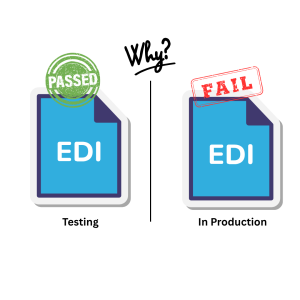
Being “EDI capable” refers to the ability to exchange standardized documents with trading partners, typically customers and suppliers. However, as your business expands, DIY EDI approaches often create more problems than they solve.
We’ve seen countless businesses hit a wall with their in-house EDI solutions.
When your transactions become more complex, errors start multiplying, and trading partner relationships suffer as a result. A well-designed EDI system that is secure and reliable can deliver substantial cost savings and business benefits for organizations at every stage of development. But how do you know when it’s time to bring in the experts?
If you’re experiencing frequent errors, struggling with integration, or finding your team lacks specialized knowledge, these are clear indicators you’ve outgrown your DIY approach.
EDI consultants can provide specialized skills and support without the long-term overhead, essentially giving you the expertise you need when you need it most.
In this guide, we’ll explore the seven telltale signs that it’s time to consider professional EDI consulting, before those small issues become major business disruptions.
- Your EDI Transaction Volume Has Significantly Increased
- You’re Experiencing Frequent EDI Errors and Trading Partner Issues
- Your Internal Team Lacks EDI Expertise and Platform Knowledge
- You’re Struggling with EDI System Integration and Migration
- Your Business Is Expanding to New Markets or Trading Partners
- You’re Unable to Meet Trading Partner EDI Requirements
- Your EDI Costs Are Rising Without a Clear ROI
Key Takeaways
- Volume overload indicates system limits – CPU at 100%, dropped orders, and performance degradation during peak periods signal your EDI infrastructure can’t scale with business growth.
- Frequent errors damage trading relationships – With 60% of B2B transactions affected by data anomalies, persistent EDI errors lead to costly chargebacks up to $500 per order.
- EDI expertise shortage creates operational risk – When no single team member understands your entire EDI system, you’re vulnerable to costly disruptions and delayed partner onboarding.
- Integration complexity multiplies with growth – Each new trading partner brings unique requirements, making multi-partner management exponentially more challenging without proper tools.
- Hidden DIY costs exceed professional services – Manual reprocessing, compliance penalties, and maintenance expenses often total $10,000-$50,000+ annually, surpassing consultant fees.
- Professional consultants deliver immediate ROI – EDI experts can reduce transaction costs by 35% and improve order-to-cash cycles by 20% while eliminating technical debt.
1. Your EDI Transaction Volume Has Significantly Increased
The volume of EDI transactions your business handles serves as a critical indicator of your EDI system’s health. Many organizations find themselves unprepared for sudden growth in EDI activity, leading to serious operational challenges.
Signs of Volume Overload
During peak business periods like major sales events or month-end processing, your EDI transaction volume can in a single hour. Unlike gradual growth that allows for planned expansion, these dramatic spikes expose weaknesses in your current EDI infrastructure. skyrocket by up to 500%
You’re likely experiencing volume overload if:
- Your CPU usage remains consistently at 100% during processing periods
- Processing times for orders to reach your ERP system keep increasing
- You notice dropped orders or delayed invoices becoming more frequent
- Your team struggles to manage seasonal transaction spikes
- Your system performance degrades noticeably during high-volume periods
Many brands find themselves unprepared for these volume challenges, especially during periods of business growth or seasonal demand fluctuations. When your existing EDI architecture lacks scalability, even modest increases in transaction volume can overwhelm your system.
Business Impact of Scaling Issues
The consequences of EDI scaling problems extend throughout your organization. Failed EDI transactions create ripple effects far beyond your IT department.
Operationally, you’ll face shipment delays, inventory discrepancies, and fulfillment backlogs. Your finance team will encounter invoicing delays and payment disputes that disrupt cash flow. Meanwhile, customer service representatives struggle to explain missing orders or incorrect shipments to frustrated clients.
The financial impact becomes particularly severe when missed shipping windows lead to from trading partners. These penalties directly impact your revenue while simultaneously damaging your professional reputation. For many businesses, the greatest hidden cost comes from inefficient legacy systems that require continuous hardware investments—essentially forcing you to pay for enormous server capacity year-round despite only needing that extra power during peak periods.expensive chargebacks
Furthermore, if your technical team spends more time fixing system crashes and addressing technical debt than onboarding new partners, your growth potential becomes severely limited. This maintenance burden creates opportunity costs that compound over time.
When to Consider EDI Consulting
The tipping point for seeking EDI consulting services typically arrives when the cost of maintaining your existing system exceeds the investment required for modernization. Rather than continuing to patch together solutions, professional EDI consultants can help you implement a more scalable architecture.
EDI consultants bring immediate, up-to-date knowledge that fills urgent capability gaps without requiring lengthy hiring processes. Their specialized expertise ensures your critical EDI operations—processing purchase orders, supplier communications, and inventory updates—continue functioning smoothly even during transition periods.
Moreover, experienced EDI consultants can quickly diagnose and resolve problems, minimizing downtime while maintaining business continuity. Their problem-solving skills stem from deep knowledge of EDI systems and common issues, enabling them to identify root causes and implement preventative measures efficiently.
For businesses experiencing growing transaction volumes, cloud-based EDI solutions offer particular advantages. These platforms can handle volume spikes without performance degradation, integrating seamlessly with your existing business systems to ensure data accuracy during high-traffic periods.
Commport EDI Consulting Services stands out as a market leader in this space. Having helped over 6000+ customers overcome EDI integration challenges, they specialize in streamlining business processes and optimizing cash flow through expert implementation. Their consultants provide tailored solutions for businesses struggling with scaling issues—book your free consultation today to see how they can transform your EDI capabilities!
2. You're Experiencing Frequent EDI Errors and Trading Partner Issues
Error patterns in your EDI system often signal deeper issues that require expert attention. A staggering number of transactions are affected or suspended because of data-related anomalies, creating a clear warning sign that your EDI capabilities need professional assistance.60% of B2B transactions
Common EDI Error Patterns
EDI errors typically follow recognizable patterns that can become systemic without proper intervention. The most prevalent issues include:
- Content errors – Missing mandatory fields, incorrect product codes, or invalid formatting that prevent successful transactions. Approximately contains human errors, leading to rejected documents and processing failures.5% of manually entered invoice data
- Message sequence errors – Documents arriving out of order (like sending invoices before shipping confirmations), causing automatic rejection by trading partner systems.
- Connection and routing errors – Transmission failures between systems due to incorrect sender/receiver configurations or server issues.
- Configuration errors – Missing setups in ERP systems that prevent proper document triggering or processing.
These errors frequently create a cascade of issues throughout your operations. Studies indicate that disputes arise in 5-25% of inbound receiving orders, suggesting systematic problems rather than isolated incidents. Additionally, many businesses report common EDI document issues, including incorrect prices (16% of monthly orders), out-of-stock items (20%), and duplicate purchase orders (8%).
Impact on Trading Partner Relationships
The consequences of persistent EDI errors extend far beyond technical frustrations. Each EDI dispute requires approximately 2 hours to resolve, creating significant operational inefficiencies. Subsequently, these problems damage trading partner relationships through:
- Financial penalties – Chargebacks can reach up to $500 per sales order due to translation and duplicate transaction errors, directly impacting your bottom line.
- Shipment rejections – Disconnected workflows lead to incorrect labels, missing information, and non-compliant shipments that distribution centers refuse to accept.
- Delayed payments – Invoice mismatches against purchase orders or shipping data result in payment delays, disrupting cash flow.
- Reputation damage – Trading partner scorecards track EDI performance, with ratings below 90% indicating serious problems that can jeopardize future business.
Furthermore, in large retail ecosystems, even small EDI errors can cost suppliers 1-3% of annual revenue in penalties. Given that modern supply chains require near real-time accuracy, legacy systems with batch processing create risk windows where data becomes outdated or inconsistent.
How EDI Consultants Resolve Technical Issues
EDI consulting services provide specialized expertise to address these complex challenges through:
Comprehensive error management – Professional consultants implement robust rules and mapping capabilities to detect preventable data errors before they reach trading partners. A sophisticated EDI solution should validate data against both EDI standards and partner-specific requirements.
Real-time monitoring and visibility – Rather than treating EDI as a “black box,” consultants establish monitoring dashboards that provide visibility into all integrations and data exchanges. This transparency enables business users to identify issues before they escalate.
Business rule implementation – EDI consultants implement exception management tools that automatically send alerts to internal teams and trading partners when detecting issues like price differences, invalid purchase orders, or product availability concerns.
System integration optimization – By establishing bi-directional synchronization between ERP, WMS, and EDI layers, consultants eliminate the latency and data divergence common in batch-oriented integrations. This real-time approach prevents discrepancies between operational systems and outbound documents.
In essence, when your EDI capabilities consistently generate errors despite internal troubleshooting efforts, professional EDI consulting becomes essential for maintaining trading partner relationships and preventing revenue loss from compliance failures.
3. Your Internal Team Lacks EDI Expertise and Platform Knowledge
Shrinking EDI expertise has become a critical business challenge. As experienced EDI professionals retire, companies face an increasingly difficult time finding qualified replacements in a market where demand far exceeds supply.
Skill Gaps That Signal Need for Help
EDI talent shortages create significant operational risks. Initially, many organizations distribute EDI responsibilities across multiple roles—often creating situations where no single person understands the entire system. At one logistics company, EDI functions were spread across four different employees who each dedicated only a portion of their time, collectively forming. Nevertheless, when asked who understood the whole system, the answer was unanimous: “Nobody since Frank left.”1.15 full-time equivalents
Clear warning signs your team lacks sufficient EDI expertise include:
- Inability to onboard new trading partners without external help
- Recurring EDI errors that your team cannot diagnose
- Over-reliance on a single employee for all EDI knowledge
- Missing documentation for custom mappings or trading partner requirements
- Delays in implementing required EDI changes
Indeed, according to recent research, report they lack the skilled resources needed to build and manage integrations between systems, applications, and partner ecosystems. Yet, regardless of newer technologies like APIs, EDI remains essential—accounting for 78% of all electronic B2B sales, totaling more than $7 trillion annually. approximately 29% of businesses
Cost of Knowledge Gaps
The financial impact of EDI knowledge gaps extends far beyond apparent costs. When an experienced EDI specialist retires or leaves, the replacement expenses are substantial. Based on current market data, visible costs include $70,000-$100,000 for a new EDI specialist salary, $15,000-$30,000 in recruiting fees, plus 30-40% for benefits and overhead.
Furthermore, hidden costs compound the financial burden: 6-12 months for a new hire to learn your specific EDI setup, emergency consultant fees of $150-$300 per hour while searching for permanent staff, lost revenue from delayed partner onboarding, and business mistakes stemming from knowledge gaps. Altogether, the first-year replacement cost approaches $150,000.
According to the London School of Economics, a lack of cloud skills—often intertwined with modern EDI implementations—costs businesses up to $258 million annually. Equally important, these costs continue rising while the talent pool keeps shrinking, creating what many describe as an “EDI skills crisis”.
How EDI Consulting Services Fill the Gap
EDI consulting services offer a strategic solution to these expertise challenges. Firstly, specialized consultants bring immediate, up-to-date knowledge in critical areas like EDI standards, communication protocols, and in-house system integration. The demand remains consistently high for four key types of EDI professionals:
- Analysts who understand business requirements
- Mappers who create document transformations
- Developers who build integrations
- Architects who design comprehensive solutions
In addition, outsourcing EDI implementation to specialists ensures smoother operations while supporting your long-term goals. Unlike having a single internal expert, consultants provide critical advantages: 24/7 coverage (since internal experts rarely work weekends), latest technology adoption, scalability without additional hiring, and elimination of the single point of failure that plagues many in-house EDI operations.
Commport EDI Consulting Services stands out as a market leader in addressing these challenges. Having helped over 6,000+ customers with their EDI integration challenges, they specialize in streamlining business processes and optimizing cash flow. Their team of seasoned consultants brings the expertise your internal team might lack, ultimately providing better value than trying to recruit scarce talent in a competitive market. Book your free consultation today!
Ultimately, the question isn’t whether you can afford EDI consulting services—it’s whether you can afford to continue without them as your internal knowledge gaps widen. With the right consulting partner, you can transform a $150,000 problem into a $60,000 solution while gaining capabilities your business never had with solo experts.
4. You're Struggling with EDI System Integration and Migration
System complexity creates formidable obstacles when integrating or migrating EDI platforms. experience disruptions due to data-related issues, highlighting the critical nature of well-executed EDI transitions.Approximately 60% of B2B transactions
Integration Complexity Challenges
The primary EDI integration challenge emerges from navigating multiple disconnected systems. Each trading partner potentially uses different ERP, accounting, or order management tools, making unified communication extremely difficult. This complexity manifests through several common pain points:
- Data Mapping Inconsistencies: EDI uses standardized formats like X12 or EDIFACT with specific structures, whereas internal systems have their own data models. Accurate field mapping becomes progressively more challenging as partner requirements increase.
- Master Data Synchronization: Maintaining consistent product codes, pricing, and addresses across platforms represents an ongoing struggle. Without proper synchronization, even minor discrepancies trigger rejected transactions.
- Real-Time Processing Barriers: , creating visibility gaps and limiting your ability to respond promptly to changes.Legacy EDI systems frequently operate with delays
These integration problems typically worsen as businesses add trading partners or expand into new markets. Consequently, many organizations find themselves trapped with inefficient systems they’ve outgrown but hesitate to replace.
Migration Risks and Pitfalls
Changing EDI providers or software represents a significant business decision that, although beneficial long-term, introduces substantial short-term risks. Common migration pitfalls include:
Version Control Failures – Companies lacking proper version control for EDI maps face serious dangers. Without tracking changes or maintaining backups, a single mapping error can halt orders or invoicing for days.
Duplicate Transaction Processing – Systems without idempotency safeguards can create phantom orders and fake invoices during migration, leading to extensive data reconciliation challenges.
Time Synchronization Issues – When EDI platforms, translators, and ERP systems operate with unsynchronized time settings, acknowledgments, and correlation logic can malfunction, triggering costly compliance penalties.
Failed Message Handling – Messages that cannot be parsed, validated, or posted during migration should be captured in error queues with detailed failure information. Otherwise, failed messages simply disappear, creating compliance gaps and missing transactions.
Most importantly, rushing migrations without thorough planning directly correlates with integration failure rates. Nonetheless, with proper preparation, the risk of experiencing downtime remains relatively low.
Professional Support for System Transitions
EDI consultants provide specialized expertise that significantly reduces migration risks while ensuring business continuity. They deliver several critical advantages throughout the transition process:
First, consultants implement proven migration strategies tailored to your specific needs—selecting between total migration for immediate, comprehensive switching or phased approaches that stagger the transition.
Furthermore, EDI consulting services offer comprehensive planning frameworks that minimize disruption. This typically includes pilot testing with small-scale migrations to identify potential issues before full implementation.
Following implementation, continuous support addresses challenges that arise during early stages. Effective consultants establish monitoring dashboards providing visibility across all integrations—enabling businesses to identify issues before they escalate.
Ultimately, outsourcing EDI migration to specialists delivers greater value than attempting in-house transitions. While internal teams may understand your business processes, they often lack the specialized experience needed for complex migrations.
The decision to engage EDI consulting services for integration and migration becomes particularly important when your organization faces expanding partner requirements, shifting compliance mandates, or legacy systems that limit growth. Professional guidance ensures these transitions enhance rather than disrupt your EDI capabilities.
5. Your Business Is Expanding to New Markets or Trading Partners
Expanding your business to new territories or adding trading partners puts immense pressure on your EDI capabilities. As companies grow their partner networks, the demand for efficient data exchange increases exponentially, often exposing limitations in existing EDI systems.
Growth-Related EDI Challenges
Expansion introduces unique EDI hurdles that can quickly overwhelm unprepared businesses. As companies add new partners, each brings distinct business expectations, electronic document format mandates, and compliance requirements that must be monitored and maintained. Most importantly, these challenges multiply rapidly—what seems manageable with three trading partners becomes overwhelming with six or ten.
Scaling issues frequently manifest when:
- Your onboarding timeline for new partners keeps extending
- Partners reject documents due to format inconsistencies
- Your team struggles with implementing multiple EDI standards simultaneously
- You cannot accommodate partner-specific requirements
For suppliers entering new relationships with major retailers, EDI becomes not just a convenience but an absolute requirement. Companies like Costco and Target rely on standardized EDI transactions and expect every vendor to follow their specific compliance guidelines. Failure to meet these requirements results in delayed onboarding or even lost business opportunities.
Multi-Partner Management Complexity
The complexity of multi-partner EDI management stems primarily from technical diversity. Each trading partner potentially uses different ERP systems, accounting software, or order management tools, making unified communication extremely challenging. In fact, many organizations face communication challenges as their ecosystems grow more complex, involving suppliers, manufacturers, and freight forwarders.
This complexity creates several operational pain points:
- Format proliferation – Organizations must juggle numerous formats including EDIFACT, ANSI X12, TRADACOMS, XML, JSON, CSV and many others
- Resource constraints – Partner onboarding consumes increasing IT resources, pulling teams from strategic work
- Compliance management – Each partner has unique standards requiring continuous monitoring
- Visibility gaps – Fragmented systems create blind spots in transaction tracking
In turn, these challenges affect business performance. Up to 47% of IT managers report that slow EDI supplier onboarding prevents capturing new revenue opportunities, while nearly a quarter of companies lose $500,000 or more annually to supply chain integration issues.
Scaling EDI Capabilities with Consulting Support
EDI consultants provide crucial expertise for businesses navigating expansion-related challenges. Professional EDI consulting services deliver several advantages for growing companies:
Streamlined partner onboarding – Consultants create standardized processes for adding new trading partners to your EDI network, with pre-built templates and mapping tools to accelerate implementation. This approach transforms what was previously a bottleneck into a competitive advantage.
Flexible integration solutions – Experienced consultants implement cloud-based EDI platforms that support multiple formats and adapt to diverse business requirements without heavy coding, enabling seamless connectivity across different systems.
Scalable infrastructure planning – Consultants help evaluate current EDI requirements and project future needs based on growth plans, considering transaction volumes, partner requirements, and industry-specific standards.
Training and knowledge transfer – Professional EDI consultants ensure your team can effectively manage the expanded EDI network through comprehensive training resources and ongoing support.
At this point in your business growth, outsourcing to EDI experts offers an effective solution to the scalability challenges inherent in expansion efforts. Rather than struggling with in-house limitations, EDI consulting services provide the infrastructure and expertise needed for successful electronic data interchange implementation and management across your growing trading partner network.
For many expanding businesses, the question shifts from whether you need EDI consulting to how quickly you can implement professional support before growth opportunities are compromised.
6. You're Unable to Meet Trading Partner EDI Requirements
Trading partner requirements present some of the most demanding challenges in the EDI landscape. Each business relationship brings unique specifications that can quickly overwhelm unprepared organizations attempting to maintain compliance through DIY approaches.
Compliance and Capability Gaps
Understanding the distinction between being “EDI capable” versus truly “EDI compliant” represents a critical difference. While EDI capability refers to basic electronic document exchange abilities, compliance means meeting specific requirements set by trading partners for data formatting, transmission protocols, and message structures. Typically, each trading partner imposes unique demands regarding document structure, data fields, error-checking mechanisms, and communication methods (VAN, AS2, SFTP).
Common compliance obstacles include:
- Compatibility issues between different organizations’ systems, resulting in data translation errors or incomplete transfers
- Data quality problems, such as missing fields or inconsistent formatting
- Integration complexity with existing ERP systems and business processes
- Insufficient technical expertise to address specialized requirements
Business Consequences of Non-Compliance
The risks of non-compliance extend far beyond technical complications. Chargebacks—essentially penalty fines—are imposed when important documents arrive late or contain errors. These penalties vary in amount yet can accumulate rapidly, leading to considerable revenue loss over time. For many suppliers in retail ecosystems, even minor EDI errors cost 1-3% of annual revenue in penalties.
Beyond direct financial impact, non-compliance creates operational disruptions. Incorrect EDI often means the customer expects more stock than what’s delivered, triggering disputes between parties. Rejected shipments at distribution centers, delayed payments, increased audit scrutiny, and vendor scorecard downgrades follow swiftly. Most critically, repeated failures erode trading partner trust, potentially affecting future business opportunities.
How Consultants Ensure EDI Capability
EDI consultants provide specialized expertise to help businesses meet complex partner requirements. Primarily, they work with companies to ensure compliance with electronic data interchange standards, helping find ways to communicate electronically with trading partners. Their deep understanding of different EDI standards and protocols across industries enables them to navigate compliance challenges effectively.
Notably, experienced consultants conduct comprehensive reviews of business processes to identify cost-saving opportunities and process improvements. They implement robust validation processes that catch errors before documents reach trading partners, establish real-time monitoring systems that provide visibility into transaction flows, and offer ongoing support for troubleshooting and system optimization.
For businesses struggling with partner compliance, EDI consulting services transform what was once a technical roadblock into a strategic advantage through specialized knowledge and proven implementation methodologies.
7. Your EDI Costs Are Rising Without Clear ROI
Financial warning signs often emerge before technical ones when your DIY EDI approach is failing. Escalating expenses combined with declining performance indicate it’s time to reevaluate your EDI strategy.
Hidden Costs of DIY EDI
DIY EDI solutions initially appear cost-effective but frequently hide substantial expenses beyond the surface. First and foremost, maintenance costs typically exceed initial development expenses over time. These hidden costs include:
- Manual reprocessing fees when EDI documents fail validation, requiring corrections and retransmissions
- Chargebacks and compliance penalties that can reach up to $500 per sales order due to translation errors
- Staff bandwidth consumption as your team spends valuable hours troubleshooting instead of driving business impact
- Knowledge loss risks when institutional EDI knowledge resides with a single person
Many businesses discover their supposedly “low-cost” in-house systems ultimately cost more than professional EDI services. In fact, for organizations with moderate transaction volumes, these hidden costs can reach $10,000 to $50,000+ annually.
Measuring EDI Performance and Value
Increasingly, forward-thinking companies recognize that transaction volume alone tells little about EDI value. Meaningful EDI performance metrics include:
- Reduced chargebacks and compliance penalties
- Faster order-to-cash cycles
- Fewer manual touchpoints and rework
- Higher partner onboarding speed
- Improved data accuracy within your ERP
The question fundamentally shifts from “How much EDI do we run?” to “What problems does EDI eliminate?”. Real ROI appears when measuring operational outcomes rather than document counts.
Optimizing EDI Investment with Expert Guidance
In contrast to the DIY approach, EDI consulting services transform cost centers into strategic advantages. Professional consultants identify optimization opportunities that reduce both direct and indirect expenses.
Commport EDI Consulting Services stands as a market leader in this specialized field. Having helped over 6000+ customers overcome integration challenges, their consultants streamline business processes and optimize cash flow through expert implementation. Their approach focuses on eliminating technical debt while ensuring your EDI capabilities deliver measurable business outcomes.
Above all, the right EDI consultant shifts your perspective from viewing EDI as mere “plumbing” to recognizing it as a strategic asset that protects revenue. When properly implemented, EDI solutions can reduce transaction costs by at least 35% and improve order-to-cash cycle time by more than 20%, delivering a clear ROI that justifies the investment in professional guidance.
Comparison Table
Sign | Key Indicators | Business Impact | Associated Costs | How Consultants Help |
Transaction Volume Increase | – CPU at 100% during processing- Increased processing times- Dropped orders- System performance degradation | – Shipment delays- Inventory discrepancies- Fulfillment backlogs | – Continuous hardware investments- Server capacity costs- Technical maintenance costs | – Implement scalable architecture- Cloud-based solutions- Performance optimization |
Frequent EDI Errors | – Content errors- Message sequence errors- Connection issues- Configuration errors | – Shipment rejections- Delayed payments- Damaged partner relationships | – Up to $500 per sales order in chargebacks- 1-3% of annual revenue in penalties | – Comprehensive error management- Real-time monitoring- Business rule implementation |
Lack of EDI Expertise | – Unable to onboard new partners- Unresolved recurring errors- Over-reliance on single employee- Missing documentation | – Delayed partner onboarding- Implementation delays- System vulnerabilities | – $150,000+ first-year replacement cost- $70,000-$100,000 specialist salary- $150-$300/hour emergency consultant fees | – Immediate expertise access- 24/7 coverage- Knowledge transfer- Team training |
Integration/Migration Struggles | – Data mapping inconsistencies- Master data synchronization issues- Real-time processing barriers | – Transaction disruptions- System downtime- Compliance gaps | Not specifically mentioned | – Proven migration strategies- Pilot testing- Comprehensive planning- Continuous support |
Business Expansion | – Extended onboarding timelines- Format inconsistencies- Multiple standards implementation | – Delayed partner onboarding- Lost business opportunities- Resource constraints | – $500,000+ annual losses from integration issues | – Streamlined partner onboarding- Flexible integration solutions- Scalable infrastructure planning |
Unable to Meet Requirements | – Data translation errors- Missing fields- Incompatible systems- Integration issues | – Rejected shipments- Payment delays- Vendor scorecard downgrades | – 1-3% of annual revenue in penalties- Chargeback fees | – Compliance validation- Real-time monitoring- Process optimization |
Rising EDI Costs | – Manual reprocessing needs- High maintenance costs- Staff bandwidth issues | – Slower order-to-cash cycles- Increased manual work- Lower efficiency | – $10,000-$50,000+ annual hidden costs- Up to $500 per error in chargebacks | – Cost optimization- Process streamlining- Strategic implementation |
Conclusion
Throughout this blog, we’ve examined the warning signs that indicate your business has outgrown its DIY EDI approach. These signals—from overwhelming transaction volumes and recurring errors to knowledge gaps and compliance challenges—represent critical junctures where professional expertise becomes essential rather than optional.
Businesses that ignore these indicators face significant consequences. Financial penalties, damaged trading partner relationships, and operational inefficiencies can quickly escalate from minor inconveniences to major business disruptions. The hidden costs of maintaining inadequate EDI capabilities often exceed the investment required for professional consulting services.
Professional EDI consulting transforms these challenges into strategic advantages. Instead of struggling with technical limitations, your business can focus on growth while experts handle the complexities of electronic data interchange. EDI consultants bring immediate expertise that fills critical capability gaps without lengthy hiring processes or expensive training programs.
Many organizations have already discovered the transformative potential of working with. We are a market leader in EDI Consulting. Helped over 6000+ customers with their EDI integration challenges and helped streamline their business processes and cash flow. Book your free consultation today! Commport EDI Consulting Services
Though implementing the right EDI solution requires initial investment, the long-term benefits far outweigh the costs. Reduced chargebacks, faster order-to-cash cycles, fewer manual touchpoints, and improved data accuracy deliver measurable ROI while positioning your business for sustainable growth. Ultimately, the question shifts from whether you can afford EDI consulting services to whether you can afford to continue without them as your business expands.
Your EDI capabilities should enable growth, not constrain it. Professional guidance ensures your electronic data interchange systems remain a competitive advantage rather than an operational liability.
Commport EDI Solutions - Best EDI Provider in North America
Need Help? Download: Commport's EDI Buyers Guide
Unlock the full potential of your supply chain with our comprehensive EDI Buyer's Guide — your first step towards seamless, efficient, and error-free transactions
Frequently Asked Questions
An EDI consultant primarily designs and implements EDI projects for clients. They develop technical and functional specifications, provide guidance on EDI systems, and help streamline electronic data exchange processes between trading partners.
If your company is part of a supply chain, you likely need EDI. Many retailers and large companies now mandate EDI compliance for their suppliers. EDI has become increasingly essential for efficient business operations and maintaining competitive partnerships.
EDI compliance involves adhering to specific rules set by trading partners, typically retailers, for standardized electronic communication. These requirements can include using particular EDI transactions (like shipping notices or invoices) and meeting specified timelines for data exchange.
Your company is EDI capable if it has the necessary resources and systems to select, implement, and use EDI software effectively. This includes the ability to exchange data electronically with trading partners, eliminating manual processes and paper-based communications.
A business should consider EDI consulting services when facing challenges such as increased transaction volumes, frequent EDI errors, lack of in-house expertise, integration difficulties, business expansion, inability to meet partner requirements, or rising EDI costs without clear ROI. Professional consultants can provide specialized knowledge and solutions to address these issues effectively.