


Introduction
Cloud-based EDI solutions are reshaping B2B communication’s future. Businesses have made a substantial move in their document and data exchange methods. Many trading partners now require their suppliers to comply with EDI standards. Research firms predict that cloud EDI will dominate as the primary exchange method within a few years.
Cloud EDI has become attractive for several reasons. Businesses can now exchange documents and communicate from any location worldwide in real-time. Web-based EDI solutions provide flexibility and simple implementation without complex IT systems. Companies don’t need to buy expensive hardware or software because everything runs in the cloud. This approach cuts upfront costs substantially. The system’s quick customer onboarding capabilities make it a perfect fit for businesses of all sizes—from small operations to enterprise-level companies.
Our comparison will show how Commport’s cloud EDI solutions match up with competitors on essential business metrics. We’ll help you pick the right EDI solution that fits your business needs by looking at everything from setup speed to cost benefits.
Key Takeaways
- Cloud EDI deploys in days versus weeks– Implementation takes just days compared to 8-10 weeks for traditional systems, enabling faster revenue realization and trading partner connections.
- Total cost savings reach 40-60%– Subscription-based pricing eliminates $10,000-$50,000+ upfront investments while reducing ongoing maintenance and infrastructure costs significantly.
- Automatic scaling handles 500% volume spikes– Cloud platforms automatically adjust resources during peak periods without manual intervention or costly hardware investments.
- Zero IT infrastructure required– Only internet connection and web browser needed, versus on-premise hardware, specialized staff, and complex maintenance requirements.
- Instant trading partner additions – Pre-built connections enable quick partner onboarding in days rather than the 3-6 months required for traditional manual configuration
Deployment and Setup: Commport Cloud EDI vs Competitors
Commport Cloud-based and traditional EDI solutions show clear differences in their deployment process. Setup times, technical requirements, and user experience highlight these contrasts right from the start.
- Implementation Time: Instant access vs weeks of setup
- IT Requirements: Minimal infrastructure vs On-premise demands
- User Onboarding: No training needed vs technical learning curve

1. Implementation Time: Instant Access vs Weeks of Setup
The deployment timeline shows dramatic differences between cloud EDI and conventional systems. Traditional EDI implementation takes weeks or months to complete, but cloud-native platforms help businesses go live in just days. Most organizations accept 8-10 week EDI onboarding timelines as standard practice. Cloud approaches can cut this time by up to 80%. Some cloud providers have simplified EDI onboarding from months to less than 5 days. This means revenue starts flowing faster instead of waiting weeks for manual validation and mapping.
2. IT Requirements: Minimal Infrastructure vs On-Premise Demands
Traditional systems need companies to maintain physical infrastructure, EDI software, and specialized IT staff. Cloud EDI removes the need for on-premise hardware. Commport Cloud EDI, the #1 Cloud-Based EDI Solution in North America, provides easy scaling and affordable options with flexible pricing. You don’t need to install or maintain any software. Cloud-based EDI solutions are available from anywhere in the world. You just need an internet connection and a web browser to exchange documents with trading partners.
3. User Onboarding: No Training Needed vs Technical Learning Curve
User experience sets these approaches apart. Traditional EDI needs prior EDI knowledge, extensive training, and technical understanding to work. Cloud EDI comes with user-friendly interfaces that don’t require previous experience with EDI systems. Staff can start using cloud platforms almost right away. Traditional systems take more time as employees learn complex interfaces, processes, and workflows. This simplicity helps smaller businesses that don’t have dedicated EDI specialists or extensive IT resources.
Scalability and Flexibility for Growing Businesses: Commport Cloud EDI vs Competitors
Scalability sets Commport cloud-based EDI apart from traditional systems. Business growth requires EDI infrastructure to adapt quickly without disrupting operations.
- Adding trading partners: Instant vs manual configuration
- Handling volume spikes: Auto-scaling vs manual resource allocation
- Global accessibility: Web-based EDI vs localized systems

1. Adding Trading Partners: Instant vs Manual Configuration
Traditional EDI systems need repeated implementation steps to add new partners. Each connection just needs custom mapping, testing, and might get pricey with extra fees. Cloud EDI platforms shine with their pre-built connections to thousands of retailers and suppliers. New partner additions need simple configuration instead of development. This cuts down both time and cost per connection significantly. Businesses can connect with many trading partners within days using modern EDI platforms. Traditional systems often take 3-6 months to achieve the same result.
2. Handling Volume Spikes: Auto-Scaling vs Manual Resource Allocation
Sales events and month-end closings can trigger transaction volumes to jump by 500% in a single hour. Cloud EDI systems adjust resources automatically based on what you just need. They scale up during busy times and scale down during quiet periods. Companies pay only for their actual usage. Traditional systems require expensive hardware investments to manage occasional spikes. Cloud-based EDI platforms process millions of transactions without delays. This makes them perfect for businesses that deal with seasonal changes.
3. Global Accessibility: Web-Based EDI vs Localized Systems
The core team can work from any location with internet access using cloud EDI. This helps companies adapt to changing work environments. Easy to scale and affordable with flexible pricing options. All you need is a computer and browser; you can start exchanging EDI anywhere from the world. Teams share information through live updates. This eliminates communication gaps that often happen with localized systems. Cloud platforms provide complete visibility through live dashboards that show transaction volumes, error rates, and partner performance.
Cost and Maintenance Comparison: Commport Cloud EDI vs Competitors
The cost differences between Commport cloud-based EDI and traditional EDI systems go way beyond the original setup. Each option comes with its own cost structure and upkeep needs that affect your profits directly.
- Startup costs: Subscription-based vs capital investment
- Ongoing maintenance: Vendor-managed vs In-house IT
- Upgrade cycles: Automatic updates vs scheduled downtime
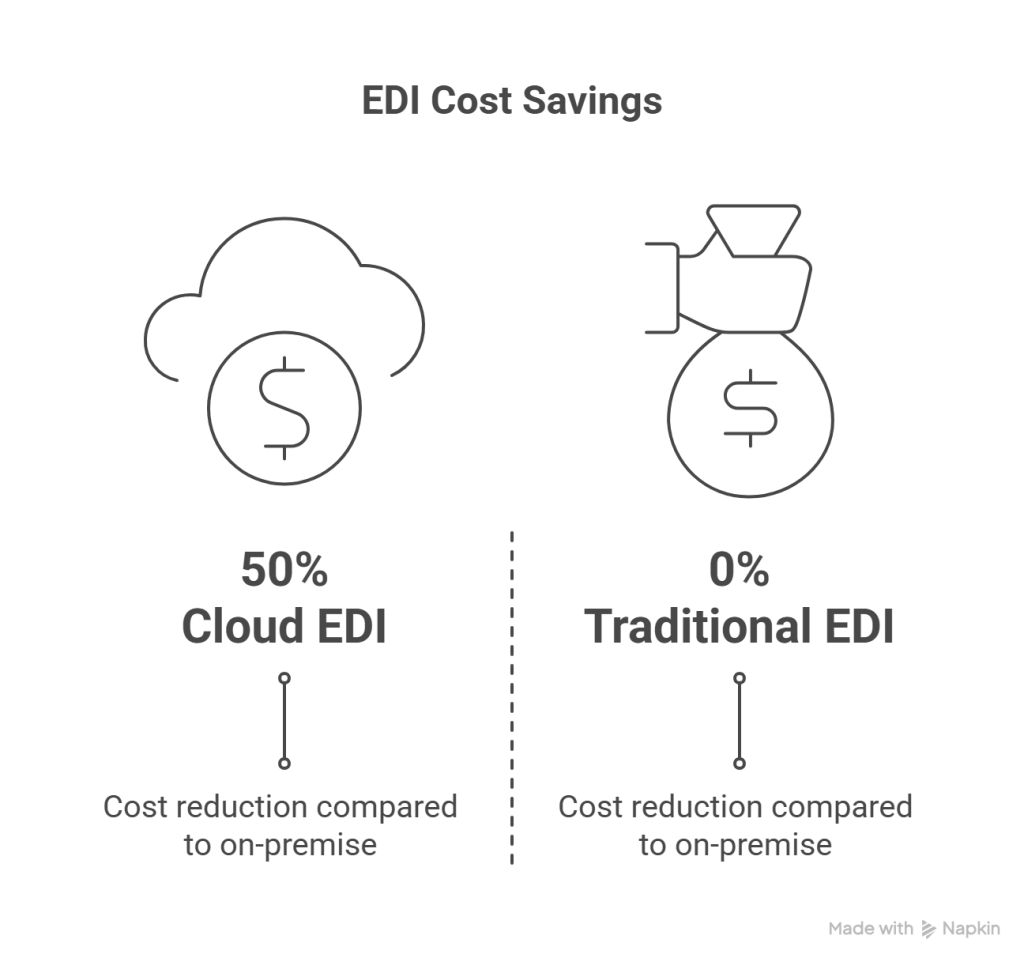
1. Startup Costs: Subscription-Based vs Capital Investment
Traditional EDI needs a big capital investment before you can process even one transaction. These systems need upfront investments ranging from $10,000 to $50,000+ for software licenses, server hardware, and setup fees. Commport Cloud EDI works differently with a subscription model that eliminates high original costs. Affordable With Flexible Pricing Options. No software required or Maintenance. Companies can pay only for the trading partners or transaction volumes they use. In fact, cloud-based EDI reduces the total cost of ownership by 40% to 60% compared to on-premise systems.
2. Ongoing Maintenance: Vendor-Managed vs In-House IT
Traditional EDI’s infrastructure gets pricey and needs lots of work. These systems need dedicated IT teams to handle updates, fix problems, and manage the system. Commport Cloud EDI solutions handle everything – from hardware maintenance to IT professionals who keep operations running smoothly. Companies can focus on their core business activities when they don’t have to pay for in-house maintenance, and they get clear, predictable monthly bills.
3. Upgrade Cycles: Automatic Updates vs Scheduled Downtime
Commport Cloud-based EDI solutions offer a huge advantage that many overlook: the upgrade process. Traditional systems need scheduled downtime for updates, but cloud platforms handle all upgrades, patches, and security updates automatically without stopping service. These automatic updates ended up saving money on software maintenance and gave businesses access to the newest features and compliance standards without expensive operational disruptions.
Integration and Customization Capabilities: Commport Cloud EDI vs Competitors
Commport Cloud-based EDI systems work differently from legacy systems, especially in how they connect with critical business applications.
- ERP integration: API-based vs deep ERP embedding
- Customization options: Pre-built templates vs full customization
- Data synchronization: Real-time cloud sync vs Internal sync

1. ERP Integration: API-Based vs Deep ERP Embedding
Commport Cloud EDI solutions use API-first platforms to connect with ERP systems through simple integrations. This makes data exchange smooth without complex infrastructure. These platforms come with REST APIs/webhooks and prebuilt connectors that translate EDI formats automatically. Traditional systems need deep ERP embedding, which takes much more customization and IT resources. Popular ERPs like SAP, Oracle NetSuite, Sage, Acumatica, and Intuit work well with many leading cloud EDI providers.
2. Customization Options: Pre-Built Templates vs Full Customization
Commport Cloud-based EDI solutions come with ready-to-use templates and standard workflows that make implementation efficient. Common EDI file templates are built in to meet compliance rules and boost efficiency. Traditional EDI systems, notwithstanding that, let businesses customize solutions to match their exact processes, but they need more development resources.
3. Data Synchronization: Real-Time Cloud Sync vs Internal Sync
Commport Cloud EDI updates data instantly across systems, unlike traditional EDI’s scheduled batch processing. Live updates keep inventory levels, order status, and financial information accurate. Cloud solutions let users exchange data right away without batch processing delays, and this is a big deal as it means that supply chain visibility improves.
Comparison Table: Commport Cloud EDI vs Competitors
Feature | Commport Cloud EDI Solutions | Other Cloud EDI Providers |
Implementation Time | Days to go live | 8-10 weeks standard |
IT Infrastructure Requirements | Internet connection and web browser only | On-premise hardware, software, specialized IT staff |
User Training Needs | Minimal, accessible interface | Extensive training and technical knowledge required |
Trading Partner Addition | Quick configuration with pre-built connections | Manual setup, 3-6 months per partner |
Volume Management | Automatic scaling, pay-per-use | Fixed capacity, requires hardware investment |
Accessibility | Global access via web browser | Limited to localized systems |
Original Costs | Subscription-based, no upfront investment | $10,000 to $50,000+ upfront |
Maintenance Requirements | Vendor-managed, automatic updates | In-house IT team, scheduled downtime |
Cost Efficiency | 40-60% lower total ownership cost | Higher TCO due to infrastructure and staff |
ERP Integration | API-based, prebuilt connectors | Deep ERP embedding, complex customization |
Data Synchronization | Live cloud sync | Scheduled batch processing |
Customization Options | Pre-built templates, optimized workflows | Full customization available, requires development |
Conclusion
Cloud-based EDI solutions offer clear advantages over their traditional counterparts. A detailed look at both systems shows cloud EDI’s superior performance in every crucial business aspect.
Quick deployment stands out as a major benefit. Businesses can start using cloud EDI within days instead of months. This rapid setup leads to faster partner connections and revenue generation. Cloud solutions also eliminate the need for costly hardware or specialized IT teams, making EDI available to companies of all sizes.
Growing businesses will find cloud platforms particularly appealing. Traditional systems demand manual setup for each partner, while cloud platforms come with ready-to-use connections. The system’s flexibility shines during peak periods, as it handles volume increases of up to 500% automatically.
The financial benefits of cloud EDI are compelling. North America’s leading Cloud Based EDI Solution provides economical options and easy scaling without any software installation needs. A computer and browser are all you need to exchange EDI globally.
Cloud solutions cut total ownership costs by 40-60% compared to on-premise systems. Users don’t worry about upfront investments or maintenance costs. The system updates itself seamlessly without disrupting operations.
Traditional EDI systems may offer more customization options. However, cloud-based solutions deliver better business outcomes for companies that need quick implementation, lower costs, and operational flexibility. These advantages make cloud EDI the smart choice for most modern businesses.
Commport Cloud EDI Solutions - #1 Cloud EDI Provider Trusted by 6000+ Happy Customers
Need Help? Download: Commport's EDI Buyers Guide
Unlock the full potential of your supply chain with our comprehensive EDI Buyer's Guide — your first step towards seamless, efficient, and error-free transactions
Frequently Asked Questions
Commport Cloud-based EDI offers faster implementation, lower costs, automatic scaling, and minimal IT infrastructure requirements. It can be deployed in days, reduces total ownership costs by 40-60%, handles volume spikes automatically, and only requires an internet connection and web browser to operate.
Commport Cloud EDI significantly simplifies adding new trading partners. It offers pre-built connections that can be activated quickly, allowing businesses to go live with new partners in days instead of the 3-6 months often required with traditional systems.
Cloud EDI operates on a subscription-based model, eliminating large upfront investments. It typically reduces total cost of ownership by 40% to 60% compared to on-premise systems by removing the need for expensive hardware, software licenses, and dedicated IT staff.
Cloud EDI automatically adjusts resources based on demand, scaling up during busy periods and down during quiet times. This elasticity ensures businesses can handle volume surges of up to 500% without developing backlogs or requiring additional hardware investments.
Commport Cloud EDI solutions often use API-first platforms that connect directly with ERP systems through lightweight integrations. They typically offer prebuilt connectors for popular ERPs like SAP, Oracle NetSuite, and Sage, enabling seamless data exchange without complex infrastructure.