
Introduction
E-commerce accounted for 80% of all digital sales in 2025, making it the year’s biggest electronic sales channel.
Yet many store owners don’t realize that major marketplaces like Amazon, Walmart, and Target require EDI capability to exchange orders, invoices, and shipping details with partners on their platforms.
Without proper EDI compliance, you simply can’t do business with these retail giants.
In this blog, we’ll walk you through what EDI in ecommerce means, how it connects your store to major marketplaces, and the various solutions available for EDI ecommerce integration, whether you’re using Shopify EDI capabilities, cloud-based EDI platforms, or Integrated EDI through your existing systems.
Key Takeaways
- EDI compliance is mandatory – Amazon, Walmart, and Target require EDI capability to exchange orders, invoices, and shipping details with marketplace partners.
- Automated processing reduces errors by 30% – EDI eliminates manual data entry, accelerates business cycles by 61%, and prevents costly compliance chargebacks.
- Multiple solution options exist – Choose from cloud EDI portals (starting at as low as $99/month), cloud platforms, or ERP-integrated systems based on your volume and budget.
- Implementation timelines vary significantly – cloud EDI setup takes days, while integrated ERP solutions require 1-3 weeks with costs ranging from $100-$1,000+ monthly.
- Real-time inventory synchronization prevents overselling – EDI 846 feeds communicate stock levels multiple times daily, ensuring accurate marketplace availability.
What is EDI, and Why do Major Marketplaces Require It
Understanding EDI in e-commerce
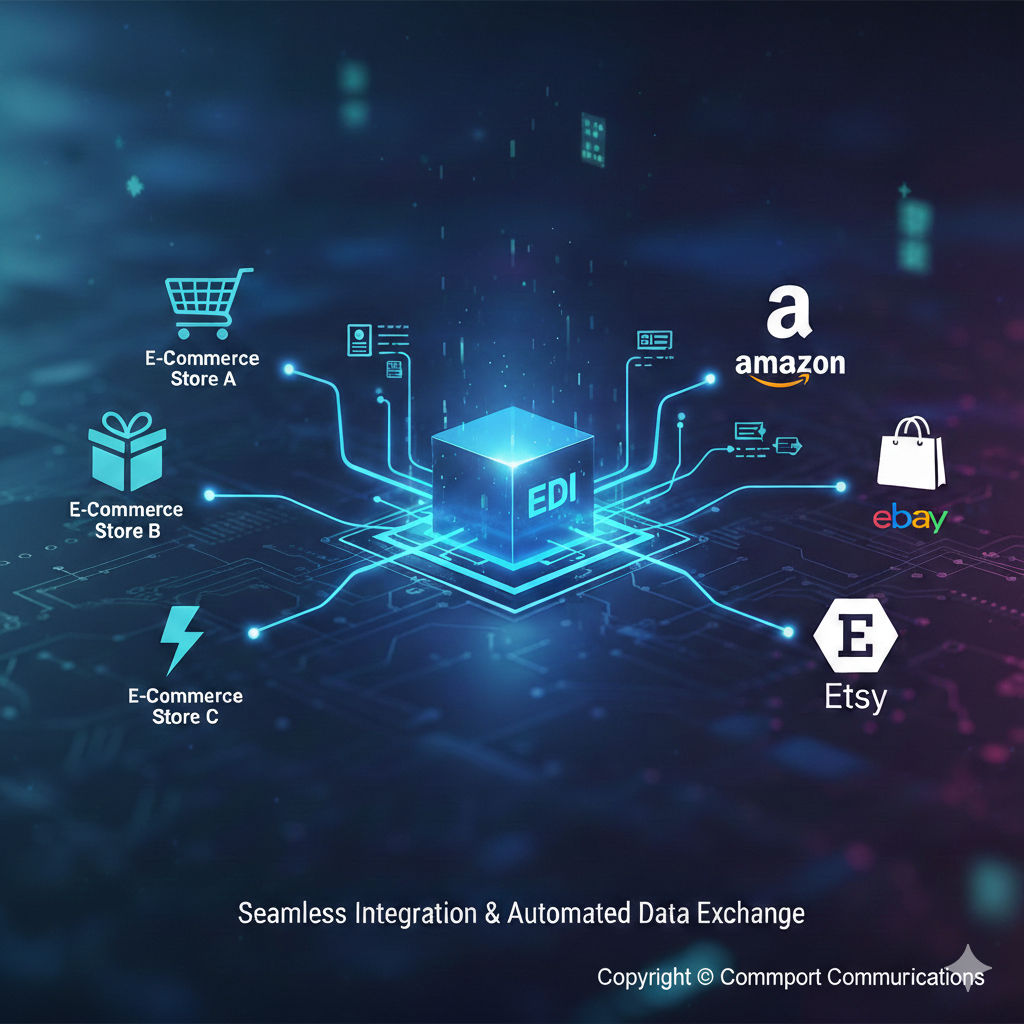
Electronic Data Interchange automates the exchange of business documents between organizations in a structured, electronic format. Instead of manually processing paper documents or emails, EDI in e-commerce enables your systems to transmit purchase orders, invoices, shipping notices, and payment information directly between computer applications without human intervention.
The technology removes repetitive data entry work that slows down order processing. When a marketplace like Walmart sends you a purchase order, your system receives it electronically, processes it automatically, and sends back confirmations and shipping details in the same standardized format. This direct system-to-system communication eliminates errors from illegible handwriting, lost faxes, and manual keying mistakes.
EDI improves data quality, delivering transactions without errors. The speed advantage matters too. EDI can accelerate your business cycles by 61%, letting you exchange transactions in minutes instead of waiting days or weeks.at least a 30% reduction
Marketplace Compliance Requirements
Major retailers set specific EDI compliance mandates to standardize how they communicate with their supplier networks. Each marketplace has unique requirements based on which EDI transactions they use and how quickly they expect to receive them.
Walmart, in particular, requires all partners to exchange seven basic EDI documents:
- 810 Invoice,
- 821 Claim,
- 816 Address Listing,
- 820 Remittance,
- 850 Purchase Order,
- 864 Text Message for invoice errors,
- and 997 Acknowledgment.
Partners must complete EDI testing within six weeks or face removal from testing for non-compliance. Walmart also mandates that trading partners send EDI 997 functional acknowledgments no more than 24 hours after purchase orders arrive in their mailbox.
Missing these requirements triggers costly consequences. Non-compliance leads to EDI chargebacks, payment delays, negative vendor performance scores, and strained relationships with retailers. Retail giants like Target, Costco, and Amazon all insist their partners trade via EDI.
Common EDI Standards Used by Marketplaces
Marketplaces rely on two primary EDI standards. ANSI X12 dominates North America with some 300,000 companies using it worldwide. This standard defines hundreds of transaction types across retail, finance, transportation, and healthcare sectors. created in 1979
UN/EDIFACT emerged in the 1980s as the international standard, gaining widespread adoption across Europe and global markets. The standard supports multi-country trade and handles diverse regulatory requirements.
Both standards serve the same purpose but differ in structure. X12 uses a hierarchical format with segments and elements, while EDIFACT employs a more compact, delimited syntax. Your geographic location and trading partners determine which standard you’ll use.
How EDI Connects Your Store to Major Marketplaces

1. Order Processing Flow
The connection starts when a marketplace transmits directly into your system. Your EDI solution receives this order and converts it into a sales order within your system, allocating inventory based on real-time stock levels. Within 24 to 48 hours, you send back an EDI 855 purchase order acknowledgment confirming receipt and your ability to fulfill the order. This acknowledgment tells the buyer if you accepted the order as-is, need to make adjustments, or must reject it entirely. After the marketplace receives your EDI 855, they send an EDI 997 functional acknowledgment confirming they got your response.EDI 850 purchase order
2. Inventory Synchronization
Communicate your product stock levels to marketplaces in real time. The document shares accurate updates on what you have available, quantities on hand, and estimated replenishment dates. Marketplaces often require these feeds multiple times per day to keep their websites current. When you mark a product out of stock in your EDI 846, the marketplace removes it from their site or lists it as unavailable until your next feed shows it’s back. This prevents overselling and ensures customers see accurate availability.EDI 846 inventory feeds
3. Shipping Notifications and Tracking
Once you ship an order, you send an EDI 856 advance shipping notice to the marketplace before the truck arrives. This ASN includes shipment tracking numbers, expected delivery dates, and detailed information about what’s in each carton or pallet. The advance notice lets warehouses plan labor and prepare for incoming deliveries. Walmart requires your ASN to be transmitted and validated before the physical truck reaches their gate.
4. Invoice and Payment Handling
After shipping, you send an EDI 810 invoice requesting payment according to the agreed terms. The marketplace confirms receipt with an EDI 997, then their accounting department processes payment. They respond with an EDI 820 payment remittance advice showing payment details and any adjustments. This automated reconciliation matches invoices to payments without manual data entry.
Major marketplaces Using EDI Integration
Amazon Vendor Central and Seller Central
Amazon operates two distinct supplier programs with different EDI requirements. Vendor Central serves first-party sellers who sell products directly to Amazon in bulk, with Amazon handling resale to customers. Seller Central supports third-party marketplace sellers who list and sell directly to consumers.
For Vendor Central, you’ll exchange standard EDI documents including 850 purchase orders, 855 acknowledgments, 856 advance ship notices, 810 invoices, and 846 inventory updates. Amazon Direct Fulfillment within Seller Central requires a more complex message flow: Order Fulfillment requests and responses, Shipment Label requests and responses, Truck Manifest Notifications, and ASNs. Integration providers like Commport Communications help automate these processes for both programs.
Walmart Marketplace
Walmart requires AS2 protocol for all EDI communications and mandates suppliers install EDI with this secure transmission method. Testing must be completed within six weeks, or you face removal from their EDI testing program. The retailer follows ANSI X12, UCS, and VICS standards domestically, processing more than 5,500 invoices annually
Target Plus
Target Plus marketplace sellers exchange EDI documents through intermediary platforms rather than direct connections. You’ll still handle the same core transactions (850 orders, ASNs, 810 invoices), but these portals manage the technical mapping between your systems and Target’s requirements.
Shopify EDI Capabilities
Shopify supports EDI integration through connector platforms that centralize order management from your store. The integration transfers orders automatically for unified management alongside traditional sales channels and sends legally compliant invoices generated from customer orders.
Other Marketplace Platforms
Best Buy, Home Depot, and Costco maintain similar EDI compliance standards for their supplier networks, requiring the same core transaction sets and secure communication protocols used across major retail partnerships.
Choosing and Implementing an EDI Solution for Marketplaces
Cloud-Based EDI Platforms
Cloud based edi platforms automate document exchange through web connections to your existing systems. Providers like Commport Communications connect to over 5000 trading partners across many countries. You choose between self-service models, where your team manages processes, or fully managed services where providers handle everything from implementation to daily monitoring. Commport Communications, market leader in B2B network solutions for electronic commerce, is trusted by 6000+ customers worldwide for scalable EDI ecommerce solutions and integrations.
Integrated EDI through ERP Integration
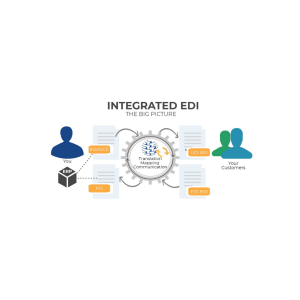
ERP-integrated EDI solutions connect EDI directly into SAP, Oracle NetSuite, Microsoft Dynamics 365, or other systems through pre-built adapters. Commport Communications offers integrations for all these major ERPs. This eliminates manual data entry by flowing transactions automatically between trading partners and your internal systems.
Conclusion
EDI capability isn’t optional if you want to sell through major marketplaces like Amazon, Walmart, or Target. The good news is that solutions exist for every business size and budget, from simple cloud portals to fully integrated platforms. Choose your EDI provider carefully based on your transaction volume and technical capabilities.
Commport EDI Solutions - Save up to 70% in EDI Costs Today!
Need Help? Download: Commport's EDI Buyers Guide
Unlock the full potential of your supply chain with our comprehensive EDI Buyer's Guide — your first step towards seamless, efficient, and error-free transactions
Frequently Asked Questions
Electronic Data Interchange (EDI) is a technology that automates the exchange of business documents like purchase orders, invoices, and shipping notices between computer systems in a standardized electronic format. Major marketplaces like Amazon, Walmart, and Target require EDI capability because it eliminates manual data entry errors, speeds up order processing by up to 61%, and reduces transaction errors by at least 30%. Without EDI compliance, you cannot do business with these retail giants.
Walmart requires all partners to exchange seven basic EDI documents: 810 Invoice, 821 Claim, 816 Address Listing, 820 Remittance, 850 Purchase Order, 864 Text Message for invoice errors, and 997 Acknowledgment. Partners must also send EDI 997 functional acknowledgments within 24 hours of receiving purchase orders and complete EDI testing within six weeks to avoid removal from the testing program.
When a marketplace sends an EDI 850 purchase order to your system, it automatically converts into a sales order and allocates inventory. You respond with an EDI 855 purchase order acknowledgment within 24-48 hours confirming your ability to fulfill the order. After shipping, you send an EDI 856 advance shipping notice with tracking details, followed by an EDI 810 invoice for payment. The marketplace confirms each step with EDI 997 acknowledgments and sends an EDI 820 payment remittance when processing payment.
Cloud-based EDI portals for small sellers typically cost around USD 99 per month with unlimited transactions, though traditional providers may charge USD 0.10 to USD 1.00 per document plus monthly VAN fees of USD 50 to USD 500. Integrated EDI solutions range from USD 400 to USD 1,000+ monthly depending on transaction volume. If you are trying to built yourself, on-premise EDI systems require USD 5,000 to USD 20,000 for software licenses plus USD 2,000 to USD 5,000 annually for maintenance, with each trading partner requiring USD 200 to USD 2,000 for mapping and testing.
Implementation timelines vary based on the complexity of your chosen solution. Web-based EDI portals can be set up in just a few days using self-service tools, as they require no software installation or backend integration. Integrated solutions that connect to ERP systems like SAP, Oracle NetSuite, or Microsoft Dynamics 365 typically take one to three weeks to implement due to the need for system mapping and testing with trading partners.