


Introduction
When choosing the right integrated EDI for your business, the decision between Commport Integrated EDI and other providers can significantly impact your operational efficiency.
We understand that EDI solutions vary widely in their approach, features, and cost structures. Commport Integrated EDI enables businesses to transmit documents such as purchase orders, invoices, and shipping notices electronically in a standardized format.
While in-house EDI involves high upfront investments in hardware and software along with ongoing maintenance costs, Commport’s solution is designed to be flexible and scalable, allowing businesses to expand without additional infrastructure investments.
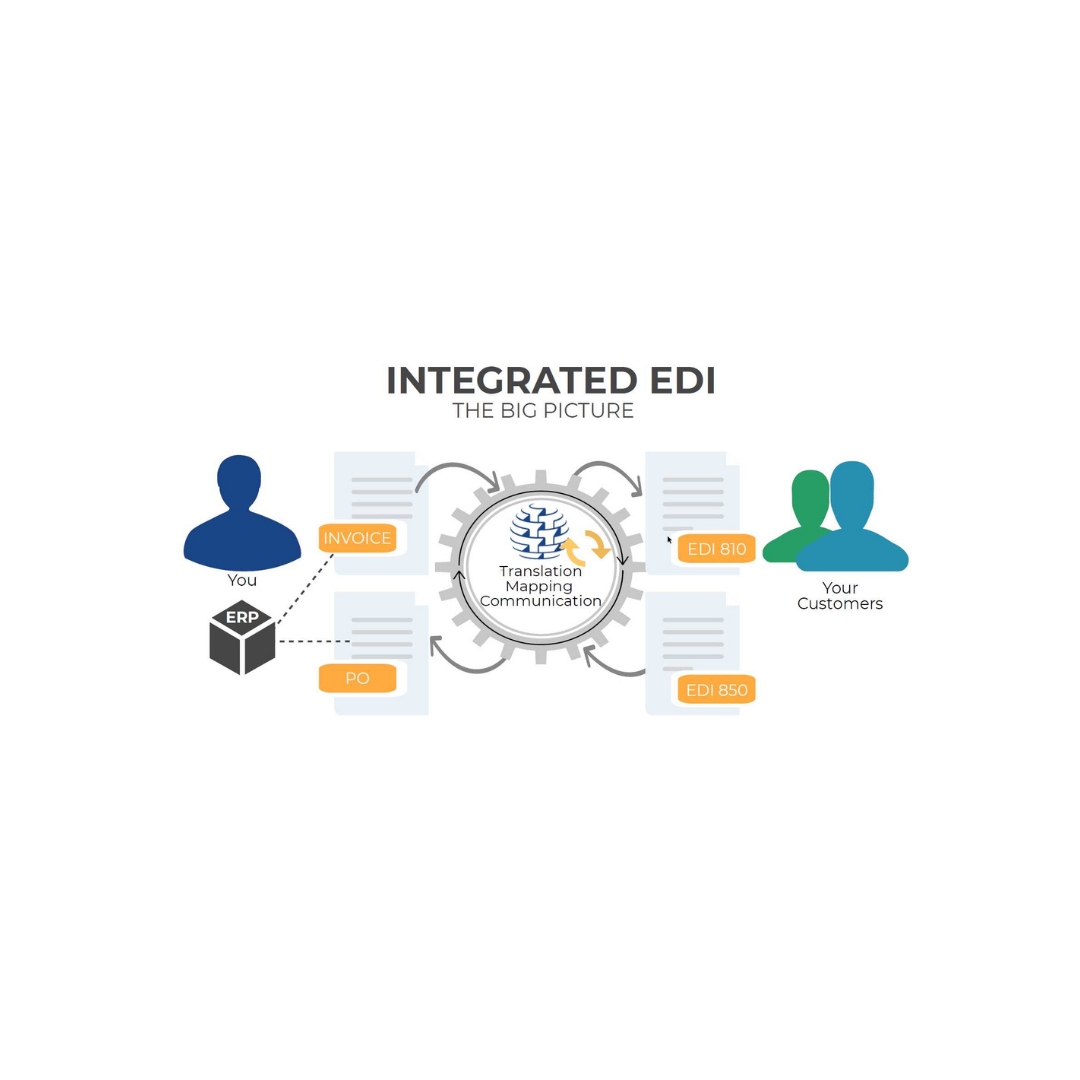
What is integrated EDI exactly? At its core, integrated EDI solutions provide seamless, automated data exchange directly into existing ERP or back-office systems.
This is particularly valuable for businesses with high transaction volumes and robust internal systems. Furthermore, Commport’s Integrated EDI translates your inbound documents from trading partners’ EDI files into a format that can be imported directly into your ERP, accounting, or other business system.
Therefore, you can focus on your business while the translation process works reliably in the background. In this comparison guide, we’ll examine how Commport stacks up against other EDI providers to help you determine which solution best fits your specific needs, resources, and growth plans.
Key Takeaways
- Commport eliminates infrastructure costs – Unlike in-house EDI requiring substantial hardware investments, Commport’s solution reduces capital expenses and IT resource dependency.
- Deep ERP integration drives efficiency– Seamless connections with SAP, Oracle, and Microsoft Dynamics enable real-time data sync across departments without manual intervention.
- Scalability without additional investment– Commport’s flexible architecture adapts to growing transaction volumes and business expansion without requiring new infrastructure.
- Mid-to-large enterprises benefit most– Organizations with complex ERP systems, high transaction volumes, and multiple trading partners gain maximum value from integrated workflows.
- Subscription model offers predictable costs– Monthly pricing eliminates upfront investments while including maintenance, updates, and support for better budget management.
What is Commport Integrated EDI?
Commport Integrated EDI stands as a comprehensive electronic document exchange system that streamlines business communications by automating the transfer of critical business documents. This solution enables seamless transmission of purchase orders, invoices, shipping notices, and other transactional information without manual intervention.
Definition and core functionality
At its core, Commport Integrated EDI functions as a translation service that converts business documents into universally recognized formats. The system handles document mapping, validation, and utilizes various communication protocols to ensure secure transmission between trading partners. Beyond basic document exchange, Commport’s solution creates automated workflows that eliminate error-prone manual data entry processes, maintaining data integrity throughout the entire document-sharing cycle.
How it integrates with ERP and business systems
Commport’s solution creates direct connections between front-end EDI and back-end ERP systems, establishing fluid data exchange between internal operations and external trading partners. The integration works smoothly with major ERP platforms, including SAP, Oracle NetSuite, Microsoft Dynamics, and Sage. Additionally, this integration extends beyond ERP to connect with inventory management, order processing, and shipping systems, creating a cohesive information flow across departments.
Key features of a fully integrated EDI system
The robust architecture of Commport’s fully integrated EDI system offers several distinctive capabilities:
- Automated validation protocols that identify and flag potential errors before they impact operations
- Seamless translation converting business system documents into globally standards-compliant formats
- Connectivity options, including direct connections with trading partners via AS2 or sFTP
- Multi-standard support for ANSI X12, EDIFACT, EANCOM, RosettaNet, ODETTE, and TRADACOMS
Moreover, the system provides real-time visibility into transactions, simplified compliance with trading partner requirements, and supports international communication through multilingual capabilities. As businesses grow, Commport’s solution scales accordingly without requiring additional infrastructure investments, making it ideal for organizations seeking long-term EDI solutions that evolve with their needs.
Comparison with Other EDI Models
Selecting the right EDI solution requires understanding how different models compare in key operational areas. Unlike standard EDI providers, Commport offers distinct advantages when measured against traditional approaches.
Commport vs In-House EDI: Infrastructure and Maintenance
In-house EDI demands substantial space for infrastructure, including servers, translation tools, and communication services. This approach necessitates high upfront investments in hardware and software, plus ongoing maintenance costs. Businesses must also allocate large IT resources to fully integrate and manage the system internally. In contrast, Commport Integrated EDI eliminates significant capital expenses and reduces dependence on internal IT support. Consequently, organizations can redirect their focus toward core business initiatives rather than EDI management.
Commport vs Cloud EDI: Deployment and Accessibility
Cloud EDI provides flexibility through subscription-based pricing that eliminates major upfront investments. Both solutions offer remote accessibility—cloud EDI requires only an internet connection and computer to access from anywhere, essentially removing geographical barriers to collaboration. However, Commport’s Integrated EDI surpasses standard cloud offerings by providing deeper integration with existing ERP systems, enabling real-time data synchronization across departments. This creates a seamless flow that standard cloud EDI cannot match without additional customization.
Commport vs Hybrid EDI: Flexibility and Customization
Hybrid integration platforms connect cloud services with on-premises systems, providing unified frameworks for complex B2B integration. Though hybrid models offer flexibility across different environments, Commport’s solution delivers superior customization through its extensive library of plug-ins for mid-market and higher business systems. The primary difference lies in implementation complexity—hybrid platforms require coordinating multiple components across environments, whereas Commport’s integrated approach streamlines this process through its centralized management console that handles EDI transactions, VAN networks, and data synchronization through a single platform.
Key Evaluation Criteria for Businesses
Evaluating the right EDI solution requires careful consideration of several key factors that directly impact business operations. Understanding these criteria helps businesses make informed decisions that align with their specific needs and growth plans.
Scalability: Handling growth and transaction volume
Scalability is crucial for businesses experiencing growth. A flexible design with interconnected modules allows organizations to add new functionalities without affecting overall system performance. Modern integrated EDI solutions provide extensive support for various standards, including EDIFACT, VDA, TRADACOMS, and PEPPOL. Subsequently, businesses can effectively advertise their integration credentials to prospective partners and outcompete those without rapid integration capabilities.
Cost Structure: Subscription vs upfront investment
The total cost of an EDI solution varies depending on business size, complexity, and provider selection. In-house systems require substantial initial investment plus ongoing costs for maintenance, updates, and monitoring. Conversely, managed EDI solutions typically operate on subscription models with more predictable monthly expenses. Indeed, managed services often include upgrades, maintenance, and support, simplifying budgeting and reducing unplanned expenses.
Compliance and Security: Built-in vs self-managed
A robust integrated EDI solution ensures documents are delivered on time and validated to prevent rejection notices or compliance charges. Self-managed systems require internal teams to keep pace with evolving regulations, whereas vendor-managed solutions typically handle compliance updates automatically.
Implementation Time: Ready-to-use vs custom setup
Implementation timeframes vary significantly based on complexity. On average, EDI projects take 6-18 weeks depending on requirements. Simple connections may be established within 3 weeks, specifically for rapid trading partner deployment. Custom implementations involving multiple trading partners and document types can extend to 6 months or more.
Support and Maintenance: Vendor-managed vs internal team
With standard managed EDI, the client primarily handles message monitoring. Fully managed services offer proactive error handling and support through dedicated integration engineers who understand business needs. This approach enables organizations to redirect internal resources toward core business activities rather than EDI management.
When to Choose Commport Over Other Providers
Many businesses face a crucial decision when selecting an EDI provider. Determining the right fit requires evaluating specific organizational needs against provider capabilities.
Best fit for mid-size to large enterprises
Commport Integrated EDI Solution facilitates efficient data exchange, enabling businesses to effectively collaborate with partners and automate critical business processes. This approach is particularly valuable for medium to large enterprises managing hundreds of trading partners, eliminating the need to establish separate connections for each relationship. Organizations with high transaction volumes benefit most from Commport’s streamlined approach, which handles complex document exchange requirements while minimizing operational complexity.
Ideal for businesses with complex ERP systems
Businesses using sophisticated ERP systems like SAP, Oracle, and Microsoft Dynamics find Commport especially beneficial due to its seamless integration capabilities. This integration creates fluid data exchange between internal systems and external partners, eliminating the “information silos” that plague many organizations. Companies requiring customized workflows across inventory management, order processing, and shipping systems gain particular advantages.
Use cases where real-time data sync is critical
Organizations requiring immediate visibility into transaction statuses should prioritize Commport’s solution. Notably, businesses handling time-sensitive operations benefit from the automated validation that identifies errors before they impact operations. Companies managing complex supply chains gain advantages through faster order cycles and reduced lead times.
Industries that benefit from integrated EDI workflows
Although initially adopted primarily by automotive and retail sectors, integrated EDI now serves manufacturing, healthcare, pharmaceutical, and construction industries. Retail companies managing complex supply chains, high-volume orders, and strict timelines particularly benefit from Commport’s capabilities. Meanwhile, manufacturers coordinating across international supply networks gain exceptional value through standardized communication protocols.
Comparison Table
| Features | Commport Integrated EDI | In-House EDI | Cloud EDI | Hybrid EDI |
| Infrastructure Requirements | Minimal – no additional infrastructure needed | Substantial – requires servers, translation tools, and communication services | Minimal – requires only internet connection | Multiple components across environments |
| Initial Investment | Lower capital expenses | High upfront investments in hardware and software | Subscription-based pricing with no major upfront costs | Not specifically mentioned |
| IT Resource Requirements | Reduced dependence on internal IT | Large IT resources needed | Not specifically mentioned | Requires coordination across multiple components |
| ERP Integration | Deep integration with major platforms (SAP, Oracle NetSuite, Microsoft Dynamics, Sage) | Not specifically mentioned | Basic integration requires additional customization | Connects cloud services with on-premises systems |
| Maintenance | Vendor-managed | Internal maintenance required | Not specifically mentioned | Not specifically mentioned |
| Scalability | Flexible and scalable without additional infrastructure | Not specifically mentioned | Not specifically mentioned | Not specifically mentioned |
| Data Synchronization | Real-time data sync across departments | Not specifically mentioned | Limited without additional customization | Unified framework for B2B integration |
| Customization | Extensive library of plug-ins for business systems | Not specifically mentioned | Not specifically mentioned | Flexible across different environments |
| Management Interface | Centralized management console | Not specifically mentioned | Not specifically mentioned | Multiple components to coordinate |
Conclusion
Selecting the right EDI solution remains a critical decision that affects operational efficiency, cost management, and business growth potential. Throughout this comparison, Commport Integrated EDI stands out as a comprehensive solution that addresses many challenges businesses face when implementing electronic data interchange systems.
First and foremost, Commport offers significant advantages through reduced infrastructure requirements and lower capital expenses compared to traditional in-house EDI implementations. This approach allows companies to redirect resources toward core business activities rather than managing complex EDI systems internally.
Additionally, the seamless integration capabilities with major ERP platforms such as SAP, Oracle NetSuite, and Microsoft Dynamics create fluid data exchange between internal operations and external trading partners. Businesses consequently benefit from real-time visibility into transactions and automated workflows that eliminate error-prone manual processes.
Cost considerations certainly play a major role when evaluating EDI solutions. Commport’s subscription-based model eliminates substantial upfront investments while providing predictable monthly expenses. This financial structure proves especially valuable for organizations seeking to manage budgets effectively without compromising on EDI capabilities.
The scalability factor cannot be overlooked. As businesses grow and transaction volumes increase, Commport’s flexible architecture adapts accordingly without requiring additional infrastructure investments. This adaptability makes it particularly suitable for mid-sized to large enterprises expecting continued expansion.
Companies managing complex supply chains or requiring immediate visibility into transaction statuses will undoubtedly appreciate the automated validation features that identify potential errors before they impact operations. These capabilities have made integrated EDI essential across industries including retail, manufacturing, healthcare, and pharmaceutical sectors.
The decision ultimately depends on your specific business needs, growth plans, and existing systems. For organizations with sophisticated ERP systems handling high transaction volumes across multiple trading partners, Commport Integrated EDI offers compelling advantages over alternative models. Your choice should align with both current requirements and future growth strategies, ensuring your EDI solution remains an asset rather than a limitation as your business evolves.
Commport's Integrated EDI Solution
Need Help? Download: Commport's EDI Buyers Guide
Unlock the full potential of your supply chain with our comprehensive EDI Buyer's Guide — your first step towards seamless, efficient, and error-free transactions
Frequently Asked Questions
Integrated EDI is a comprehensive electronic document exchange system that seamlessly connects with existing ERP and business systems. Unlike standalone EDI solutions, integrated EDI automates data transfer between internal operations and external trading partners, eliminating manual data entry and reducing errors.
Commport Integrated EDI offers seamless integration with major ERP platforms, real-time data synchronization, automated validation protocols, and support for multiple EDI standards. It also provides scalability without additional infrastructure investments, making it suitable for growing businesses with complex EDI requirements.
Commport Integrated EDI eliminates the need for substantial upfront investments in hardware and software required by in-house EDI. It also reduces dependence on internal IT support, allowing businesses to focus on core activities rather than managing complex EDI systems.
Commport Integrated EDI is particularly well-suited for mid-size to large enterprises managing multiple trading partners and high transaction volumes. It’s ideal for businesses with complex ERP systems and those requiring real-time data synchronization across departments.
Commport typically offers a subscription-based pricing model, which eliminates major upfront costs and provides more predictable monthly expenses. This approach often includes upgrades, maintenance, and support, simplifying budgeting and reducing unplanned expenses compared to self-managed EDI systems.